- Angela’s Picks
- Shop by Age
- Shop by Category
- Shop by Values
- Montessori Toys
- Sensory Toys
- Teething Toys
- Wooden Toys
- Educational Toys
- Stacking & Sorting Toys
- Baby Bottles
- Sippy Cups
- Plates & Bowls
- Bibs
- Baby Utensils
- Deals
- High Chairs
- Breastfeeding & Nursing
- Snack Containers
- Crib Mattresses
- Bassinets
- Sleep Sacks & Swaddles
- Baby Blankets
- Baby Monitors
- Cribs & Nursery Furniture
- Baby Shampoo & Wash
- Baby Lotion & Oil
- Baby Sunscreen
- Bath Tubs & Seats
- Towels & Washcloths
- Diaper Cream & Balm
- Eco-Friendly Diapers
- Baby Wipes
- Potty Training
- Changing Pads
- Cloth Diapers
- Baby Thermometers
- Baby Proofing
- Baby Gates
- Humidifiers
- First Aid & Grooming
- Onesies & Bodysuits
- Sleepers & Pajamas
- Hats & Mittens
- Nursing Pads
- Breast Pumps & Accessories
- Postpartum Care
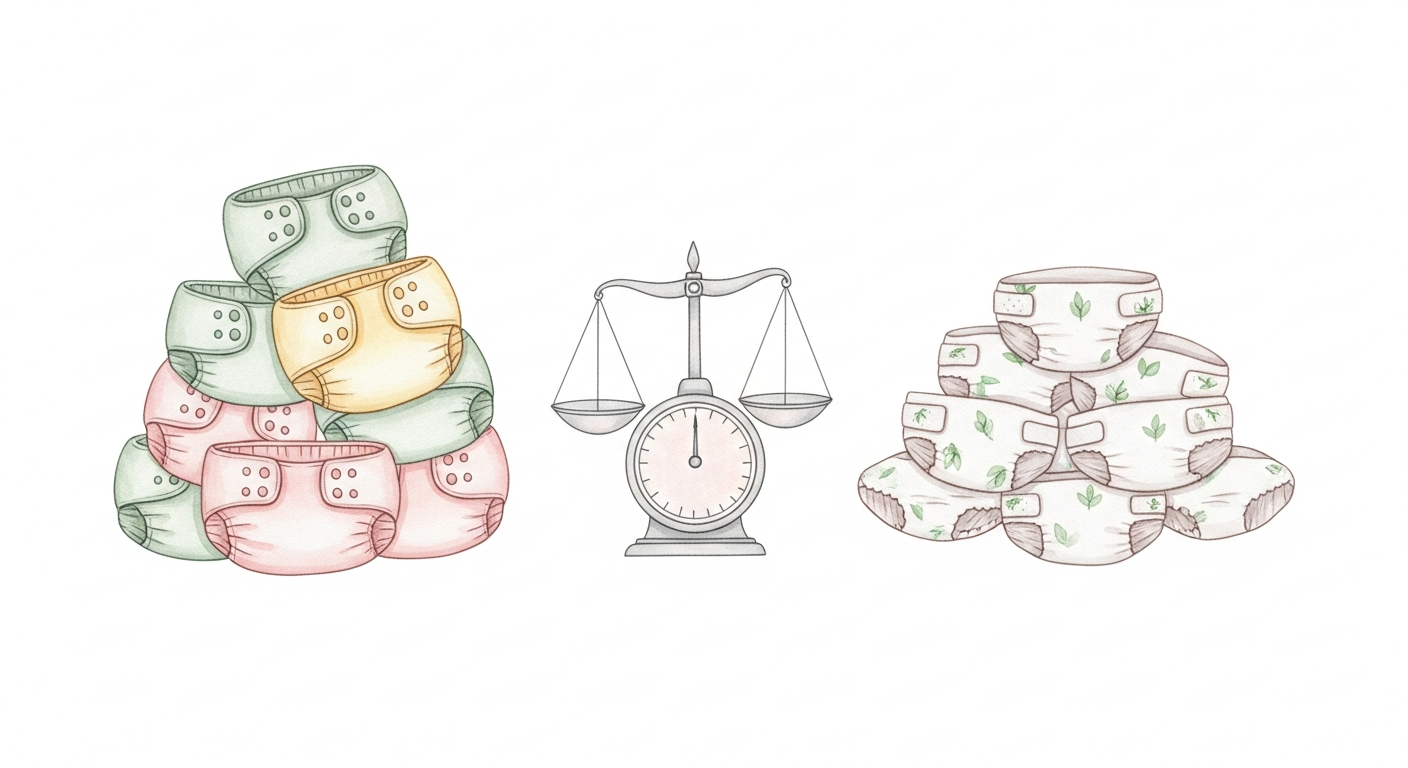
Cloth Diapers vs. Eco-Disposables: The Honest Comparison

Quick Answer
Cloth diapers or eco-friendly disposables? We compare cost, convenience, environmental impact, and chemical safety to help you decide.
Updated for 2025. All products independently researched. Some links are affiliate links — we earn a small commission at no cost to you.
If you’ve spent any time in non-toxic parenting circles, you’ve heard this debate. Cloth diaper enthusiasts say disposables are toxic chemical bombs headed for landfills. Eco-disposable fans say cloth is an exhausting, time-consuming guilt trip. The truth? Both sides have valid points, and the “right” answer depends entirely on your family.
Let’s break down the actual data — cost, chemicals, convenience, and environmental impact — so you can make the choice that works for YOUR life.
The Chemical Safety Comparison
Conventional Disposables (Pampers, Huggies, etc.)
Concerns: Chlorine bleaching (dioxins), SAP gel (sodium polyacrylate), synthetic fragrances, phthalates, VOCs, and petroleum-based materials. A 2019 French study found 60+ chemicals in major diaper brands including glyphosate and formaldehyde.
Baby Sleep Miracle
Help baby sleep through the night naturally
Get It →Eco-Friendly Disposables (Bambo Nature, Eco by Naty, Honest Co.)
Better because: TCF (Totally Chlorine Free) bleaching, plant-based materials, no fragrance, reduced or eliminated SAP. Many carry OEKO-TEX, Nordic Swan, or FSC certifications. Still contain: Some SAP gel (necessary for absorption), some petroleum-derived materials in the waterproof backing.
Cloth Diapers
Safest option chemically — especially organic cotton or hemp. Zero SAP, zero chlorine, zero fragrance. Caveat: If using secondhand cloth diapers, the elastic may contain older chemical treatments. New organic cloth diapers from reputable brands (GroVia, Thirsties, Esembly) are the gold standard for chemical safety.
The Cost Comparison
Conventional disposables: ~$1,500-2,000 over 2.5 years
Eco-disposables: ~$1,800-2,500 over 2.5 years (15-25% more expensive)
Cloth diapers: ~$400-800 total investment (including washing costs), and reusable for subsequent children. If you have two kids in cloth, the per-child cost drops to $200-400.
The Environmental Comparison
Disposables (all types): 4,000-6,000 diapers per child go to landfill. Eco-disposables use more plant-based materials but still take decades to decompose in landfill conditions (despite “biodegradable” marketing — landfills aren’t designed for composting).
Cloth: 90% less landfill waste. But uses more water and energy for washing. The net environmental impact depends heavily on how you wash (cold vs. hot water, line dry vs. dryer, HE machine vs. old machine).
Our Honest Recommendation
The hybrid approach wins for most families. Cloth diapers at home (where laundry is easy), eco-disposables for daycare, overnight, and travel. This gives you 60-70% cloth usage without the all-or-nothing pressure, saves money over 100% eco-disposables, and still massively reduces chemical exposure and landfill waste.
And if cloth isn’t for you? That’s completely fine. Switching from conventional Pampers to Eco by Naty or Bambo Nature is still a massive improvement in chemical safety. Don’t let perfect be the enemy of better.
— Angela Grace
How Cloth Diapers Work (The Main Types)
Modern cloth diapers are a world away from the pins and plastic pants of the past. The main styles:
- All-in-ones (AIO): the absorbent layer is sewn in — easiest, most like a disposable, but slower to dry.
- Pockets: a waterproof shell with a pocket you stuff with inserts — customizable absorbency, quick to dry.
- Prefolds/flats + cover: the most economical — a folded cloth secured under a reusable waterproof cover.
- Hybrids: a reusable shell with the choice of a cloth insert or a disposable insert — flexible for travel.
To start, you’ll want about 20–24 diapers for a 2-day wash rotation. The basic washing routine: a cold rinse, then a hot wash with a cloth-safe detergent, then tumble or line dry. Browse cloth diapers and accessories to build your stash.
Cloth & Eco Diaper Picks
| Product | Best For | Price | |
|---|---|---|---|
| DYPER Baby Diapers - Cloth Alternative, Day & | Best Overall | $19.99 | View |
| OsoCozy Unbleached Prefold Cloth Diapers - 6 Pack | Best Value | $14.00 | View |
| RUVANTI 10 Pack Birdseye Flat-Fold Cloth Diapers 24x24 | Editor's Pick | $22.99 | View |
| Birdseye Diapers and Burp Cloths, Hypoallergenic (6 Pack) | Great Choice | $14.99 | View |
| Gerber Baby Boys Girls Gauze Prefold Cloth Diapers | Great Choice | $16.99 | View |
| NUOBESTY 10pcs Reusable Cloth Diapers for Newborns | Great Choice | $20.78 | View |
BEST OVERALL 
DYPER Baby Diapers - Cloth Alternative, Day & Overnight
$19.99
- Incredible Softness: Made with soft, stretchy materials that resemble yoga pants, DYPER diapers offer an almost underwear-like fit.
- Exceptional Absorbency: These diapers are designed to keep your baby dry for longer, making them perfect for both daytime use and overnight protection.
- Allergens and Chemicals Free: DYPER diapers are free from chlorine, latex, alcohol, and other harsh chemicals, ensuring they are gentle on your baby’s skin.
- Versatile Use: Perfect not just for diapering, but also as a cloth diaper alternative and during potty training transitions.
- Environmentally Minded: With a commitment to plant-based materials, these diapers are a responsible choice for eco-conscious families.
BEST VALUE 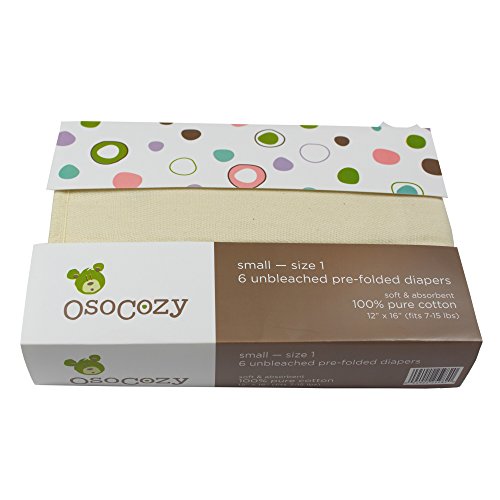
OsoCozy Unbleached Prefold Cloth Diapers - 6 Pack
$14.00
- Made from 100% comfortable unbleached cotton, providing a gentle touch against your baby's sensitive skin.
- Highly absorbent and durable, designed to withstand numerous washes while maintaining their shape and functionality.
- Cost-effective—parents can save thousands compared to using disposable diapers over time.
- Versatile design that can be folded in various ways to suit your baby's needs and offers excellent customization for fit.
- Eco-friendly option that reduces landfill waste significantly while promoting a greener lifestyle for your family.
EDITOR'S PICK 
RUVANTI 10 Pack Birdseye Flat-Fold Cloth Diapers 24x24 Inches
$22.99
- Multi-Purpose Use: Beyond diapering, these cloths can double as burp cloths, unpaper towels, or even dish drying cloths, making them a practical addition to your home.
- Soft and Absorbent: The unique Birds Eye Weave fabric not only feels soft against your baby's skin but also effectively wicks moisture away, keeping your little one dry and comfortable.
- Eco-Friendly Choice: Using cloth diapers significantly reduces waste compared to disposable options, making it a great choice for environmentally conscious families.
- Easy to Clean: Both hand and machine washable, these cloth diapers are designed for convenience, allowing you to keep them fresh and ready for use.
- Perfect Gift: This 10-pack makes for an ideal gift for baby showers or new parents, combining practicality with a thoughtful touch.

Birdseye Diapers and Burp Cloths, Hypoallergenic (6 Pack)
$14.99
- Multi-Functional: Use them as diapers, burp cloths, or cleaning rags—perfect for busy parents!
- Soft & Absorbent: Crafted to be thicker and more absorbent than many standard brands, providing comfort for your baby.
- Customizable Usage: Moms can easily fold these cloths to meet their specific needs during feeding or diaper changes.
- Eco-Friendly Choice: Reusable and washable, contributing to a more sustainable lifestyle and less waste.
- Easy Maintenance: Machine washable and quick-drying, making care a breeze for busy families.
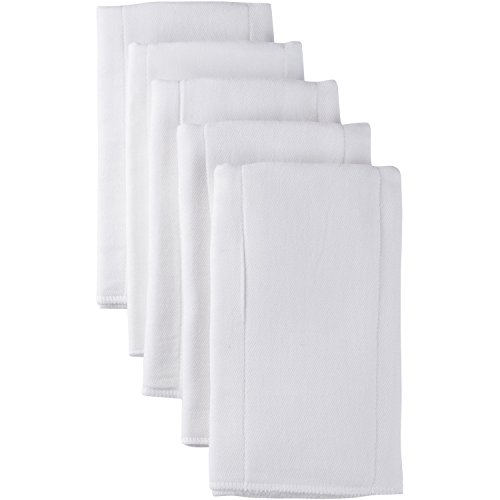
Gerber Baby Boys Girls Gauze Prefold Cloth Diapers Multipack
$16.99
- Constructed from 100% cotton, offering a soft touch against your baby's delicate skin.
- Multi-functional design: use them as burp cloths, cleaning rags, or even in arts and crafts.
- Conveniently sized at 14" x 20", ideal for tucking into a diaper bag for on-the-go parents.
- Recyclable and reusable, reducing your family's waste footprint while saving money in the long run.
- Prefolded panels make diaper changes quick and easy, allowing for customized folding to suit your needs.

NUOBESTY 10pcs Reusable Cloth Diapers for Newborns
$20.78
- Leak-proof design keeps bedding dry, so you can enjoy peaceful nights without worrying about messes.
- Soft, breathable material ensures your baby's delicate skin stays comfortable and irritation-free.
- Eco-friendly option that reduces landfill waste, making it better for our planet.
- Durable and built to last through multiple washes, saving you money in the long run compared to disposables.
- Conveniently adjustable to fit newborns and toddlers, offering versatility as your child grows.
As an Amazon Associate we earn from qualifying purchases. We only recommend products we'd use ourselves — we're never paid for placement.
Frequently Asked Questions
How many cloth diapers do I need?
Plan on about 20–24 diapers if you want to wash every other day — newborns go through 10–12 a day. Having extras means fewer wash days and a buffer when some are drying. Many families build their stash gradually.
Are cloth diapers cheaper than disposables?
Over the diapering years, yes — cloth has a higher upfront cost but can save hundreds to over a thousand dollars, especially if reused for a second child. Factor in water, energy, and detergent, but the long-term math usually favors cloth (and it keeps thousands of disposables out of landfills).
Angela's Recommended Resources
Guides and courses I personally recommend:
Most Popular
Baby Sleep Miracle
Proven gentle method to help your baby sleep through the night naturally. No cry-it-out, science-backed.
* Affiliate links. We may earn a commission at no extra cost to you.