- Angela’s Picks
- Shop by Age
- Shop by Category
- Shop by Values
- Montessori Toys
- Sensory Toys
- Teething Toys
- Wooden Toys
- Educational Toys
- Stacking & Sorting Toys
- Baby Bottles
- Sippy Cups
- Plates & Bowls
- Bibs
- Baby Utensils
- Deals
- High Chairs
- Breastfeeding & Nursing
- Snack Containers
- Crib Mattresses
- Bassinets
- Sleep Sacks & Swaddles
- Baby Blankets
- Baby Monitors
- Cribs & Nursery Furniture
- Baby Shampoo & Wash
- Baby Lotion & Oil
- Baby Sunscreen
- Bath Tubs & Seats
- Towels & Washcloths
- Diaper Cream & Balm
- Eco-Friendly Diapers
- Baby Wipes
- Potty Training
- Changing Pads
- Cloth Diapers
- Baby Thermometers
- Baby Proofing
- Baby Gates
- Humidifiers
- First Aid & Grooming
- Onesies & Bodysuits
- Sleepers & Pajamas
- Hats & Mittens
- Nursing Pads
- Breast Pumps & Accessories
- Postpartum Care
The Complete Guide to Toddler-Proofing Your Home (Non-Toxic Edition)

Quick Answer
Complete toddler-proofing guide with non-toxic safety products. Room-by-room checklist and practical tips from a real parent.
Around the time your baby starts crawling, you realize your home is basically an obstacle course of hazards. Electrical outlets at eye level. Cleaning products under the sink. That bookshelf that is definitely not anchored to the wall. Welcome to toddler-proofing, where your main job is staying one step ahead of a tiny human whose sole mission is to find danger.
The Non-Negotiable Safety Basics
Furniture Anchoring
This is the most important thing on this list. Unsecured furniture tips over more often than you think, and the consequences can be devastating. Anchor all dressers, bookshelves, TV stands, and any furniture taller than waist height to the wall with anti-tip straps. Most furniture comes with them now. Use them. All of them.
Outlet Covers
Sliding outlet covers are better than plug-in caps, which are choking hazards themselves. The sliding covers automatically close when the plug is removed. One of the cheapest and most effective safety upgrades you can make.
Cabinet and Drawer Locks
At minimum, lock cabinets containing cleaning products, medications, and sharp objects. Magnetic locks are the most secure and invisible option. Adhesive strap locks work well for a budget-friendly choice. Spring-loaded locks are the easiest to install but can be figured out by determined toddlers.
Room-by-Room Checklist
Kitchen
- Stove knob covers or remove knobs when not in use
- Lock oven door
- Move cleaning products to upper cabinets or lock lower ones
- Keep sharp objects out of reach (magnetic knife strips up high)
- Secure trash can with a lock or keep behind a locked cabinet
Bathroom
- Toilet lock (yes, really, drowning risk is real)
- Non-slip bath mat
- Lock all medications and supplements, even vitamins
- Set water heater to 120F to prevent scalding
- Remove all small items from countertops
Living Areas
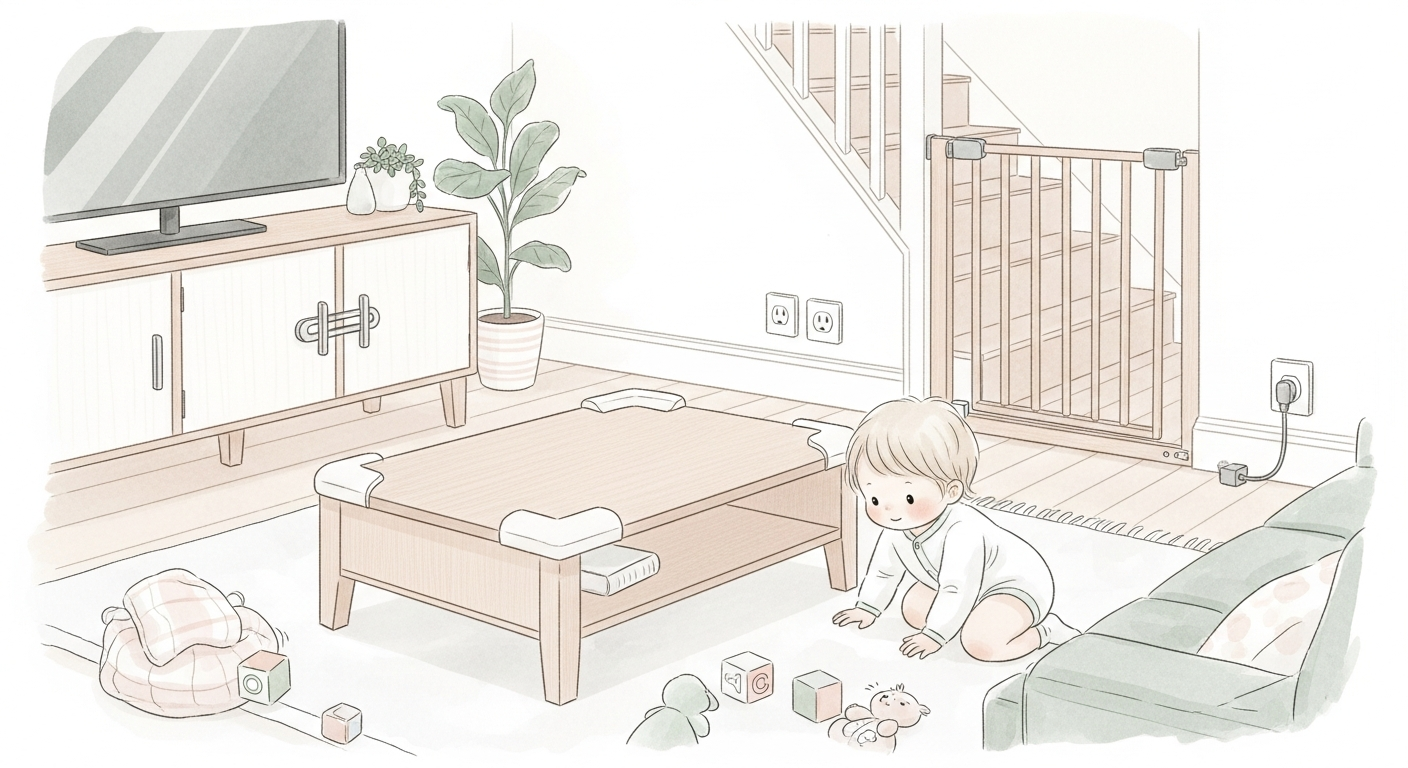
- Corner guards on sharp furniture edges (coffee tables are the worst offenders)
- Secure all cords, both electrical and blinds, out of reach
- Baby gates at stairs, top and bottom
- Remove or secure any items smaller than a toilet paper roll (choking test)
- Check plants for toxicity and relocate if needed
Choosing Non-Toxic Safety Products
Even safety products can contain questionable materials. Here is what to look for:
- Baby gates – Hardware-mounted gates at stairs (pressure-mounted can be pushed over). Choose solid wood or metal over plastic.
- Play mats – Skip PVC/EVA foam puzzle mats (contain formamide). Choose natural rubber, organic cotton quilts, or CertiPUR-US foam mats.
- Corner guards – Silicone is better than foam, lasts longer and stays attached
- Cabinet locks – Stainless steel mechanisms last longer than all-plastic options
The Clean Cleaning Products Switch
This is the perfect time to switch to non-toxic cleaning products. Your toddler is on the floor touching everything, putting things in their mouth, and generally living their best germ-exploring life. Swap conventional cleaners for plant-based alternatives, or make your own with vinegar, baking soda, and castile soap. Your floors do not need to be hospital-sterile, they just need to be clean.
A Reality Check
You cannot bubble-wrap your entire home, and you should not try. Toddlers need to explore, take small risks, and learn natural consequences (touching something cold, falling down from standing). The goal of toddler-proofing is to eliminate the genuinely dangerous hazards so your child can safely explore everything else.
The most important safety device in your home is you. No product replaces active supervision. But good childproofing means you can blink without having a heart attack, and that is worth its weight in gold.
Toddler-Proofing Picks
| Product | Best For | Price | |
|---|---|---|---|
| Toddleroo Supergate Ergo Baby Gate, 42” Wide | Best Overall | $16.77 | View |
| Regalo Easy Step 36" Extra Tall Walk-Thru Baby | Best Value | $39.99 | View |
| Cumbor Baby Gate 29.7-46" for Stairs and Doorways, | Editor's Pick | $99.99 | View |
| ROBBEAR Baby Teething Toy - Silicone Fire TV | Great Choice | $5.50 | View |
| Tickle & Main Forest Friends Gift Sets for | Great Choice | $28.99 | View |
| 3 in 1 Portable Baby High Chair with | Great Choice | $79.99 | View |
BEST OVERALL 
Toddleroo Supergate Ergo Baby Gate, 42” Wide
$16.77
- Adaptable Fit: This gate easily adjusts to fit openings from 26 to 42 inches wide, making it a versatile choice for various spaces in your home.
- Child-Resistant Design: Standing at 26 inches tall, it’s specifically built to deter climbing, so you can trust it to keep your little one safe.
- Effortless Installation: Choose between pressure-mounted or hardware-mounted options for easy setup, whether for a doorway or a stairway.
- One-Handed Operation: The ergonomic handle allows for quick opening and secure locking with just one hand—a game changer for busy parents!
- Made in the USA: With a commitment to high safety and quality standards, this gate is proudly manufactured in the USA, reflecting a dedication to excellence.
BEST VALUE 
Regalo Easy Step 36" Extra Tall Walk-Thru Baby Gate
$39.99
- Extra Height: At 36 inches, this gate is perfect for active toddlers who are just beginning to explore climbing.
- Easy Walk-Thru Design: The convenient walk-thru feature allows adults to pass through effortlessly without needing to remove the gate each time.
- Adjustable Fit: It fits openings from 29 to 36.5 inches, with a 4-inch extension included, making it adaptable to various spaces in your home.
- Sturdy Construction: Made from durable steel, this gate is built to withstand the wear and tear of everyday use, ensuring long-lasting safety.
- User-Friendly Release: The lever style handle offers a straightforward one-touch release, making it easy for parents to operate while keeping kids secure.
EDITOR'S PICK 
Cumbor Baby Gate 29.7-46" for Stairs and Doorways, White
$99.99
- Large & Wide Design: With an adjustable width, this gate fits most standard doorways and staircases, ensuring versatile use throughout your home.
- Easy Walk-Through: The spacious walk-thru design allows you to move freely even when holding your baby, making daily tasks much easier.
- Double-Lock Safety Release: This feature makes it challenging for toddlers to open the gate, providing peace of mind for parents.
- Durable Steel Construction: Sturdy enough to withstand impacts from both children and pets, this gate is built to last.
- Two Installation Options: Choose between pressure mounting for quick setup or hardware installation for maximum stability in high-traffic areas.

ROBBEAR Baby Teething Toy - Silicone Fire TV Remote Teether
$5.50
- Made from food-grade silicone that is BPA-free, ensuring a safe chewing experience for your baby.
- Soft and flexible material reduces the risk of oral injuries while effectively soothing teething discomfort.
- Bright colors and various textures engage your baby’s senses and stimulate their tactile development.
- Compact size (1.7"×5.5") is easy for little hands to grasp, promoting hand-eye coordination.
- Can double as an ice cube mold for fun sensory experiences during hot days.

Tickle & Main Forest Friends Gift Sets for Newborn Baby
$28.99
- Enchanting Storytime: The 'Hello Forest' storybook introduces your little one to vibrant illustrations and gentle narratives, fostering a love for reading from an early age.
- Comforting Swaddle: Crafted from 100% cotton, the cozy bear swaddle blanket is designed to wrap your baby in warmth and security, perfect for snuggling during those chilly evenings.
- Soothing Rattle: The plush tree rattle not only entertains but also provides calming sounds to soothe your little one, making playtime a peaceful experience.
- Gender-Neutral Design: With its charming forest theme, this gift set is ideal for any baby, making it a versatile choice for parents looking for inclusive options.
- Thoughtful Gifting: This gift set is hassle-free for parents, allowing them to enjoy precious moments with their newborn without the stress of shopping for individual items.

3 in 1 Portable Baby High Chair with Detachable Double Tray
$79.99
- Multifunctional Design: Easily transitions between a high chair, play chair, and booster seat, accommodating your child's various activities.
- Safety First: Constructed with a sturdy steel frame and equipped with a 5-point harness, ensuring a secure and stable seat for your little one.
- Easy Cleaning: The BPA-free double tray is dishwasher-safe, while the waterproof cushion cover makes wipe-downs a breeze.
- Space-Saving Convenience: Quick installation and disassembly make it perfect for small spaces or on-the-go families.
- Adjustable Height: Customize the height to suit your dining table or countertop, making mealtime more comfortable for both parent and child.
As an Amazon Associate we earn from qualifying purchases. We only recommend products we'd use ourselves — we're never paid for placement.
Angela's Recommended Resources
Guides and courses I personally recommend:
Most Popular
Baby Sleep Miracle
Proven gentle method to help your baby sleep through the night naturally. No cry-it-out, science-backed.
* Affiliate links. We may earn a commission at no extra cost to you.