- Angela’s Picks
- Shop by Age
- Shop by Category
- Shop by Values
- Montessori Toys
- Sensory Toys
- Teething Toys
- Wooden Toys
- Educational Toys
- Stacking & Sorting Toys
- Baby Bottles
- Sippy Cups
- Plates & Bowls
- Bibs
- Baby Utensils
- Deals
- High Chairs
- Breastfeeding & Nursing
- Snack Containers
- Crib Mattresses
- Bassinets
- Sleep Sacks & Swaddles
- Baby Blankets
- Baby Monitors
- Cribs & Nursery Furniture
- Baby Shampoo & Wash
- Baby Lotion & Oil
- Baby Sunscreen
- Bath Tubs & Seats
- Towels & Washcloths
- Diaper Cream & Balm
- Eco-Friendly Diapers
- Baby Wipes
- Potty Training
- Changing Pads
- Cloth Diapers
- Baby Thermometers
- Baby Proofing
- Baby Gates
- Humidifiers
- First Aid & Grooming
- Onesies & Bodysuits
- Sleepers & Pajamas
- Hats & Mittens
- Nursing Pads
- Breast Pumps & Accessories
- Postpartum Care
Non-Toxic Changing Pad Buying Guide: What to Look For

Quick Answer
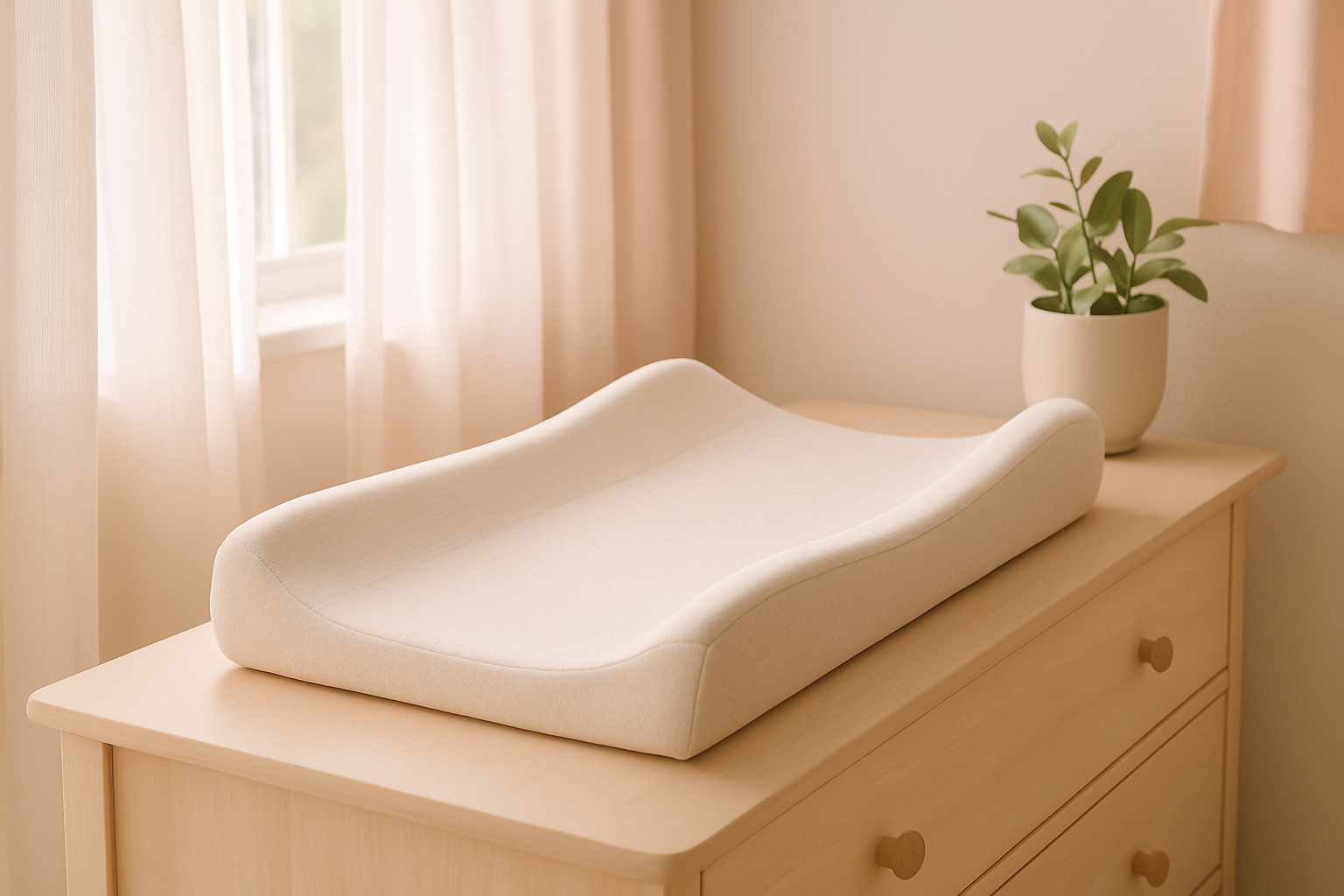
A non toxic changing pad guide from 1 Stop Baby: which certifications, cover materials, and foam to look for, plus PVC, PFAS, and flame retardants to skip.
A non toxic changing pad skips the usual problem materials and leans on safer, certified ones instead — and once you know the four or five things to check, shopping for one gets a lot calmer. Here’s the short version so you can scan and go: look for a foam core certified CertiPUR-US or GREENGUARD Gold (both screen for the stuff you don’t want off-gassing near your baby), a waterproof cover made from TPU, PEVA, or organic cotton rather than PVC or vinyl, and a clear “phthalate-free” and “no added flame retardants” note from the maker. Then pick a shape (contoured pads with a safety strap are the everyday standard), confirm the surface actually wipes clean, and give any new pad a few days to air out before it goes into rotation.
That’s the whole decision in a nutshell. If you want to understand why each of those matters — and how to spot the labels that sound reassuring but don’t actually mean much — keep reading. I vet this category the same way I vet everything at 1 Stop Baby: read the material list, check the certifications, and stay honest about what we do and don’t know.
What to look for in a non toxic changing pad
Four things carry most of the weight here. Get these right and the rest is preference.
- Certifications you can verify. For foam pads, CertiPUR-US means the polyurethane foam was tested to limit certain flame retardants, formaldehyde, and heavy metals. GREENGUARD Gold is a low-chemical-emissions certification — it screens the finished product for VOCs at levels set with kids and sensitive people in mind. Neither is a magic stamp, but both are third-party checks rather than a brand’s own marketing word.
- Cover material. The waterproof layer is what your baby actually touches, so it matters most. Friendlier options are TPU (thermoplastic polyurethane), PEVA, and organic cotton with a food-grade or TPU backing. These give you a wipeable, water-resistant surface without the PVC/vinyl chemistry below.
- Foam or fill. Contoured pads are usually polyurethane foam — fine when it’s certified. If you’d rather skip foam entirely, some flat pads use cotton or other fills, though they’re less waterproof on their own and lean on the cover to do that job.
- Plain-language safety notes. Look for the maker to say, in writing, “phthalate-free,” “no added flame retardants,” and “PVC-free.” A brand that’s doing the work tends to spell this out. Vague words like “eco” or “natural” with no material list behind them don’t tell you much.
A quick note on waterproofing: “waterproof” and “non-toxic” aren’t opposites, but the how matters. TPU and PEVA get you water resistance without the older vinyl approach. Be a little skeptical of coatings marketed as ultra stain- or water-repellent with no material named — that’s the category where PFAS (“forever chemicals”) sometimes show up. A maker that uses a TPU or PEVA barrier usually says so plainly.
Baby Sleep Miracle
Help baby sleep through the night naturally
Get It →Materials to avoid, and why
You don’t need to memorize a chemistry chart. You just need to recognize a few names on a spec sheet and know why they’re on the “rather not” list.
- PVC and vinyl covers. Soft PVC is often made flexible with phthalates, a group of plasticizers many parents prefer to keep away from a surface their baby lies on daily. TPU and PEVA cover the same waterproof job without the vinyl chemistry.
- Added flame retardants. Foam pads were historically treated with flame-retardant chemicals that can migrate into household dust. This is exactly what CertiPUR-US foam screens against, which is why the certification is worth looking for.
- Off-gassing polyurethane foam (VOCs). That “new foam” smell is volatile organic compounds releasing from an uncured or uncertified core. A GREENGUARD Gold pad has been tested for low emissions — and airing any pad out (more on that below) helps regardless.
- PFAS “waterproof” coatings. These are the stain- and water-repellent treatments that persist in the environment and the body. A pad that gets its water resistance from a named TPU or PEVA layer isn’t relying on them.
None of this means a conventional pad will harm your baby tomorrow. It means that when a safer option exists at a similar price — and it usually does — there’s little reason not to choose it. That same “check the materials, don’t panic” logic is how I’d approach a non-toxic crib or the mattress that goes in it, since those are surfaces your baby spends even more hours on.
Contoured vs. flat, and the safety strap
Most pads today are contoured — raised sides that cradle your baby and help keep a wriggler centered. Flat pads and portable fold-out mats are handy for travel and diaper bags but offer less of that gentle boundary. For a home changing station, contoured is the common pick for good reason.
Whatever shape you choose, use the safety strap. A contour helps, but babies get strong and squirmy fast, and a changing surface is often at counter or dresser height. Buckle the strap every single time, keep one hand on your baby, and set up so wipes and a fresh diaper are within arm’s reach — you never want to turn away to grab something. Also confirm the pad is secured to your dresser or changing table per the maker’s hardware, and always follow the manufacturer’s safety instructions, since designs and weight limits differ.
Wipeability, hygiene, and airing out a new pad
A changing pad is a high-traffic surface, so cleanability is a real feature, not a nice-to-have. A seamless TPU or PEVA surface wipes down in seconds and doesn’t trap moisture in seams. If you go with an organic-cotton or fabric pad, plan to use a washable cover or liner on top and keep a couple in rotation so one’s always clean. Either way, a quick wipe after messy changes keeps things fresh between deeper cleans.
One habit worth building: air out a new pad before first use. Even a certified low-emission pad can carry a faint manufacturing or packaging smell. Unwrap it, set it somewhere ventilated — an open room, a porch, near a cracked window — for a few days, and let any residual odor dissipate before it joins the nursery. It’s the same courtesy I’d give a new mattress. Once it’s aired and wiped down, you’re good to go.
If you’re building out the rest of the station, our diapers & potty collection pairs naturally with a changing setup, and you can browse the sleep essentials while you’re thinking about the nursery as a whole.
Below are the non-toxic changing pads that passed our screen.
Non-Toxic Changing Pads That Passed Our Screen
| Product | Best For | Price | |
|---|---|---|---|
| Owlowla Soft Minky Dots Changing Pad Cover | Best Overall | $9.99 | View |
| Rocinha 100 Pack Disposable Changing Pads, 17 x | Best Value | $25.98 | View |
| Baby Floral Diaper Changing Pad Cover, 2 Pack | Editor's Pick | $7.59 | View |
| Baby Disposable Underpad 100 Count Waterproof Changing Pad | Great Choice | $25.89 | View |
| Kopi Baby Portable Diaper Changing Pad - Grey | Great Choice | $25.99 | View |
| 100 Pack Disposable Changing Pads | Great Choice | $22.99 | View |
BEST OVERALL 
Owlowla Soft Minky Dots Changing Pad Cover
$9.99
- Made from luxury minky fabric that feels incredibly soft against your baby’s delicate skin.
- Stretchable design fits most standard changing pads measuring up to 16" x 32", providing versatile use.
- Easy to install with an elastic bottom band that keeps it securely in place, allowing for quick diaper changes.
- Machine washable and easy to wipe clean, making it a practical choice for busy parents.
- Perfect for gifting at baby showers or birthdays, adding a touch of warmth to any nursery.
BEST VALUE 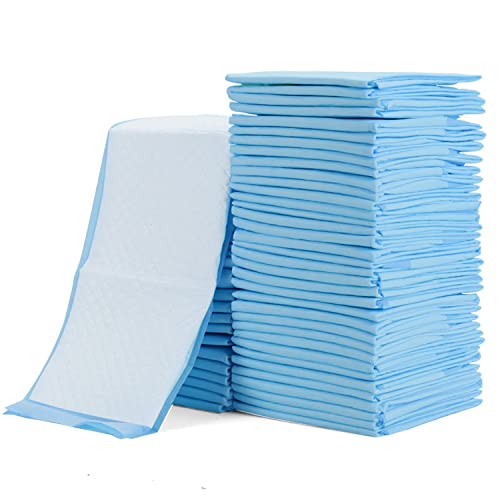
Rocinha 100 Pack Disposable Changing Pads, 17 x 13 Inches
$25.98
- Soft and Gentle: Made from premium non-woven fabric, these pads are soft against your baby’s delicate skin, reducing the risk of irritation.
- Highly Absorbent: The built-in polymer water-absorbent resin quickly absorbs moisture, keeping the surface dry in seconds.
- Leak-Proof Design: Equipped with water-resistant PE membranes, these pads prevent leaks, ensuring your surfaces remain clean and dry.
- Convenient and Versatile: Perfect for diaper changes, pet messes, and even as a travel sleeping pad, these pads simplify life on-the-go.
- Bulk Benefits: With 100 pads in each pack, you’ll be well-prepared for daily diaper changes and unexpected messes.
EDITOR'S PICK 
Baby Floral Diaper Changing Pad Cover, 2 Pack
$7.59
- Crafted from 100% high-quality knitted cotton, ensuring a gentle touch against your baby's skin.
- Conveniently sized at 32 x 16 x 4 inches, fitting most standard changing pads perfectly.
- The durable tight rubber bands keep the cover securely in place, providing added safety against any bacteria.
- Lightweight and machine washable, making cleanup a breeze for busy parents.
- Beautifully designed with soft textures that not only protect your baby’s skin but also elevate your nursery decor.

Baby Disposable Underpad 100 Count Waterproof Changing Pad
$25.89
- Sealed on all four sides, effectively preventing leaks and keeping surfaces dry.
- The soft fluff fill with added absorbency ensures a cozy and comfortable sleeping experience for your baby.
- Waterproof design saves you cleaning time, allowing for quick and hassle-free changes.
- Non-skid blue backing keeps the pad securely in place whether you're at home or on the go.
- Eliminates worries about dirtying bedsheets or changing tables during diaper changes.
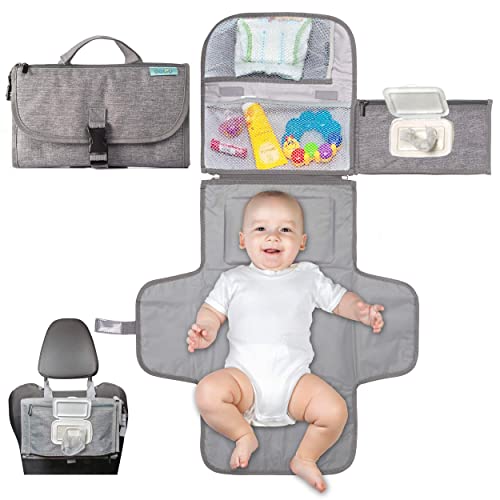
Kopi Baby Portable Diaper Changing Pad - Grey
$25.99
- Perfectly Portable: This changing pad folds easily and fits seamlessly into your diaper bag, ensuring a hygienic changing space wherever you are.
- Convenient Carry Options: The Kopi Baby pad features Velcro straps and a buckle loop, allowing you to attach it to strollers or bags for hands-free transport.
- Smart Wipes Pocket: With a dedicated pocket for wipes, you’ll have quick access to your favorites, eliminating the hassle of searching through your bag.
- Extra Storage: Keep essentials organized with an outer pocket for parents and two inner mesh pockets for baby items, or detach for a minimalist experience.
- Durable and Waterproof: The waterproof surface ensures that messes are contained, simplifying clean-up after diaper changes.

100 Pack Disposable Changing Pads
$22.99
- Made from premium non-woven fabric and fluff pulp, ensuring a soft feel against baby’s skin.
- Ultra absorbent with a 5-layer design that locks moisture away, helping to keep your little one dry and comfy.
- Leak-proof backing prevents any messes, protecting beds, furniture, and floors from accidents.
- Compact and travel-friendly, these pads fit perfectly in diaper bags for on-the-go changes.
- Generous pack size of 100, making it a practical choice for busy families.
As an Amazon Associate we earn from qualifying purchases. We only recommend products we'd use ourselves — we're never paid for placement.
Frequently Asked Questions
Is a non toxic changing pad really worth it over a regular one?
When a safer pad costs about the same as a conventional one — which is often the case now — choosing the version that skips PVC, added flame retardants, and PFAS coatings is an easy call. It’s less about fear and more about picking the better option when it’s right there.
What’s the safest changing pad cover material?
TPU and PEVA are popular for being waterproof without vinyl chemistry, and organic cotton (usually with a TPU backing or a separate liner) is a favorite for parents who want a soft, natural-fiber surface against baby’s skin. Any of the three is a solid, wipeable choice.
Do I need to worry about foam off-gassing?
Choose a pad with CertiPUR-US or GREENGUARD Gold foam to limit VOCs from the start, then air the pad out for a few days before use. Between the certification and the airing-out step, off-gassing concerns drop way down.
Are all the pads here vegan?
Yes. Everything we feature is vegan and free of animal-derived materials like wool, leather, and lanolin, in line with how we vet the whole 1 Stop Baby shop. TPU, PEVA, and organic cotton all fit that standard.
Take the four checks with you — verifiable certification, a friendly cover material, certified foam, and a clear phthalate-free/PFAS-free note — and you can shop any changing pad with confidence, here or anywhere. You’ve got this, and I’m glad to help you set up a spot that’s as clean and calm as those hundred-diapers-a-week days deserve. This guide is general product information, not medical advice; always follow the manufacturer’s safety instructions for your specific pad.
Angela's Recommended Resources
Guides and courses I personally recommend:
Most Popular
Baby Sleep Miracle
Proven gentle method to help your baby sleep through the night naturally. No cry-it-out, science-backed.
* Affiliate links. We may earn a commission at no extra cost to you.