- Angela’s Picks
- Shop by Age
- Shop by Category
- Shop by Values
- Montessori Toys
- Sensory Toys
- Teething Toys
- Wooden Toys
- Educational Toys
- Stacking & Sorting Toys
- Baby Bottles
- Sippy Cups
- Plates & Bowls
- Bibs
- Baby Utensils
- Deals
- High Chairs
- Breastfeeding & Nursing
- Snack Containers
- Crib Mattresses
- Bassinets
- Sleep Sacks & Swaddles
- Baby Blankets
- Baby Monitors
- Cribs & Nursery Furniture
- Baby Shampoo & Wash
- Baby Lotion & Oil
- Baby Sunscreen
- Bath Tubs & Seats
- Towels & Washcloths
- Diaper Cream & Balm
- Eco-Friendly Diapers
- Baby Wipes
- Potty Training
- Changing Pads
- Cloth Diapers
- Baby Thermometers
- Baby Proofing
- Baby Gates
- Humidifiers
- First Aid & Grooming
- Onesies & Bodysuits
- Sleepers & Pajamas
- Hats & Mittens
- Nursing Pads
- Breast Pumps & Accessories
- Postpartum Care
Baby-Led Weaning: The Complete Beginner Guide

Quick Answer
Complete baby-led weaning guide. When to start, best first foods, safety essentials, and non-toxic feeding gear. From one parent to another.
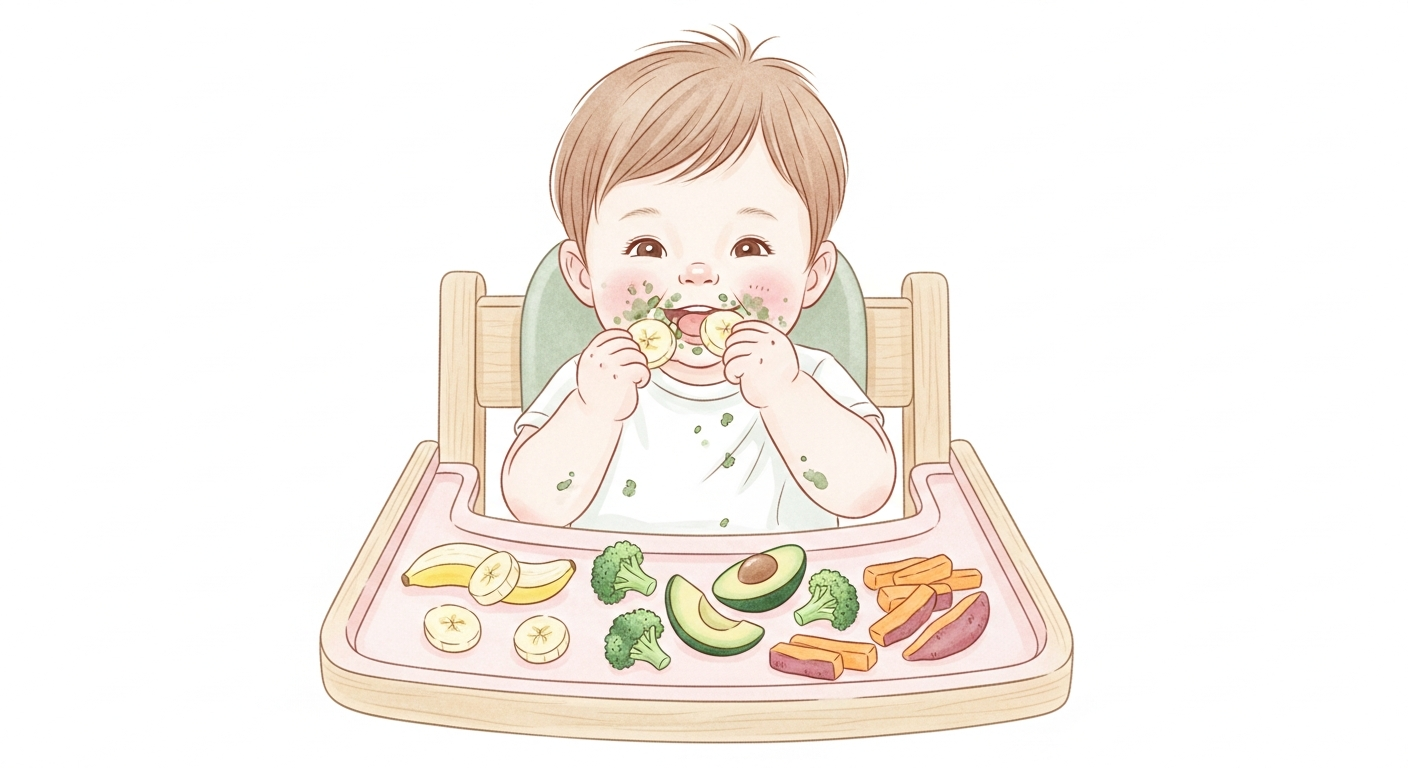
Baby-led weaning sounds fancy, but it is basically this: instead of spoon-feeding purees, you let your baby feed themselves actual food from the start. They grab it, explore it, squish it, throw it on the floor, and eventually some of it makes it into their mouth. It is messy, it is slow, and it is kind of amazing to watch.
When to Start
The signs of readiness (usually around 6 months) are: sitting independently with minimal support, loss of the tongue-thrust reflex (they stop pushing food out with their tongue), showing interest in your food, and the ability to grasp objects and bring them to their mouth. All four signs should be present. Age alone is not enough.
The Safety Essentials
Let me address the elephant in the room: gagging is not choking. Gagging is normal, expected, and actually a safety mechanism. Your baby will gag. It looks scary. It sounds scary. But it is their body learning to manage food. Choking, on the other hand, is silent. Take an infant CPR class before starting solids. Every parent should.
Children Learning Reading
Simple phonics program, 15 min/day
Get It →Foods to absolutely avoid before age 1: honey (botulism risk), whole nuts and seeds (choking hazard, offer as butter), whole grapes or cherry tomatoes (cut lengthwise), hard raw vegetables (cook until soft), and large chunks of sticky foods like nut butter (thin it out).
Best First Foods
Forget the old advice about starting with rice cereal. Modern research says start with iron-rich foods, since babies start running low on their iron stores around 6 months. Great first foods include:
- Strips of soft-cooked meat (beef, chicken, turkey) – Excellent iron source
- Steamed broccoli florets – Natural handle, easy to grip
- Avocado spears – Healthy fats, soft texture, mild flavor
- Banana – Leave some peel on for grip
- Sweet potato wedges – Roasted until very soft
- Egg strips – Scrambled or as an omelet, cut into strips
- Soft-cooked salmon – Iron, omega-3s, and healthy fats
The Non-Toxic Feeding Setup
Since your baby will be handling their own food (and putting everything in their mouth), the materials matter:
- High chair – Solid wood or BPA-free plastic with a removable tray. Avoid fabric seats that need chemical-laden stain treatments.
- Plates and bowls – Silicone suction plates (food-grade) or stainless steel. Skip melamine and painted ceramics.
- Utensils – Pre-spoons (silicone) for self-feeding. Babies do not need forks yet.
- Cups – Open cup from the start (yes, really). Tiny sips of water with meals. Stainless steel or silicone.
- Bib – Silicone catch-all bibs are a game changer. Easy to clean, no fabric to absorb stains.
The First Week Game Plan
Week one is about exploration, not nutrition. Breast milk or formula is still the primary food source until 12 months. Offer one new food at a time, watch for allergic reactions (wait 2-3 days before introducing another new food), and keep it low-pressure. If baby throws everything on the floor? That is actually a developmental milestone. They are learning about gravity. You are welcome.
Common Concerns
They are not eating enough. They are probably eating more than you think. Also, milk is still their main nutrition until 12 months.
The mess is unreal. Yes. Get a splat mat under the high chair. Feed them in just a diaper when possible. Embrace the chaos.
My pediatrician recommended purees. Both approaches are fine. Many families do a combo: purees from a spoon plus finger foods for self-feeding. There is no wrong way to feed your baby (as long as the food is safe).
The beauty of baby-led weaning is that it teaches babies to listen to their hunger cues, develop fine motor skills, and enjoy a wide variety of flavors and textures from the very beginning. Plus, you get to eat your own dinner while they happily squish avocado between their fingers. Win-win.
First Foods & How to Cut Them Safely
The golden rule of baby-led weaning is offering soft foods in shapes baby can actually grab and gum. How you cut food changes as their skills grow:
- Around 6 months (raking grasp): long, finger-sized strips baby can hold with a fist and a bit sticking out — roasted sweet potato wedges, avocado spears, soft-steamed broccoli “trees” with a handle.
- ~9 months (pincer grasp developing): smaller, pea-sized soft pieces they can pick up with thumb and finger.
- Always: cook until soft enough to squish between your fingers; cut round foods like grapes and cherry tomatoes lengthwise into quarters.
- Prioritize iron-rich foods — soft meats, lentils, beans, iron-fortified oats — since baby’s iron stores dip around 6 months.
Gagging is normal and protective (loud, with coughing) — it’s how babies learn to manage food. Choking is silent. Always seat baby upright, supervise every bite, and consider an infant-CPR class for peace of mind. See our starting solids guide for a full schedule.
Baby-Led Weaning Gear
| Product | Best For | Price | |
|---|---|---|---|
| Baby Led Weaning 10 Piece Silicone Feeding Set | Best Overall | $22.99 | View |
| Toddler Plates 3 Pack, Divided Silicone Suction Plates | Best Value | $7.95 | View |
| Dr. Brown's Natural Flow Narrow Baby Bottle Nipple, | Editor's Pick | $8.79 | View |
| 6-Piece Silicone Baby Feeding Spoons, Soft-Tip | Great Choice | $11.99 | View |
| Nuby 2 Pack Adjustable Easy Clean Soft Silicone | Great Choice | $11.17 | View |
| AVA + OLIVER Waterproof Silicone Bib Set of | Great Choice | $19.99 | View |
BEST OVERALL 
Baby Led Weaning 10 Piece Silicone Feeding Set
$22.99
- Complete Feeding Solution: This set includes a variety of essential items, from a suction tray plate to utensils, making it a one-stop solution for baby-led weaning.
- Mess Prevention: The suction features on the bowl and plate help keep food in place, significantly reducing messy spills during mealtime.
- Easy to Clean: Made of durable silicone, all items are dishwasher safe, ensuring quick and hassle-free clean-up after meals.
- Gentle on Gums: The included utensils have safety guards and soft edges, making them safe and comfortable for your baby’s delicate gums and emerging teeth.
- Adjustable Bib: The bib features a wide pocket that effectively catches food, helping to keep your little one’s clothes clean.
BEST VALUE 
Toddler Plates 3 Pack, Divided Silicone Suction Plates
$7.95
- Strong Suction Power: Each plate features four robust suction cups that keep it securely in place on high chairs and tables, making it hard for little hands to tip it over.
- Divided Compartments: The thoughtfully designed sections allow you to serve a variety of foods, promoting a balanced diet and reducing mealtime chaos.
- Durable and Easy to Clean: These plates are unbreakable, microwave and dishwasher safe, making cleanup a breeze for busy parents.
- Stylish and Fun Colors: Available in a range of stylish colors, these plates can brighten up any dining table, making mealtime a delightful experience for both parents and toddlers.
- Encourages Healthy Habits: The raised edges help little ones scoop food easily, fostering independence and good eating habits as they grow.
EDITOR'S PICK 
Dr. Brown's Natural Flow Narrow Baby Bottle Nipple, 100% Silicone
$8.79
- Medium-Fast Flow: Ideal for growing babies who are ready for a faster feeding experience without overwhelm.
- Anti-Colic System: The internal vent system is clinically proven to minimize colic symptoms, providing peace of mind during feeding time.
- Natural Latch: The breast-like shape encourages an effective latch, making transitions between breastfeeding and bottle-feeding seamless.
- Consistent Flow Rate: This nipple is designed to deliver a steady flow, allowing babies to feed at their own pace without frustration.
- Durable Silicone: Crafted from 100% silicone, offering durability and safety for your baby's health.

6-Piece Silicone Baby Feeding Spoons, Soft-Tip
$11.99
- Gentle on Gums: The pliable, soft tips of the spoons are easy on babies' mouths, perfect for their teething phase.
- Colorful Variety: With six pastel shades, these spoons are visually soothing, supporting your baby's developing sight without overwhelming their senses.
- Easy to Grip: The ergonomic design fits perfectly in tiny hands, encouraging self-feeding while allowing parents to assist comfortably.
- Durable & Flexible: Made to withstand bending and chewing, these spoons are robust enough for daily use without cracking or breaking.
- Mess-Free Design: Smooth surfaces prevent food from getting trapped, making clean-up a breeze and keeping mealtime enjoyable.

Nuby 2 Pack Adjustable Easy Clean Soft Silicone Bibs with Scoop
$11.17
- Double-tab closure for secure fastening, ensuring the bib stays in place during feeding.
- Adjustable neck closure for a custom fit, providing comfort as your baby grows.
- Cute and trendy patterns that make mealtime a stylish affair.
- Rolls up easily for travel, making it convenient for on-the-go families.
- Quick to clean; simply wipe with a damp cloth and soap for effortless maintenance.

AVA + OLIVER Waterproof Silicone Bib Set of 2
$19.99
- Sturdy Pocket: The large, stable pocket stays open and catches all the spills, ensuring that mealtime messes are contained.
- Baby Safe: Made from 100% food-grade silicone, these bibs are free from harmful chemicals like BPA, phthalates, PVC, and lead.
- Easy to Clean: Effortless cleanup is guaranteed; toss them in the dishwasher or simply rinse with soap and water.
- Adjustable Closure: The adjustable fit accommodates growing babies from 6 months to 3 years, adapting to their changing needs.
- Travel Friendly: Designed for convenience, these bibs roll up easily, making them perfect for meals on the go or dining out.
As an Amazon Associate we earn from qualifying purchases. We only recommend products we'd use ourselves — we're never paid for placement.
Frequently Asked Questions
Is baby-led weaning safe / does it cause choking?
When done correctly — baby sitting upright and able to self-feed, foods soft and appropriately sized, and constant supervision — research suggests BLW does not increase choking risk compared with spoon-feeding. Learn the difference between gagging (normal) and choking (silent), and never leave baby alone while eating.
When can a baby start baby-led weaning?
Around 6 months, once your baby can sit up with little support, holds their head steady, has lost the tongue-thrust reflex, and shows interest in food. These readiness signs matter more than the exact date.
Angela's Recommended Resources
Guides and courses I personally recommend:
Children Learning Reading
Phonics-based reading program for young children. Simple 15-minute daily lessons that work.
* Affiliate links. We may earn a commission at no extra cost to you.