- Angela’s Picks
- Shop by Age
- Shop by Category
- Shop by Values
- Montessori Toys
- Sensory Toys
- Teething Toys
- Wooden Toys
- Educational Toys
- Stacking & Sorting Toys
- Baby Bottles
- Sippy Cups
- Plates & Bowls
- Bibs
- Deals
- Baby Utensils
- High Chairs
- Breastfeeding & Nursing
- Snack Containers
- Crib Mattresses
- Bassinets
- Sleep Sacks & Swaddles
- Baby Blankets
- Baby Monitors
- Cribs & Nursery Furniture
- Baby Shampoo & Wash
- Baby Lotion & Oil
- Baby Sunscreen
- Bath Tubs & Seats
- Towels & Washcloths
- Diaper Cream & Balm
- Eco-Friendly Diapers
- Baby Wipes
- Potty Training
- Changing Pads
- Cloth Diapers
- Baby Thermometers
- Baby Proofing
- Baby Gates
- Humidifiers
- First Aid & Grooming
- Onesies & Bodysuits
- Sleepers & Pajamas
- Hats & Mittens
- Nursing Pads
- Breast Pumps & Accessories
- Postpartum Care
Newborn Sleep Guide: Surviving (and Understanding) the First 3 Months

Quick Answer
Everything you need to know about newborn sleep. Safe sleep practices, realistic expectations, and gentle strategies from a real parent.
I’m going to be straight with you: the first three months of sleep are wild. Not “cute chaos” wild — more like “is this even legal” wild. Your tiny human has absolutely no concept of day and night, their longest sleep stretch might be 2-3 hours, and you’ll question every life choice that led to this moment.
But here’s what I wish someone had told me: it’s completely normal. It’s temporary. And there are things you can do to make it better — not perfect, but genuinely better.
Safe Sleep: The Non-Negotiables
Before we talk strategy, let’s cover the safety basics. These come from the AAP (American Academy of Pediatrics) and they’re not suggestions — they’re the foundation:
Baby Sleep Miracle
Help baby sleep through the night naturally
Get It →- Back to sleep, every sleep. Always place your baby on their back for all sleep — naps and nighttime.
- Firm, flat surface. A firm crib mattress with only a fitted sheet. Nothing else in the crib.
- Nothing in the crib. No blankets, pillows, bumpers, stuffed animals, or positioners. A bare crib is a safe crib.
- Room sharing, not bed sharing. The AAP recommends baby sleeps in your room (but on their own surface) for at least the first 6 months.
- No overheating. Dress baby in one layer more than you’re wearing. If your room is 68-72°F, a sleep sack over a onesie is usually perfect.
What’s Actually Normal
Newborns sleep 14-17 hours a day, but in short bursts of 2-4 hours. Their stomachs are tiny (day one: marble-sized, week one: egg-sized), so they genuinely need to eat frequently. This isn’t a sleep problem — it’s biology.
Weeks 0-4: Survival Mode
Sleep happens when it happens. There’s no schedule. Feed on demand, sleep when baby sleeps (yes, it’s annoying advice, and yes, it’s the best advice). Wake windows are 45-60 minutes max — after that, they’re overtired and harder to settle.
Weeks 4-8: Tiny Patterns Emerge
You might notice a slightly longer stretch at night (3-4 hours — celebrate this). Day/night confusion usually resolves. Expose baby to natural light during the day and keep nights dark and boring.
Weeks 8-12: The Light at the End of the Tunnel
Many babies start giving you one longer stretch of 4-6 hours. Some even start sleeping through the night (and if yours doesn’t, that’s ALSO completely normal). Social smiles start, which makes the sleep deprivation somehow more bearable.
Gentle Strategies That Actually Help
Create Day/Night Distinction
During the day: bright lights, normal household noise, engaging interaction during wake times. At night: dim everything, quiet voices, boring diaper changes. Don’t play or make eye contact during night feeds (I know, it’s hard). This helps set their circadian rhythm.
The Power of White Noise
White noise mimics the womb environment (which was about as loud as a vacuum cleaner — wild, right?). It helps babies fall asleep faster and stay asleep longer. Use a dedicated sound machine placed across the room, not a phone app next to their head. Keep volume at or below 50 decibels.
Swaddling
Most newborns love being swaddled — it prevents the Moro (startle) reflex from waking them. Use a muslin or organic cotton swaddle blanket, or a velcro/zip swaddle if you’re not into burrito-folding at 3 AM. Stop swaddling when baby shows signs of rolling (usually around 8 weeks).
Don’t Rush In
Babies are noisy sleepers. They grunt, squeak, thrash, and make sounds that will convince you they’re awake when they’re actually in active sleep. Give them a minute before picking them up — they might settle on their own.
What NOT to Do
- Don’t let baby sleep in a swing, bouncer, or car seat (except in a moving car). These aren’t safe for extended sleep.
- Don’t use sleep positioners or nests. They’re not safe, regardless of what Instagram influencers show you.
- Don’t try to “sleep train” a newborn. Under 4 months, babies aren’t developmentally ready. Focus on good habits and survival.
- Don’t compare to other babies. The mom at playgroup whose baby “sleeps through the night” at 6 weeks? Different baby, different situation. Comparison is the thief of (already limited) joy.
When to Call the Pediatrician
Most newborn sleep weirdness is totally normal, but contact your doctor if your baby is sleeping significantly more or less than 14-17 hours, seems impossible to wake for feeds, has breathing pauses longer than 20 seconds, or isn’t gaining weight appropriately.
A Note for the Exhausted Parent Reading This at 4 AM
This phase is temporary. I know it doesn’t feel like it at 4 AM when you’ve been up every 90 minutes, but it truly is. Your baby isn’t broken. You’re not failing. This is just what newborns do.
Take the help when it’s offered. Sleep when you can. Lower your standards for everything except safety. And know that every night that passes is one night closer to longer stretches.
You’re doing an incredible job. Even when it doesn’t feel like it — especially when it doesn’t feel like it.
Newborn Sleep Picks
| Product | Best For | Price | |
|---|---|---|---|
| Dream On Me Lacy Protable 2 in 1 | Best Overall | $54.99 | View |
| Konssy 2 Pack Muslin Bassinet Sheets, 100% Cotton | Best Value | $13.99 | View |
| Chicco Bassinet Fitted Sheets, Soft Jersey Cotton, Pink, | Editor's Pick | $25.99 | View |
| Chicco LullaGo Anywhere Portable Bassinet | Great Choice | $79.99 | View |
| HARPPA Cuddly Bassinet, 3 in 1 Bedside Sleeper | Great Choice | $185.99 | View |
| Joey + Joan Bassinet Fitted Sheets 19" x | Great Choice | $26.99 | View |
BEST OVERALL 
Dream On Me Lacy Protable 2 in 1 Bassinet and Cradle
$54.99
- Dual Functionality: Easily convert from a stationary bassinet to a rocking cradle by lifting the wheels, giving you options for soothing your baby to sleep.
- Lightweight & Mobile: The aluminum frame and hooded locking casters make it effortless to move the Lacy around your home, keeping your baby by your side.
- Chic & Cozy Design: Available in a variety of colors and patterns, the soft polyester foam fabric, complemented by ruffles, adds a touch of elegance to your nursery.
- Convenient Storage: A spacious storage basket underneath the bassinet allows quick access to baby essentials, keeping your space organized.
- Functional Canopy: The multipurpose canopy, crafted from part mesh and part fabric, not only shields your baby from bugs but also provides a cozy environment for sleep.
BEST VALUE 
Konssy 2 Pack Muslin Bassinet Sheets, 100% Cotton
$13.99
- Soft & Breathable: Crafted from 100% muslin cotton, these sheets offer a gentle touch against your baby’s skin, keeping them comfortable during nap time.
- Perfect Fit: These fitted sheets are designed to accommodate various bassinet shapes, including Oval, Hour Glass, and Small Rectangle, ensuring a snug fit.
- Easy Care: They are machine washable, allowing for hassle-free maintenance—simply wash before first use for optimal softness.
- Secure Design: With 360° elastic that fully encases the mattress, you can rest easy knowing the sheets will stay in place as your baby moves.
- Charming Aesthetic: The neutral design adds a touch of charm to your nursery, making it an inviting space for your baby.
EDITOR'S PICK 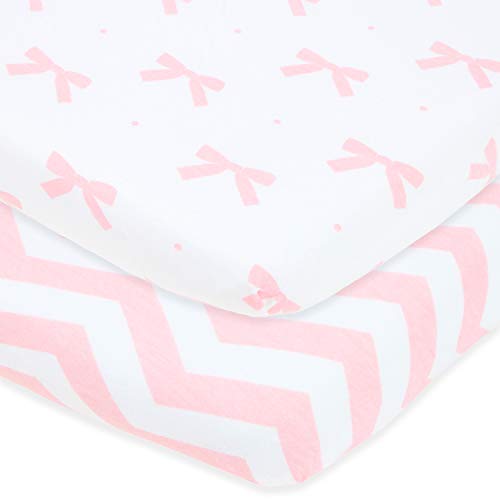
Chicco Bassinet Fitted Sheets, Soft Jersey Cotton, Pink, 2 Pack
$25.99
- Unmatched Softness: These sheets are crafted with only the softest jersey cotton, providing a gentle, cozy environment for your baby.
- Perfect Fit: Specifically designed for Chicco models, they stay securely in place, preventing any slips that could disturb your baby's sleep.
- Noisy-Free Nights: Unlike many other bassinet sheets, these are quiet and breathable, ensuring a peaceful sleeping space for both baby and parents.
- Convenient 2-Pack: With two sheets included, you can easily manage laundry while ensuring your baby always has a fresh, clean surface.
- Lifetime Replacement Promise: With a commitment to quality, these sheets come with a promise that they won’t pill, stain, or lose their softness, or they will be replaced for life.

Chicco LullaGo Anywhere Portable Bassinet
$79.99
- Lightweight Design: At just 12 pounds, the LullaGo Anywhere is ultra-lightweight, making it easy to move from room to room or take on trips.
- Easy Setup: With sturdy metal legs that snap on quickly, you can set it up in seconds—perfect for those sleep-deprived moments.
- Compact and Portable: Folds flat and fits into an included carry bag, making it a breeze to travel with, whether you're heading to grandma's house or a weekend getaway.
- Safe Sleep Environment: The bassinet features a firm, flat sleep surface with a waterproof mattress and breathable mesh side panels for visibility and airflow.
- Handy Storage: A mesh storage pocket allows you to keep diapers or pacifiers conveniently within reach during late-night feedings.

HARPPA Cuddly Bassinet, 3 in 1 Bedside Sleeper with Mattress
$185.99
- Multi-functional Design: Easily converts between bedside, rocking, and standalone modes to suit your sleeping arrangement.
- Height Adjustable: Features 5 adjustable heights to fit various bed sizes, ensuring a secure fit and reducing the risk of gaps.
- Breathable Mesh Sides: Equipped with breathable mesh for optimal airflow, helping to regulate your baby's temperature throughout the night.
- Sturdy Construction: Built with a robust triangular structure and aluminum frame, plus anchor straps and locking wheels for stability and safety.
- Comfortable Mattress: Comes with a soft cotton mattress that supports your baby's spine, promoting healthy sleep posture.

Joey + Joan Bassinet Fitted Sheets 19" x 32" - 2 Pack
$26.99
- Ultimate Softness: Crafted from 100% jersey cotton, these sheets are so soft that they rival your own hugs, perfect for snuggling up your newborn.
- Custom Fit: Designed for select models like the Cowiewie bedside sleeper, these sheets won't slip off, giving you peace of mind while your baby sleeps.
- Breathable Design: Unlike noisy, synthetic sheets, these breathable cotton sheets promote airflow, keeping your baby comfortable without overheating.
- Easy Care: Machine washable and tumble dry friendly, these sheets maintain their softness and vibrant patterns even after multiple washes.
- Lifetime Assurance: Joey + Joan stand behind their product, promising a lifetime replacement guarantee if you're not completely satisfied.
As an Amazon Associate we earn from qualifying purchases. We only recommend products we'd use ourselves — we're never paid for placement.
Angela's Recommended Resources
Guides and courses I personally recommend:
Most Popular
Baby Sleep Miracle
Proven gentle method to help your baby sleep through the night naturally. No cry-it-out, science-backed.
* Affiliate links. We may earn a commission at no extra cost to you.