- Angela’s Picks
- Shop by Age
- Shop by Category
- Shop by Values
- Montessori Toys
- Sensory Toys
- Teething Toys
- Wooden Toys
- Educational Toys
- Stacking & Sorting Toys
- Baby Bottles
- Sippy Cups
- Plates & Bowls
- Bibs
- Baby Utensils
- Deals
- High Chairs
- Breastfeeding & Nursing
- Snack Containers
- Crib Mattresses
- Bassinets
- Sleep Sacks & Swaddles
- Baby Blankets
- Baby Monitors
- Cribs & Nursery Furniture
- Baby Shampoo & Wash
- Baby Lotion & Oil
- Baby Sunscreen
- Bath Tubs & Seats
- Towels & Washcloths
- Diaper Cream & Balm
- Eco-Friendly Diapers
- Baby Wipes
- Potty Training
- Changing Pads
- Cloth Diapers
- Baby Thermometers
- Baby Proofing
- Baby Gates
- Humidifiers
- First Aid & Grooming
- Onesies & Bodysuits
- Sleepers & Pajamas
- Hats & Mittens
- Nursing Pads
- Breast Pumps & Accessories
- Postpartum Care
Is Zinc Oxide Safe for Babies? An Honest Guide for Parents

Quick Answer
Is zinc oxide safe for babies? Yes — here’s the honest, non-alarmist breakdown of diaper cream, mineral sunscreen & how to use it right.
If you’ve ever flipped over a tube of diaper cream or mineral sunscreen and paused at the ingredient list, you’re in good company. One name shows up again and again, and it tends to raise the same question in every parent’s mind: is zinc oxide safe for babies? The short, reassuring answer is yes — zinc oxide is generally considered very safe for babies, and it’s the ingredient pediatricians and dermatologists reach for first when it comes to diaper rash and sun protection.
Here’s why it earns that trust. Zinc oxide is a mineral that works by sitting on top of the skin rather than soaking into it. It forms a gentle physical barrier that shields delicate skin from moisture, friction, and the sun’s rays — and because it mostly stays on the surface, it isn’t absorbed into the body the way some other ingredients are. That surface-level, “shield-not-soak” behavior is exactly what makes it such a dependable choice for the softest, most sensitive skin in the house. The main thing to know: choose non-nano zinc oxide for creams and lotions, and avoid inhaling any spray or loose-powder form. Do those two things and you’re following the same guidance the experts do.
Let’s walk through the whole honest picture together — where you’ll find zinc oxide, why it’s so well regarded, and exactly how to put it to work.
Where Zinc Oxide Shows Up in Your Baby’s Routine
Once you know to look for it, you’ll spot zinc oxide all over the baby-care aisle. It tends to appear in three main places:
- Diaper rash cream. This is zinc oxide’s home turf. That thick, white paste you smooth on at changing time? Zinc oxide is almost always the active ingredient doing the protective work.
- Mineral (physical) sunscreen. When a sunscreen is labeled “mineral” or “physical,” zinc oxide is usually the star — sometimes paired with titanium dioxide. It sits on the skin and reflects and scatters UV rather than absorbing it.
- Barrier balms and multipurpose ointments. Some all-in-one balms use zinc oxide to soothe and protect against drool rash, minor chafing, and other everyday irritations.
One lovely bonus for values-driven families: zinc oxide is a naturally mineral-derived ingredient, which makes it inherently vegan-friendly. No animal-derived components required. If you’re comparing it to other popular barrier ingredients, our guide on whether beeswax is safe for babies is a helpful companion read.
Baby Sleep Miracle
Help baby sleep through the night naturally
Get It →The Safety Picture: Why Experts Prefer It
Let’s get into why zinc oxide has such a solid reputation — because “experts like it” is only reassuring when you understand the reasoning behind it.
It works as a barrier, not a chemical reaction
The whole appeal of zinc oxide is how simple it is. It’s a physical blocker. On a bottom, it puts a protective layer between skin and the wetness that causes rashes. On a sunny day, it forms a shield that reflects UV rays away. Because it works physically rather than through a chemical reaction with the skin, it’s far less likely to sting, irritate, or trigger a reaction — which is a big reason it’s so often recommended for newborns and babies with sensitive skin.
The nano vs. non-nano question, explained honestly
Here’s the one nuance worth understanding, because you’ll see “non-nano” on labels and wonder if it matters. Zinc oxide comes in two particle sizes. Non-nano particles are larger and are widely considered to stay on the surface of the skin. Nano particles are much smaller.
For creams and lotions you smooth on, this distinction is mostly about peace of mind — choosing non-nano is the conservative, belt-and-suspenders pick many parents prefer. Where the nano conversation genuinely matters is inhalation: you don’t want to breathe in fine airborne particles. That’s why the practical rule is simple — favor non-nano creams and lotions, and steer clear of spray sunscreens and loose powders around your baby’s face, where breathing them in is a real possibility. A cream you rub on with your hands sidesteps that concern entirely.
Why it’s often preferred over chemical alternatives
For sun protection especially, mineral zinc oxide is frequently the go-to recommendation for babies over chemical sunscreen filters. The barrier action is gentle, it starts working the moment it’s applied, and it’s a well-understood, long-trusted ingredient. When you’re shopping for sun protection specifically, our roundup of the best non-toxic baby sunscreen options walks through mineral picks that fit these criteria.
How to Use Zinc Oxide for Diaper Rash
Diaper rash is where most families first meet zinc oxide, so let’s make sure you’re getting the most out of it. A few simple habits go a long way:
- Start with a clean, dry bottom. Gently clean the area and let it air-dry (or pat it dry) before applying. Trapping moisture under the cream works against you.
- Apply a generous layer. Unlike a lotion you rub all the way in, a zinc oxide barrier cream is meant to sit visibly on top of the skin. A nice even coat is doing its job precisely because you can still see it.
- Reapply at each change. Smooth on a fresh layer with every diaper change while a rash is healing, so the skin stays protected from moisture around the clock.
- Use it preventively, too. Many parents apply a thin barrier layer before bedtime or long stretches in a diaper to head off irritation before it starts.
If a rash is severe, blistering, bleeding, or simply not improving after a few days of consistent care, check in with your pediatrician — occasionally a rash needs more than a barrier cream. For the full playbook on soothing and heading off irritation, our guide to diaper rash treatment and prevention covers everything from causes to daily routines.
A quick, friendly note: this article is here to inform, not to replace personalized medical advice. Your pediatrician knows your baby best, so lean on them for any specific concerns about your little one’s skin.
Below are the zinc-oxide diaper creams and barrier balms that passed our screen.
Browse our vetted diaper creams & barrier balms →
Zinc-Oxide Diaper Creams That Passed Our Screen
| Product | Best For | Price | |
|---|---|---|---|
| Bumco Diaper Cream Spatula - BPA-Free Flexible Applicator | Best Overall | $6.99 | View |
| Earth Mama Nipple Butter & Diaper Balm Bundle | Best Value | $27.59 | View |
| Desitin Maximum Strength Baby Diaper Rash Cream | Editor's Pick | $7.97 | View |
| Boudreaux's Butt Paste Diaper cream | Great Choice | $4.89 | View |
| A+D Original Diaper Rash Ointment 4 Oz | Great Choice | $5.47 | View |
| Desitin Maximum Strength Diaper Rash Cream, 40% Zinc | Great Choice | $8.03 | View |
BEST OVERALL 
Bumco Diaper Cream Spatula - BPA-Free Flexible Applicator
$6.99
- Mess-Free Application: The original mom-invented design keeps your hands clean, eliminating the sticky mess that typically comes with applying diaper cream.
- Soft & Gentle: Made from soft, flexible silicone, this spatula is gentle enough for your baby's delicate skin, ensuring comfort with every use.
- Convenient Suction Base: The built-in suction cup keeps the spatula upright on any flat surface, preventing it from tipping over and getting dirty during diaper changes.
- Perfect Size: At 6.25 inches, it fits comfortably in your hand and easily scoops from any diaper cream jar, making it a must-have for on-the-go parents.
- Easy to Clean: Simple to rinse off or wipe down after each use, this spatula promotes hygiene and convenience during busy diaper changes.
BEST VALUE 
Earth Mama Nipple Butter & Diaper Balm Bundle
$27.59
- Organic Ingredients: Both the nipple butter and diaper balm are made with USDA Certified Organic ingredients, ensuring that you’re using only the best for your family.
- Multi-Purpose Use: The Nipple Butter isn’t just for breastfeeding; it can also be applied to dry lips or cuticles, while the Diaper Balm works wonders on baby’s bum and even on adult skin irritations.
- EWG Verified: Parents can rest easy knowing that the Diaper Balm is EWG Verified, indicating it meets high safety standards for skincare products.
- Free from Worrisome Additives: Neither product contains petroleum, preservatives, or artificial fragrances, making it an excellent choice for sensitive skin.
- Gift-Ready Bundle: This set makes a thoughtful gift for expecting moms, perfect for baby registries or hospital bags.
EDITOR'S PICK 
Desitin Maximum Strength Baby Diaper Rash Cream
$7.97
- Maximum Strength Protection: With a clinically proven formula that protects for up to 12 hours, Desitin ensures your baby's skin stays safeguarded against moisture and irritation.
- 5-in-1 Action: This cream treats, heals, protects, soothes, and helps prevent diaper rash, giving you visible healing and tangible relief for your little one.
- Immediate Relief: The rich texture of the paste forms a protective barrier on the skin, offering instant comfort for chafed areas.
- Hypoallergenic Formula: Free from parabens, phthalates, and dyes, Desitin is dermatologist-tested and pediatrician-approved, making it gentle enough for everyday use.
- Convenient Application: Easy to apply, this cream can be used as often as needed, especially during extended periods in wet diapers.
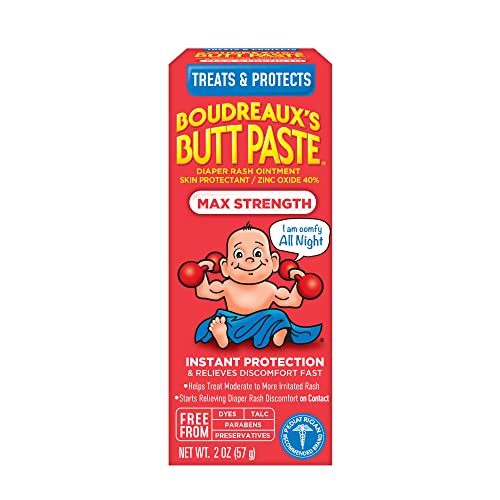
Boudreaux's Butt Paste Diaper cream
$4.89
- Fast Relief: Clinically tested to provide rapid relief from the discomfort of diaper rash, helping to soothe your baby’s skin.
- Long-Lasting Protection: Its thick consistency seals out moisture, keeping your baby’s skin dry and protected, even overnight.
- Gentle on Skin: Free from parabens, dyes, preservatives, and talc, this cream is designed to be gentle for sensitive skin.
- Effective Formula: With over twice the rash-fighting ingredient compared to the Original Butt Paste, it’s perfect for treating moderate to irritated diaper rash.
- Pediatrician Recommended: Trusted by parents and healthcare professionals alike, this cream is highly regarded for its effectiveness.

A+D Original Diaper Rash Ointment 4 Oz
$5.47
- Pediatrician Recommended: Endorsed by pediatricians, ensuring a trusted choice for sensitive skin.
- Effective Barrier: Forms a thick layer that seals out wetness, effectively preventing diaper rash.
- Multi-Use Benefits: Beyond diaper rash, it can soothe chapped skin, cracked lips, and even dry feet.
- Gentle and Non-Greasy: Smooth application that spreads evenly without leaving a greasy residue.
- Time-Tested Formula: With over 80 years of trusted use, it has been a staple in family care routines.

Desitin Maximum Strength Diaper Rash Cream, 40% Zinc Oxide
$8.03
- Fast Relief: Clinically shown to relieve diaper rash discomfort, with 90% of babies experiencing noticeable improvement within 12 hours.
- Long-Lasting Protection: Provides a protective barrier that seals out wetness for up to 12 hours, ensuring your little one stays comfortable.
- 5-in-1 Action: Treats, heals, protects, soothes, and prevents diaper rash, delivering comprehensive care for delicate skin.
- Gentle Formula: Hypoallergenic and free from parabens, phthalates, dyes, and soap, making it safe for daily use on sensitive skin.
- Pediatrician Recommended: Trusted by parents and healthcare professionals alike, it’s the #1 choice for diaper rash care.
As an Amazon Associate we earn from qualifying purchases. We only recommend products we'd use ourselves — we're never paid for placement.
Frequently Asked Questions
Is zinc oxide diaper cream safe?
Yes. Zinc oxide diaper cream is widely considered safe for babies and is one of the most trusted, commonly recommended options for treating and preventing diaper rash. It works as a protective barrier on the surface of the skin, so it isn’t meaningfully absorbed. Apply a generous, visible layer at changing time, and you’re using it exactly as intended.
Is nano zinc oxide safe for babies?
For creams and lotions you smooth onto the skin, many parents opt for non-nano zinc oxide as the more conservative choice, and it’s easy to find. The bigger, well-founded caution around nano particles is about inhaling them — so the practical takeaway is to choose non-nano creams and avoid spray or loose-powder products near your baby’s face, where breathing in fine particles is possible.
Can I use zinc oxide sunscreen on a baby?
Mineral zinc oxide sunscreen is often the preferred sun-protection choice for babies because it forms a gentle physical barrier rather than relying on chemical filters. That said, for infants under 6 months, the standard guidance is to prioritize shade and protective clothing and to talk with your pediatrician before regular sunscreen use. For older babies, a non-nano mineral cream (not a spray) is a great pick.
Does zinc oxide need to be rubbed all the way in?
Not for diaper cream — just the opposite. A zinc oxide barrier cream is designed to sit visibly on top of the skin, so a slightly white, even coat means it’s doing its job. For mineral sunscreen, rub it in until the skin is evenly covered (a light cast is normal and fine), and remember to reapply after water or sweat.
Here’s the bottom line, friend: zinc oxide is one of those rare ingredients that’s both time-tested and genuinely gentle. Choose non-nano creams, skip the sprays and powders around little faces, and you can smooth it on with real confidence — whether you’re soothing a sore bottom or heading out into the sunshine. You’ve got this.
Angela's Recommended Resources
Guides and courses I personally recommend:
Most Popular
Baby Sleep Miracle
Proven gentle method to help your baby sleep through the night naturally. No cry-it-out, science-backed.
* Affiliate links. We may earn a commission at no extra cost to you.