- Angela’s Picks
- Shop by Age
- Shop by Category
- Shop by Values
- Montessori Toys
- Sensory Toys
- Teething Toys
- Wooden Toys
- Educational Toys
- Stacking & Sorting Toys
- Baby Bottles
- Sippy Cups
- Plates & Bowls
- Bibs
- Baby Utensils
- Deals
- High Chairs
- Breastfeeding & Nursing
- Snack Containers
- Crib Mattresses
- Bassinets
- Sleep Sacks & Swaddles
- Baby Blankets
- Baby Monitors
- Cribs & Nursery Furniture
- Baby Shampoo & Wash
- Baby Lotion & Oil
- Baby Sunscreen
- Bath Tubs & Seats
- Towels & Washcloths
- Diaper Cream & Balm
- Eco-Friendly Diapers
- Baby Wipes
- Potty Training
- Changing Pads
- Cloth Diapers
- Baby Thermometers
- Baby Proofing
- Baby Gates
- Humidifiers
- First Aid & Grooming
- Onesies & Bodysuits
- Sleepers & Pajamas
- Hats & Mittens
- Nursing Pads
- Breast Pumps & Accessories
- Postpartum Care
Are Essential Oils Safe for Babies? A Calm, Honest Guide

Quick Answer
Are essential oils safe for babies? Not always — learn which oils to avoid, safe dilution, diffusing cautions, and gentler age-by-age choices.
Are essential oils safe for babies? The honest answer is: it depends, and “natural” does not automatically mean “safe for infants.” Essential oils are highly concentrated plant extracts, and a tiny bottle can hold the aromatic power of a huge amount of plant material. On delicate baby skin and developing airways, that concentration is exactly what makes them tricky. So before you diffuse anything in the nursery or dab an oil on a fussy little one, it’s worth slowing down and getting the facts.
Here’s the short version I give friends: for young babies, the simplest safe choice is to skip essential oils entirely. Never use them undiluted on skin, and never, ever give them by mouth. Several common oils — peppermint, eucalyptus, wintergreen, rosemary, and camphor among them — are widely advised against for babies and young children because of potential breathing risks. If oils are used at all, they’re generally reserved for older babies, in very heavy dilution, with a pediatrician’s guidance, and only gentler options like lavender or chamomile. When in doubt, fragrance-free wins.
I’m Angela, and I spend my days vetting baby products for exactly these kinds of questions. I’m not here to scare you — essential oils aren’t villains — but babies aren’t small adults, and their bodies handle concentrated botanicals very differently than ours do. Let’s walk through why, calmly and clearly.
Why Concentration Is the Real Issue
The thing that trips people up is the word “natural.” Essential oils are natural, sure — but they’re also intensely concentrated. It can take pounds of leaves, flowers, or peel to produce a single small bottle. What you’re holding is not a mild herbal tea; it’s the plant’s aromatic compounds distilled down to their most potent form.
That matters for babies for a few reasons. Their skin is thinner and more permeable than adult skin, so more of whatever you apply can be absorbed. Their airways and lungs are still developing. And their bodies are less equipped to process and clear concentrated compounds. An amount of oil that feels like “barely anything” to an adult can be a meaningful dose for a newborn.
This is why the two hardest rules exist: never apply essential oils undiluted (“neat”) to a baby’s skin, and never ingest them. Undiluted oils can irritate or sensitize delicate skin, and swallowing essential oils is genuinely dangerous for little ones. If a product tells you to put drops directly on a baby or into a bottle, that’s a red flag, not a shortcut.
Oils to Avoid for Babies
Some essential oils are singled out again and again by pediatric and safety sources as ones to keep away from babies and young children. The main concern with this group is breathing: certain oils contain compounds that can affect a young child’s airways, and in infants that’s not a risk worth taking.
- Peppermint — commonly cautioned against for babies and toddlers due to breathing concerns.
- Eucalyptus — frequently flagged for the same reason; popular in adult “chest rub” products that aren’t made for infants.
- Wintergreen — contains a compound related to a common pain reliever and is widely considered unsafe for young children.
- Rosemary — often listed among oils to avoid for babies.
- Camphor — strong, medicinal, and repeatedly advised against for infants and small children.
This isn’t an exhaustive list, and it’s a great example of why “plant-based” alone can’t be your safety filter. A useful habit: if you can’t confirm an oil is appropriate for your baby’s age, treat it as a “not yet.” And keep in mind that many mainstream vapor rubs and congestion products are formulated for adults or older kids, so the label age really does matter.
Diffusing and Topical Cautions
Diffusing feels gentle because nothing touches the skin, but it still puts aromatic compounds into the air your baby breathes — and airways are exactly where the biggest concerns live. For newborns and young infants, the widely shared guidance is simple: it’s generally best to avoid diffusing essential oils around them altogether.
If you do diffuse in a home with an older baby, the common-sense precautions matter. Keep it brief rather than running a diffuser for hours. Use a well-ventilated room, never a small closed nursery. Keep the diffuser and every oil bottle far out of reach — curious hands and swallowed oils are a real emergency risk. And watch your baby: coughing, wheezing, fussiness, or any change in breathing is your cue to stop and get fresh air.
For topical use, dilution is everything, and for babies it needs to be very heavy dilution in a plant-based carrier oil (think fractionated coconut, sweet almond, or jojoba — skip anything animal-derived). Never apply oils near a baby’s face, nose, mouth, or hands, since that’s where they can migrate into eyes or get licked off. Always patch-test a tiny diluted amount on one small spot first and wait to see how the skin responds. If any redness or irritation shows up, wipe it off with a plain carrier oil and stop.
Safer Choices by Age
Age is the biggest factor in this whole conversation. Here’s the simple framework I keep coming back to.
- Newborns and young infants: the safest path is no essential oils at all — not on skin, not in a diffuser. Fragrance-free is genuinely the easiest “safe” button here.
- Older babies: if you choose to use oils, stick to gentler options such as lavender or chamomile, in very heavy dilution with a plant-based carrier, kept away from the face, and only after checking with your pediatrician.
- Any age: never undiluted, never ingested, never near the eyes or hands, and always patch-test first.
Honestly, the least stressful move for most families is to lean fragrance-free for baby’s skin and save the aromatherapy for grown-up spaces. If you’re curious about why added scent gets so much scrutiny in the first place, my breakdown on whether fragrance in baby products is safe is a good next read. And if you’d rather just skip the guesswork, our roundups of the best organic baby skincare and the best non-toxic baby lotion are built around gentle, simple ingredient lists.
Below are the gentle, fragrance-free baby skincare picks that passed our screen.
Gentle, Fragrance-Free Baby Skincare
| Product | Best For | Price | |
|---|---|---|---|
| NIVEA Soothing Baby Lotion | Best Overall | $6.41 | View |
| Babo Botanicals Sensitive Baby Mineral Sunscreen Lotion SPF | Best Value | $19.00 | View |
| Eucerin Baby Body Lotion, Hypoallergenic, 13.5 Fl Oz | Editor's Pick | $11.79 | View |
| Coppertone Kids Roll On Sunscreen Lotion SPF 50, | Great Choice | $9.99 | View |
| Coppertone WaterBabies Baby Sunscreen Lotion SPF 50, 8 | Great Choice | $8.88 | View |
| Noodle & Boo Super Soft Moisturizing Lotion | Great Choice | $20.00 | View |
BEST OVERALL 
NIVEA Soothing Baby Lotion
$6.41
- Non-greasy formula: Absorbs quickly without leaving a sticky residue, making it easy to apply during diaper changes or after bath time.
- Hydrating ingredients: Formulated to provide long-lasting moisture, helping to combat dryness and maintain skin's natural softness.
- Dermatologically tested: Safe for sensitive skin, giving parents peace of mind when applying to their baby.
- Soothing properties: Infused with skin-loving ingredients that help calm irritation and redness, perfect for post-bath pampering.
- Gentle scent: Offers a light, fresh fragrance that is not overpowering, keeping your baby smelling delightful.
BEST VALUE 
Babo Botanicals Sensitive Baby Mineral Sunscreen Lotion SPF 50
$19.00
- Water-Resistant Protection: Provides up to 80 minutes of coverage against water and sweat, perfect for beach days or splashes in the pool.
- Fragrance-Free Formula: Ideal for babies with sensitive skin, minimizing the risk of irritation caused by added scents.
- Mineral-Based Safety: Contains zinc to naturally shield against UVA and UVB rays, without the use of oxybenzone or octinoxate.
- Dermatologist Tested: Clinically evaluated to reduce the risk of allergic reactions, making it a safe choice for the most sensitive skin.
- B Corp Certified: Manufactured in the USA with a commitment to environmental sustainability and social responsibility.
EDITOR'S PICK 
Eucerin Baby Body Lotion, Hypoallergenic, 13.5 Fl Oz
$11.79
- Daily Moisturization: The lotion is perfect for everyday use, helping to maintain your baby’s skin hydration and softness.
- Gentle Formulation: Enriched with Pro-Vitamin B5 and natural Shea Butter, it provides nurturing care without the worry of irritants.
- Hypoallergenic: Designed specifically for sensitive skin, this lotion minimizes the risk of allergic reactions.
- Convenient Pump Design: The easy-to-use pump bottle allows for quick dispensing, making application a breeze during busy diaper changes.
- Trusted Brand: Eucerin is recommended by dermatologists and pediatricians, ensuring you choose a brand that prioritizes your baby’s skin health.

Coppertone Kids Roll On Sunscreen Lotion SPF 50, 2.5 Fl Oz
$9.99
- Fun Application: The bright blue color allows children to see where they've applied sunscreen, ensuring full coverage and making the application process entertaining.
- Effective Protection: With SPF 50 and broad-spectrum UVA/UVB protection, parents can trust that their child's delicate skin is protected from harmful sun rays.
- Easy to Use: The roll-on applicator makes it simple for kids to self-apply (with supervision), promoting independence while keeping mess to a minimum.
- Tear-Free Formula: No stinging or tears during application, making it ideal for the sensitive skin of babies and toddlers.
- Water Resistant: Staying effective for up to 80 minutes in water, this sunscreen is perfect for beach days, pool parties, or backyard splash sessions.

Coppertone WaterBabies Baby Sunscreen Lotion SPF 50, 8 Fl Oz
$8.88
- Broad Spectrum Protection: Shields your baby's delicate skin from up to 98% of UVA and UVB rays, keeping them safe during outdoor adventures.
- Water Resistant: Lasts through water play, remaining effective for up to 80 minutes, so your little swimmer can splash around freely.
- Hypoallergenic Formula: Designed with your baby's sensitive skin in mind, this sunscreen is hypoallergenic, minimizing the risk of irritation.
- Pediatrician Recommended: Trust in a product that comes from the #1 pediatrician-recommended sunscreen brand, ensuring a reliable choice for sun protection.
- Easy Application: The smooth lotion formula glides on easily, making it a breeze to apply and reapply when needed.
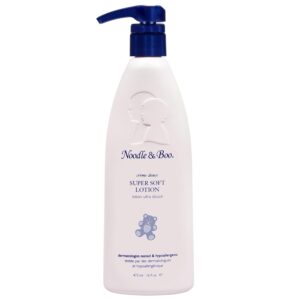
Noodle & Boo Super Soft Moisturizing Lotion
$20.00
- Delivers rich hydration, ensuring your baby's skin remains supple and moisturized throughout the day.
- Crafted from non-toxic, organic ingredients for safe, worry-free application.
- Features a light, soothing scent that adds a calming ritual to your baby's skincare routine.
- Perfect for daily use, making it a staple in your baby care arsenal.
- Absorbs quickly without leaving a greasy residue, ideal for busy parents.
As an Amazon Associate we earn from qualifying purchases. We only recommend products we'd use ourselves — we're never paid for placement.
Frequently Asked Questions
Can I diffuse lavender oil around my newborn?
For newborns and young infants, the common guidance is to avoid diffusing essential oils, even lavender. Their airways are still developing, and fragrance-free air is the lower-risk choice. If you want to try it with an older baby, keep sessions short, ventilate the room well, keep the diffuser out of reach, and ask your pediatrician first.
Which essential oils should I never use on a baby?
Peppermint, eucalyptus, wintergreen, rosemary, and camphor are commonly advised against for babies and young children, mostly over breathing concerns. This isn’t a complete list, so if you can’t confirm an oil is appropriate for your baby’s age, treat it as a no for now.
Are essential oils ever okay on baby skin?
Sometimes, for older babies, with a gentle oil in very heavy dilution using a plant-based carrier, kept away from the face and hands, and only after a patch test. They should never be applied undiluted or given by mouth. When in doubt, a plain fragrance-free product is the simplest safe option.
What carrier oil is best for diluting?
Choose a plant-based carrier such as fractionated coconut, sweet almond, or jojoba oil. Avoid anything animal-derived. The carrier’s job is to dramatically dilute the essential oil so it’s far gentler on delicate skin, and to give you an easy way to wipe everything off if irritation appears.
This article is for general information and isn’t medical advice; always check with your pediatrician before using essential oils on or around your baby.
If all of this feels like a lot, remember the reassuring part: you don’t have to master essential oil safety to take wonderful care of your baby. “Fragrance-free and simple” is a completely valid, loving choice — and often the calmest one. Trust your instincts, keep the concentrated stuff out of reach, and lean on gentle basics. You’ve got this, and I’m always here helping you sort the genuinely safe from the merely “natural.” Browse our vetted bath and skincare picks whenever you’re ready.