- Angela’s Picks
- Shop by Age
- Shop by Category
- Shop by Values
- Montessori Toys
- Sensory Toys
- Teething Toys
- Wooden Toys
- Educational Toys
- Stacking & Sorting Toys
- Baby Bottles
- Sippy Cups
- Plates & Bowls
- Bibs
- Baby Utensils
- Deals
- High Chairs
- Breastfeeding & Nursing
- Snack Containers
- Crib Mattresses
- Bassinets
- Sleep Sacks & Swaddles
- Baby Blankets
- Baby Monitors
- Cribs & Nursery Furniture
- Baby Shampoo & Wash
- Baby Lotion & Oil
- Baby Sunscreen
- Bath Tubs & Seats
- Towels & Washcloths
- Diaper Cream & Balm
- Eco-Friendly Diapers
- Baby Wipes
- Potty Training
- Changing Pads
- Cloth Diapers
- Baby Thermometers
- Baby Proofing
- Baby Gates
- Humidifiers
- First Aid & Grooming
- Onesies & Bodysuits
- Sleepers & Pajamas
- Hats & Mittens
- Nursing Pads
- Breast Pumps & Accessories
- Postpartum Care
Is Aquaphor Safe for Babies? An Honest, Fair Look

Quick Answer
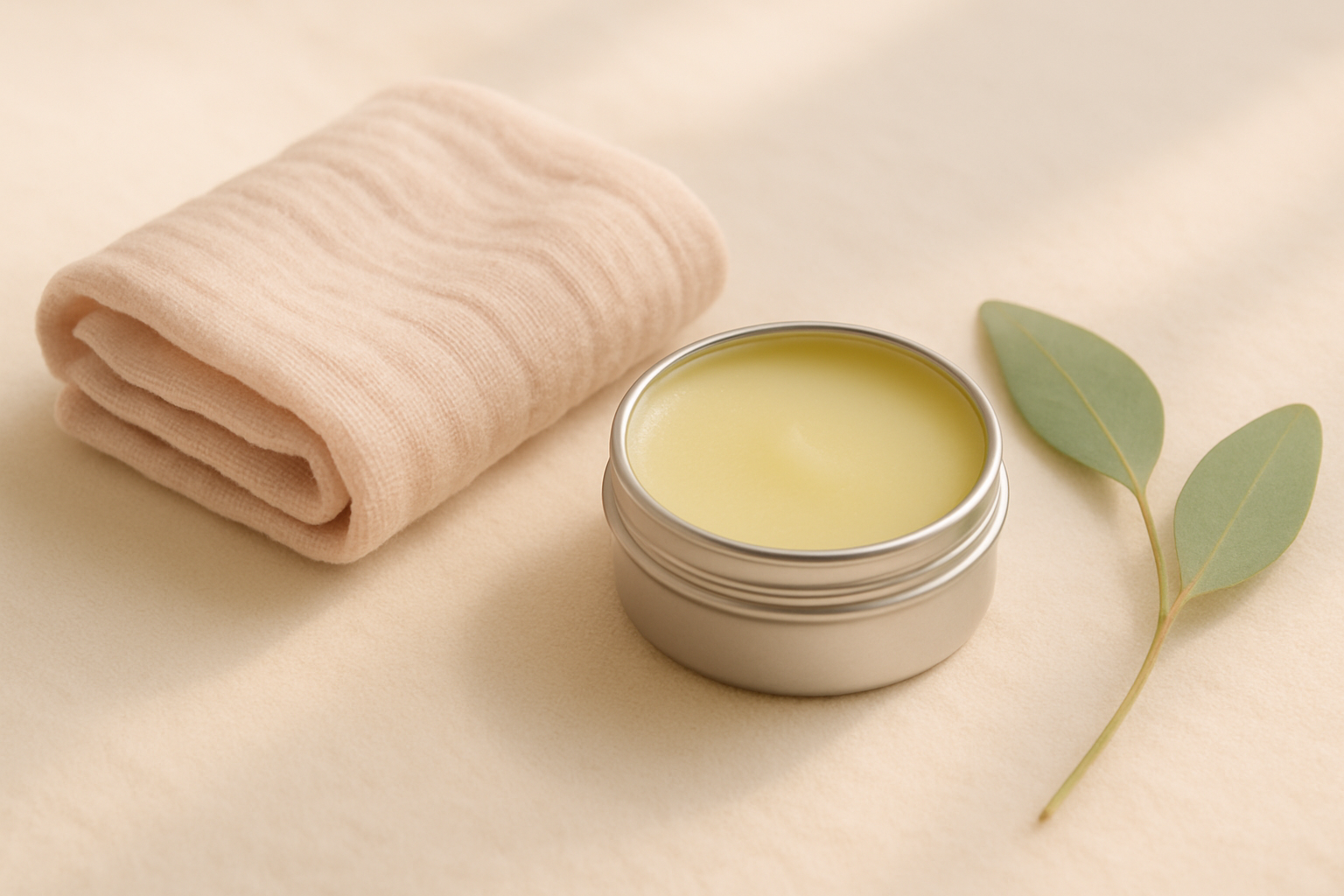
Is Aquaphor safe for babies? Yes, it’s generally considered safe and pediatrician-recommended—plus the honest nuances and vegan alternatives.
If you’ve been staring at that little blue tube wondering is Aquaphor safe for babies, here’s the short, honest answer: yes, Aquaphor is generally considered safe for babies, and it’s one of the products pediatricians and dermatologists reach for most often when a little one has dry patches, chapped cheeks, or an irritated diaper area. It works as an occlusive barrier—basically a breathable seal that locks moisture in and keeps friction and wetness out—which is exactly what fragile baby skin often needs.
That said, I like to give you the whole picture, not just the headline. There are a few honest nuances worth knowing. Aquaphor is petroleum-derived (its main ingredient is refined petrolatum), which some families prefer to avoid on principle. Some formulations also contain lanolin, a sheep-derived ingredient, so it’s not vegan-labeled—always check the current label if that matters to you. And if you’d rather skip petroleum entirely, there are lovely plant-based balms that do a similar job. None of that makes Aquaphor “bad.” It just means you get to choose what fits your family. Let’s walk through it together.
What an Occlusive Barrier Actually Does
“Occlusive” is a fancy word for a simple idea: a barrier that sits on top of the skin and slows water from evaporating out of it. Petrolatum—the refined petroleum jelly at the heart of Aquaphor and plain products like it—is one of the most effective occlusives we have. It doesn’t soak in and it doesn’t “feed” the skin with actives. Instead, it forms a protective layer that gives the skin’s own barrier a chance to recover underneath.
For babies, that’s genuinely useful in a handful of everyday situations:
Children Learning Reading
Simple phonics program, 15 min/day
Get It →- Dry, flaky skin. A thin layer over clean, slightly damp skin helps hold moisture in where the air has pulled it out.
- Wind- and cold-chapped cheeks. Winter walks and dry indoor heat are hard on little faces. A barrier ointment shields those exposed spots.
- The diaper area. An occlusive layer keeps wetness from sitting directly against the skin, which is why barrier ointments are a diaper-bag staple.
- Rough patches and minor scrapes. Keeping a small area covered and comfortable while it heals is exactly what these ointments are built for.
If your baby is dealing with recurring dry, itchy, inflamed patches rather than the occasional rough spot, that can point to something more specific like eczema. It’s worth understanding the difference—our guide on baby eczema causes, triggers, and treatment breaks it down, and for anything persistent or worsening, loop in your pediatrician.
Is Aquaphor Safe for Babies? The Honest Safety Picture
Here’s where a little context helps a lot. Petroleum jelly has a slightly scary-sounding backstory—yes, it’s derived from petroleum—and that origin is what makes some parents pause. But the version used in cosmetic and skincare products is highly refined, and that refining step is the whole story.
The concern you may have read about relates to unrefined or poorly refined petrolatum, which can carry impurities. The cosmetic-grade, USP-refined petrolatum used in well-known baby ointments is purified to strip those out. In that refined form, petrolatum is considered inert—it sits on the skin rather than being absorbed into the body—which is a big part of why it has such a long, well-documented track record and why so many dermatologists and pediatricians recommend it, including for newborns and sensitive skin.
A few honest, non-alarmist points to round out the picture:
- It’s fragrance-free. That’s a real plus for baby skin, since added fragrance is a common irritant. If you want to go deeper on why, we cover it in is fragrance in baby products safe.
- Ingredients vary by formulation. The classic healing ointment and the baby-specific versions aren’t always identical, and formulas can change over time. The label on the tube in your hand is always the source of truth.
- Patch-test with anything new. Even gentle products can occasionally not agree with a particular baby. A small test spot for a day is a simple habit worth keeping.
- When in doubt, ask. For broken skin, spreading rashes, or anything that isn’t improving, your pediatrician’s guidance beats any general article—including this one.
So, is Aquaphor safe for babies? For most families, used as directed on intact skin, it’s a reasonable, well-regarded choice. The reasons a family might look elsewhere are usually about preference—not a safety alarm.
The Vegan & Petroleum-Free Angle
Now for the part that matters to a lot of the families I write for. Two things keep Aquaphor off the plant-based shelf:
- It’s petroleum-derived. Completely safe in its refined form, but if your household leans toward renewable, plant-sourced ingredients, petrolatum simply isn’t that.
- Some formulas contain lanolin. Lanolin is a wax from sheep’s wool. It’s a wonderful emollient for many people, but it’s an animal-derived ingredient, so a lanolin-containing product isn’t vegan. (Not every Aquaphor product contains it—so, once more, check the current label.)
The good news is that plant-based balms have come a long way, and many do the same occlusive, moisture-sealing job beautifully. When you’re reading labels, look for rich butters and plant waxes doing the heavy lifting, such as:
- Shea butter and cocoa butter — deeply moisturizing plant fats that soften and protect.
- Candelilla wax and carnauba wax — plant-derived waxes that give a balm its protective, sealing structure (the vegan stand-ins for beeswax).
- Plant oils like sunflower, jojoba, or coconut, which add slip and nourishment.
A quick, honest note from our vetting process: some “natural” baby balms use beeswax or lanolin, which are animal-derived—so “natural” and “vegan” aren’t the same thing. If a fully plant-based routine is your goal, the wax on the ingredient list is the detail to check. For a broader starting point, our roundup of the best organic baby skincare is a good companion to this guide.
Whichever way you go, the goal is the same: a calm, protected, comfortable little one. Aquaphor can absolutely get you there. So can a well-made plant-based balm. It comes down to what feels right for your family’s values. Below are the vegan, petroleum-free balms that passed our screen.
Vegan, Petroleum-Free Balms We Love
| Product | Best For | Price | |
|---|---|---|---|
| Aquaphor Baby Healing Ointment, 14 Oz Jar | Best Overall | $19.99 | View |
| A+D Original Diaper Rash Ointment 4 Oz | Best Value | $5.47 | View |
| A+D Original Diaper Rash Ointment - 4 Oz | Editor's Pick | $14.47 | View |
| Aquaphor Baby Healing Ointment, 7 Oz Tube | Great Choice | $13.59 | View |
| Manhattan Toy Folklore Plush Luna Moth Baby Travel | Great Choice | $19.99 | View |
| Bumco Diaper Cream Spatula - BPA-Free Flexible Applicator | Great Choice | $6.99 | View |
BEST OVERALL 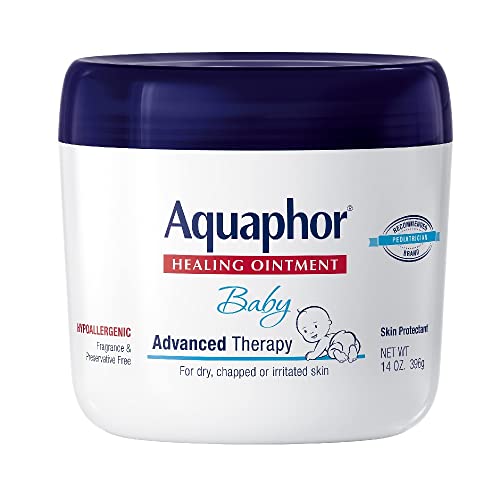
Aquaphor Baby Healing Ointment, 14 Oz Jar
$19.99
- Multipurpose Care: Ideal for treating diaper rashes, dry skin, and even chapped lips, making it a staple in your baby's skincare routine.
- Soothes Irritation: Specifically formulated to calm and heal irritated skin caused by teething, drool, or other sources of discomfort.
- Prevents Diaper Rash: Acts as a barrier against moisture and acidity, safeguarding delicate skin from rashes before they start.
- No Harsh Additives: Completely free from fragrances and preservatives, perfect for little ones with sensitive skin.
- Parent-Friendly: Parents can also enjoy its benefits, using it to hydrate dry hands, cracked heels, or cuticles.
BEST VALUE 
A+D Original Diaper Rash Ointment 4 Oz
$5.47
- Pediatrician Recommended: Endorsed by pediatricians, ensuring a trusted choice for sensitive skin.
- Effective Barrier: Forms a thick layer that seals out wetness, effectively preventing diaper rash.
- Multi-Use Benefits: Beyond diaper rash, it can soothe chapped skin, cracked lips, and even dry feet.
- Gentle and Non-Greasy: Smooth application that spreads evenly without leaving a greasy residue.
- Time-Tested Formula: With over 80 years of trusted use, it has been a staple in family care routines.
EDITOR'S PICK 
A+D Original Diaper Rash Ointment - 4 Oz
$14.47
- Pediatrician-Recommended: Endorsed by healthcare professionals for over 80 years, parents can trust A+D to deliver effective results.
- Vitamin-Enriched Protection: Contains vitamins A and D, which are known for their skin-soothing and moisturizing properties.
- Thick Barrier Formula: Unlike typical creams, it forms a durable barrier to seal out wetness, significantly reducing the risk of diaper rash.
- Multi-Use Ointment: Not just for diaper rashes; it can soothe chapped skin, cracked lips, and even dry feet.
- Easy to Use: Its smooth, non-greasy texture spreads easily and absorbs quickly, making application a breeze.

Aquaphor Baby Healing Ointment, 7 Oz Tube
$13.59
- Clinically proven to heal and protect, offering a trusted solution for everyday skin issues.
- Acts as a preventative barrier against diaper rash, keeping your baby’s skin safe from wetness and irritation.
- Ideal for use on other dry areas, including hands, cracked heels, and chapped lips, making it a multi-purpose product for the whole family.
- Gentle enough for the most sensitive skin, ensuring peace of mind for health-conscious parents.
- Convenient 7 oz tube size fits perfectly in diaper bags or purses for on-the-go relief.

Manhattan Toy Folklore Plush Luna Moth Baby Travel Toy
$19.99
- Brightly colored, high-contrast design that captures baby’s attention and encourages visual tracking.
- Features crinkle paper and a gentle rattle to stimulate auditory senses and promote cause-and-effect learning.
- Includes a baby-secure mirror, allowing for self-discovery and interactive play.
- Conveniently attaches to strollers and car seats with a hook-and-loop strap, making it easy to take on-the-go.
- Natural wooden teething ring provides a safe and satisfying option for sore gums.

Bumco Diaper Cream Spatula - BPA-Free Flexible Applicator
$6.99
- Mess-Free Application: The original mom-invented design keeps your hands clean, eliminating the sticky mess that typically comes with applying diaper cream.
- Soft & Gentle: Made from soft, flexible silicone, this spatula is gentle enough for your baby's delicate skin, ensuring comfort with every use.
- Convenient Suction Base: The built-in suction cup keeps the spatula upright on any flat surface, preventing it from tipping over and getting dirty during diaper changes.
- Perfect Size: At 6.25 inches, it fits comfortably in your hand and easily scoops from any diaper cream jar, making it a must-have for on-the-go parents.
- Easy to Clean: Simple to rinse off or wipe down after each use, this spatula promotes hygiene and convenience during busy diaper changes.
As an Amazon Associate we earn from qualifying purchases. We only recommend products we'd use ourselves — we're never paid for placement.
Frequently Asked Questions
Is Aquaphor safe for a baby’s face?
Generally, yes—a thin layer of a fragrance-free barrier ointment is a common way to protect chapped cheeks, dry patches, and the area around the nose during cold or windy weather. Keep it to a light layer, avoid the eyes, and steer clear of broken or infected skin. If my baby’s face is red, weepy, or not improving, that’s a cue to check with the pediatrician rather than keep experimenting.
Is Aquaphor safe for diaper rash?
It’s frequently used as a protective barrier in the diaper area to keep moisture off irritated skin, and many pediatricians are comfortable recommending it for everyday prevention and mild irritation. For a stubborn, raw, or blistering rash—or one with a yeast component—a dedicated zinc-oxide cream or a doctor’s guidance may serve better, since a plain occlusive alone may not be enough. When in doubt, ask.
Is Aquaphor vegan?
No—Aquaphor isn’t vegan-labeled. It’s petroleum-based, and some formulations include lanolin, which comes from sheep’s wool. If a fully plant-based product is what you’re after, look for a balm built on shea or cocoa butter with candelilla or carnauba wax instead, and check the current label to confirm.
Is there a plant-based alternative that works as well?
For everyday dryness and chapping, a well-formulated plant-based balm—think rich butters plus a plant wax like candelilla—can protect and soften just as nicely. The trade-off is that petrolatum is an exceptionally strong, predictable occlusive, so for very severe dryness some families still reach for it. Try a plant-based option for daily use and see how your baby’s skin responds; you can always adjust.
A Warm Word to Close
Here’s what I hope you take away: Aquaphor is a safe, trusted, effective option, and choosing a plant-based balm instead is an equally valid, values-driven choice—not a safety upgrade. Both can keep your baby’s skin soft and protected. You’re not choosing between “safe” and “unsafe;” you’re choosing what fits your home. Read the label that’s actually in your hand, patch-test new things, and lean on your pediatrician for anything that looks off. You’ve got this.
This article is for general informational purposes and isn’t medical advice. Product formulations change, so always read the current label, and talk with your pediatrician or a qualified professional about your baby’s specific skin needs. Ready to shop the plant-based picks? Explore our bath & skincare collection.
Angela's Recommended Resources
Guides and courses I personally recommend:
Children Learning Reading
Phonics-based reading program for young children. Simple 15-minute daily lessons that work.
* Affiliate links. We may earn a commission at no extra cost to you.