- Angela’s Picks
- Shop by Age
- Shop by Category
- Shop by Values
- Montessori Toys
- Sensory Toys
- Teething Toys
- Wooden Toys
- Educational Toys
- Stacking & Sorting Toys
- Baby Bottles
- Sippy Cups
- Plates & Bowls
- Bibs
- Baby Utensils
- Deals
- High Chairs
- Breastfeeding & Nursing
- Snack Containers
- Crib Mattresses
- Bassinets
- Sleep Sacks & Swaddles
- Baby Blankets
- Baby Monitors
- Cribs & Nursery Furniture
- Baby Shampoo & Wash
- Baby Lotion & Oil
- Baby Sunscreen
- Bath Tubs & Seats
- Towels & Washcloths
- Diaper Cream & Balm
- Eco-Friendly Diapers
- Baby Wipes
- Potty Training
- Changing Pads
- Cloth Diapers
- Baby Thermometers
- Baby Proofing
- Baby Gates
- Humidifiers
- First Aid & Grooming
- Onesies & Bodysuits
- Sleepers & Pajamas
- Hats & Mittens
- Nursing Pads
- Breast Pumps & Accessories
- Postpartum Care
Best Wooden Toys for 1 Year Old: What Actually Matters at 12–18 Months

Quick Answer
The best wooden toys for 1 year olds match new skills like stacking, pushing & posting. What to look for at 12-18 months, plus safe non-toxic finishes.
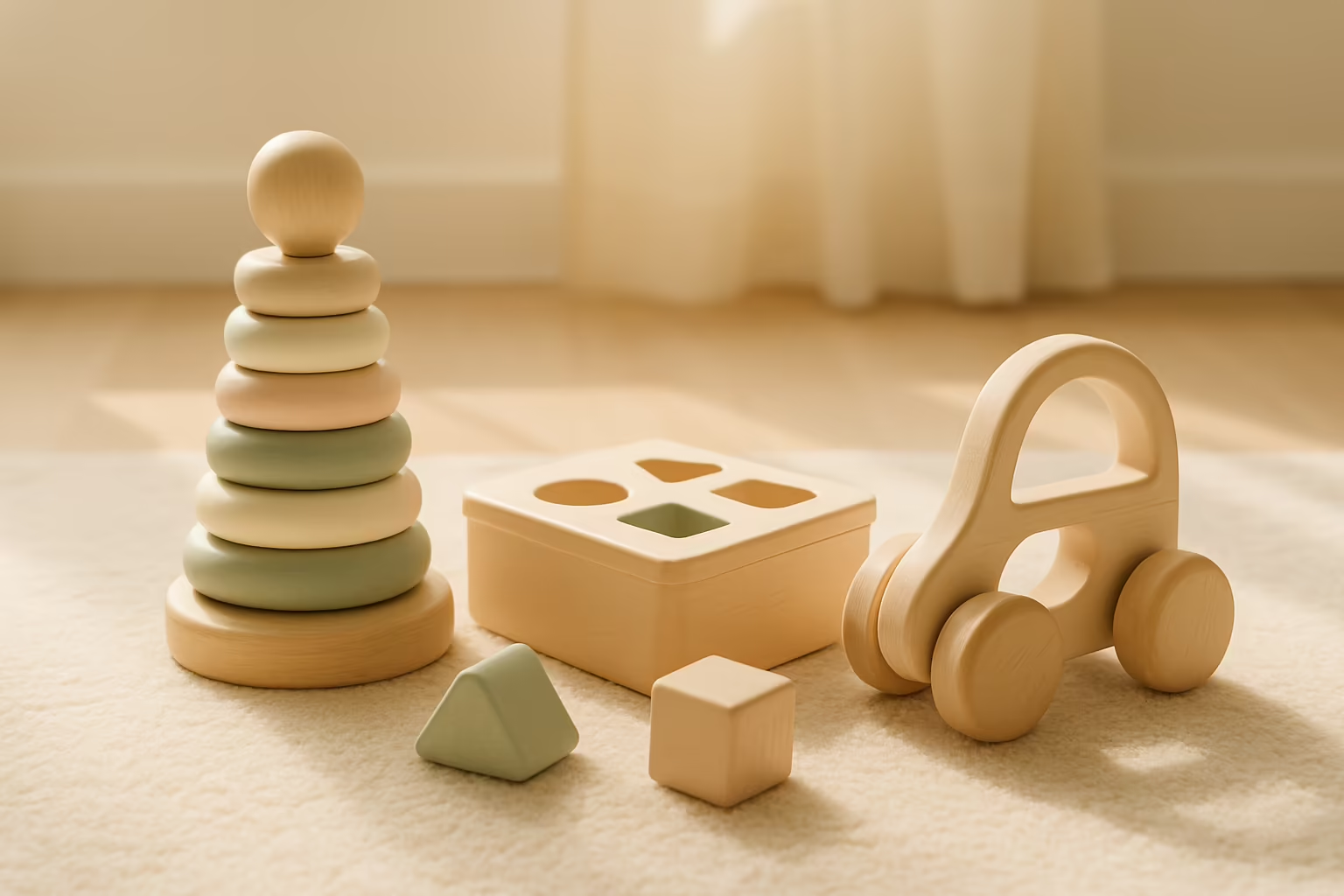
If you’re hunting for the best wooden toys for 1 year old play, here’s the short answer: at 12–18 months, the toys that earn their keep are the ones that match the skills your little one is actively building right now. That means stacking toys and wooden rings, shape sorters, sturdy push toys, posting boxes (anything with a hole your child can drop something into), and the very first sparks of pretend play, like a simple wooden car or a little drum to bang on.
And because everything still goes straight into the mouth at this age, the materials matter just as much as the play value. Look for solid wood (not glued-together composite), water-based or food-safe non-toxic finishes, smooth splinter-free edges, and pieces too big to swallow, generally nothing smaller than about 1.75 inches across.
That’s really it. You don’t need a playroom full of blinking, singing plastic. A handful of well-made wooden toys, chosen to match where your child actually is developmentally, will get more use than a mountain of stuff that does the playing for them. I’m Angela Grace, founder and lead product researcher here at 1 Stop Baby, and vetting toys like these is genuinely my favorite part of the job. In this guide I’ll walk you through what’s happening in that busy one-year-old brain, which wooden toy types map to each new skill, and exactly what to check before anything goes in your cart. You can browse everything that passed our screen in our wooden toys collection whenever you’re ready.
What’s Actually Happening at 12–18 Months
One is a wild age, in the best way. Somewhere in this window, most babies go from cruising along the couch to taking real steps, and suddenly the whole house is theirs. At the same time, that little pincer grasp (thumb and forefinger working together) is getting precise enough to pick up small objects on purpose, turn them over, and place them somewhere specific.
Two other things kick into high gear around now. The first is a full-blown cause-and-effect obsession: I do this, and that happens. Drop the spoon, someone picks it up. Push the ball, it rolls. One-year-olds will run that experiment fifty times in a row, and it’s not stubbornness, it’s science. The second is early imitation. Your child is watching everything you do and starting to copy it: stirring, sweeping, talking on a “phone.” That’s the doorway into pretend play.
The best wooden toys for 1 year old development lean directly into these four things: new mobility, a more precise grip, cause-and-effect testing, and imitation. Here’s how the classic toy types line up.
Children Learning Reading
Simple phonics program, 15 min/day
Get It →The Wooden Toy Types That Earn Their Place
Stackers & Ring Towers
The classic ring-on-a-peg stacker is popular for a reason: it works that pincer grasp, hand-eye coordination, and early size sequencing all at once. At 12 months, expect a lot of taking rings off before putting them on becomes interesting. Both are legitimate play. Chunky stacking cubes and simple wooden blocks belong in this category too, because knocking down a tower you built is peak cause-and-effect joy.
Shape Sorters & Posting Boxes
Around this age, kids develop a delightful obsession with posting: putting objects into holes, slots, and containers. A simple posting box (one hole, one chunky shape) is actually better for a young one-year-old than a complex sorter with six shapes, which tends to frustrate before 15–18 months. Start simple and let the challenge grow with them.
Push Toys & Wooden Walkers
For a new or almost-walker, a weighted wooden push walker (the kind with a handle and a wagon or activity front) is one of the best purchases you can make. Here’s my honest take on the walker-versus-seated-activity-center question: a push walker lets your child power their own movement, build balance, and stop when their body says stop. Seated activity centers keep babies contained and entertained, which has its moments for a caregiver who needs two free hands, but they don’t build walking skills, and the AAP has long encouraged families to skip mobile seated walkers entirely for safety reasons. If you’re choosing one, choose the push walker, and look for one that’s weighted or has adjustable wheel resistance so it doesn’t scoot away faster than a wobbly walker can follow.
Simple Wooden Vehicles
A chunky wooden car or truck, big enough to grip with a whole fist, is often a first pretend-play toy. Push it, make the “vroom” sound, and watch your child copy you within days. Skip anything with tiny wheels or parts that could work loose.
First Instruments
A wooden xylophone, a small drum, or a pair of maracas is cause-and-effect in its purest form: I hit this, sound happens, and I made it happen. Instruments also invite back-and-forth play with you, which matters more for language development at this age than any “educational” feature a toy can claim.
Object Permanence Boxes
This Montessori classic is a small box with a hole on top and a tray: drop the ball in, it disappears, then rolls back out. It sounds almost too simple, and that’s exactly why one-year-olds love it. It confirms, over and over, that things still exist when they vanish, which is a genuinely big idea when you’re one.
Why Wood Beats Plastic at This Age (Mostly)
I want to be honest here rather than dogmatic: plastic toys are not evil, and some are wonderful. But at 12–18 months specifically, wood has real advantages. Mouthing hasn’t stopped yet, so a solid hardwood toy with a water-based finish gives you a simpler, more knowable material than mystery plastic. Wood is durable enough to survive being thrown (and it will be thrown), and it holds up for younger siblings and hand-me-downs. The sensory weight of wood also gives little hands more feedback than lightweight plastic, which helps kids calibrate their movements.
And then there’s the battery question. A toy that lights up and sings does the entertaining for your child. A wooden stacker does nothing until your child acts on it, which means the thinking, the experimenting, and the delight all come from them. That’s not nostalgia talking; it’s just where the developmental work happens.
The Safety Screen: What I Check Before Anything Makes Our Shop
When I vet wooden toys for 1 year old use, every candidate has to clear the same checklist. Use it yourself anywhere you shop:
- Solid wood, not composite. MDF and glued composites can contain adhesives you don’t want in a mouthing toy, and they chip more easily.
- Water-based or food-safe non-toxic finish. Paints and sealants should be explicitly labeled non-toxic; unfinished or oil-finished hardwood is also a great option.
- No small parts. Nothing smaller than about 1.75 inches in any dimension, and no beads, knobs, or wheels that could detach.
- Smooth, splinter-free edges. Run your hand over every surface. Well-made wooden toys feel sanded and rounded everywhere.
- Real safety testing. Look for ASTM F963 (the U.S. toy safety standard) or EN 71 (the European one) on the listing or packaging.
If you want the deeper version of this checklist, including what those standards actually cover, our non-toxic toys safety guide walks through all of it in plain English.
A Quick Word About “Montessori” Toys
You’ll see “Montessori” stamped on a lot of listings, so let’s clear this up: Montessori is a philosophy, not a brand, and nobody owns the label. In practice, a genuinely Montessori-aligned toy for this age does three things: it isolates one skill at a time (a stacker teaches stacking, not stacking plus lights plus the alphabet), it favors realistic objects over fantasy ones, and it lets the child lead, with no buttons deciding what happens next. Most of the wooden toy types above fit naturally, which is why the two overlap so much. If you want age-by-age guidance, my roundup of the best Montessori toys by age goes deeper, and you can shop the aligned picks in our Montessori toys collection.
So that’s the framework: match the toy to the skill, insist on solid wood and safe finishes, and let your child do the thinking. Below are the wooden picks that passed our screen.
Wooden Picks That Passed Our Screen
| Product | Best For | Price | |
|---|---|---|---|
| Montessori Wooden Musical Instruments Set | Best Overall | $36.99 | View |
| Wooden Dinosaur Train Set | Best Value | $21.99 | View |
| Melissa & Doug Wooden Toy Barn Playset | Editor's Pick | $35.99 | View |
| Silicone Teething Toy with Wooden Ring | Great Choice | $6.39 | View |
| Adena Montessori 5 in 1 Wooden Play Kit | Great Choice | $33.89 | View |
| Wooden Toy Set for Infants | Great Choice | $26.95 | View |
BEST OVERALL 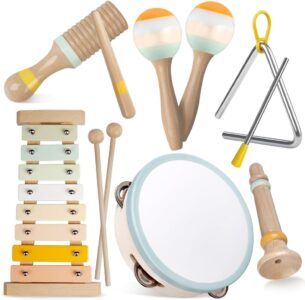
Montessori Wooden Musical Instruments Set
$36.99
- Promotes Fine Motor Skills: Each instrument encourages children to develop their hand-eye coordination and dexterity through interactive play.
- Nurtures Musical Talent: The variety of instruments helps cultivate a child’s rhythm and musical sensitivity from an early age.
- Safe for Little Hands: Crafted from 100% BPA-free and non-toxic materials, ensuring peace of mind during play.
- Elegant Neutral Aesthetics: The natural wood and soft colors make these toys a beautiful addition to any nursery or playroom.
- Encourages Parent-Child Bonding: Playing together fosters meaningful interactions and strengthens relationships through shared musical experiences.
BEST VALUE 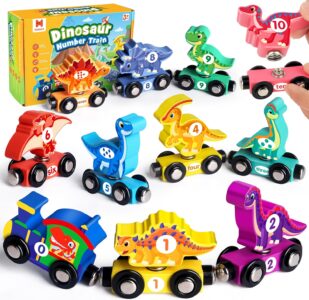
Wooden Dinosaur Train Set
$21.99
- Encourages early math skills: Each train car features numbers 0-10, paired with adorable dinosaur figures, fostering number recognition and counting.
- Boosts fine motor development: The magnetic connections and snap assembly promote hand-eye coordination and dexterity in little hands.
- Supports imaginative play: Kids can create their own dino adventures while enhancing problem-solving skills through matching and connecting.
- Montessori-inspired learning: This versatile toy aligns with educational principles, making it perfect for sensory play and developing cognitive abilities.
- Durable and safe: Crafted from high-quality wood with smooth edges, this set is built to withstand toddler play while ensuring a safe experience.
EDITOR'S PICK 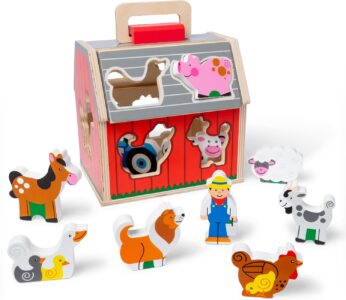
Melissa & Doug Wooden Toy Barn Playset
$35.99
- **Skill Development**: With 10 chunky wooden animals and a farmer, children can enhance their shape recognition, sorting, and matching skills while having fun.
- **Imaginative Play**: Kids can create their own farm adventures, acting out stories with the included characters, which boosts their creativity and narrative skills.
- **Portable Fun**: The barn’s built-in handle and flip-up roof make it easy to take on the go, allowing for screen-free play anywhere.
- **Durable Design**: Crafted from sturdy wood, these toys are designed to withstand the rigors of active play, making them a long-lasting addition to your child’s toy collection.
- **Social Interaction**: Perfect for group playdates, this set encourages sharing and teamwork as kids join in on the fun together.
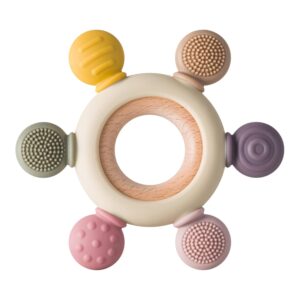
Silicone Teething Toy with Wooden Ring
$6.39
- Soft silicone texture gently massages sore gums, providing instant relief to your teething baby.
- The natural wooden ring offers a sturdy grip, making it easy for tiny hands to hold.
- Stylish khaki color complements modern nursery aesthetics while remaining functional.
- Made from eco-friendly materials, giving peace of mind to health-conscious parents.
- Lightweight and portable, perfect for on-the-go soothing during outings or travels.
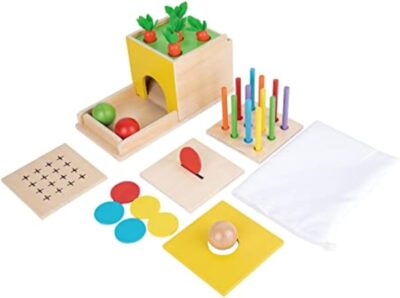
Adena Montessori 5 in 1 Wooden Play Kit
$33.89
- Multi-faceted Learning: This kit includes an Object Permanence Box and four other interactive games that promote cognitive skills and sensory experiences.
- Fine Motor Skill Development: Each activity is designed to enhance hand-eye coordination and fine motor skills through playful exploration.
- Color Recognition: Engaging with the vibrant colors in the games helps children learn to identify and match colors, enriching their visual development.
- Safe Design: Crafted with rounded edges and splinter-free wood, these toys are safe for little hands to explore without worry.
- Convenient Storage: The foldable storage box and drawstring bag help keep the play area tidy and make clean-up a breeze.
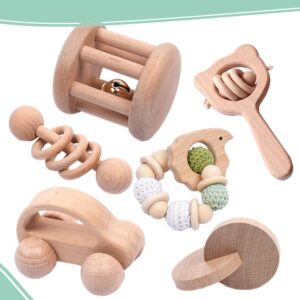
Wooden Toy Set for Infants
$26.95
- Stimulates sensory development with a variety of textures and delightful bells, keeping your baby intrigued and engaged.
- Promotes essential motor skills through interactive rattles and push car designs that encourage movement and exploration.
- Encourages imaginative play, allowing your little explorer to create their own adventures right from the start.
- Made with eco-friendly materials that align with your values while providing safe play for your baby.
- A favorite among health-conscious moms, this toy set is designed to foster a safe, nurturing play environment.
As an Amazon Associate we earn from qualifying purchases. We only recommend products we'd use ourselves — we're never paid for placement.
Frequently Asked Questions
How many toys does a 1 year old actually need?
Fewer than you’d think. A small rotation of six to eight toys out at a time is plenty; when everything is available at once, kids tend to flit rather than settle into deep play. Store the rest and swap a few in when interest fades. Old toys feel brand new again, and you buy less overall.
Are wooden toys really better than plastic?
“Better” depends on the toy, not just the material. A well-made wooden toy beats most plastic at this age on durability, simplicity of materials for mouthing, and open-ended play. But a poorly finished wooden toy with chipping paint is worse than a solid, safety-tested plastic one. Judge each toy on construction, finish, and testing, and wood will simply win that comparison most of the time.
What finish is safe on wooden toys?
Look for water-based paints and stains labeled non-toxic, or food-safe oils and waxes on unpainted wood (we screen for plant-based options at 1 Stop Baby). Since one-year-olds still mouth their toys, the finish is as important as the wood itself. If a listing won’t tell you what the finish is, that’s your answer: move on.
Is a wooden push walker safe for a baby who isn’t walking yet?
Yes, once your child can pull up to standing on their own. A weighted push walker supports babies who are cruising and almost-walking; it moves only when they push it, unlike the mobile seated walkers safety experts recommend skipping. Just supervise near stairs and start on carpet or a rug, where the wheels roll a little slower.
Whichever toys you choose, remember that you are still the best plaything your one-year-old has ever met. A simple wooden toy, a patch of floor, and your attention: that’s the whole recipe.
Angela's Recommended Resources
Guides and courses I personally recommend:
Children Learning Reading
Phonics-based reading program for young children. Simple 15-minute daily lessons that work.
* Affiliate links. We may earn a commission at no extra cost to you.