- Angela’s Picks
- Shop by Age
- Shop by Category
- Shop by Values
- Montessori Toys
- Sensory Toys
- Teething Toys
- Wooden Toys
- Educational Toys
- Stacking & Sorting Toys
- Baby Bottles
- Sippy Cups
- Plates & Bowls
- Bibs
- Baby Utensils
- Deals
- High Chairs
- Breastfeeding & Nursing
- Snack Containers
- Crib Mattresses
- Bassinets
- Sleep Sacks & Swaddles
- Baby Blankets
- Baby Monitors
- Cribs & Nursery Furniture
- Baby Shampoo & Wash
- Baby Lotion & Oil
- Baby Sunscreen
- Bath Tubs & Seats
- Towels & Washcloths
- Diaper Cream & Balm
- Eco-Friendly Diapers
- Baby Wipes
- Potty Training
- Changing Pads
- Cloth Diapers
- Baby Thermometers
- Baby Proofing
- Baby Gates
- Humidifiers
- First Aid & Grooming
- Onesies & Bodysuits
- Sleepers & Pajamas
- Hats & Mittens
- Nursing Pads
- Breast Pumps & Accessories
- Postpartum Care
Screen-Free Toys by Age: The Non-Toxic Developmental Guide

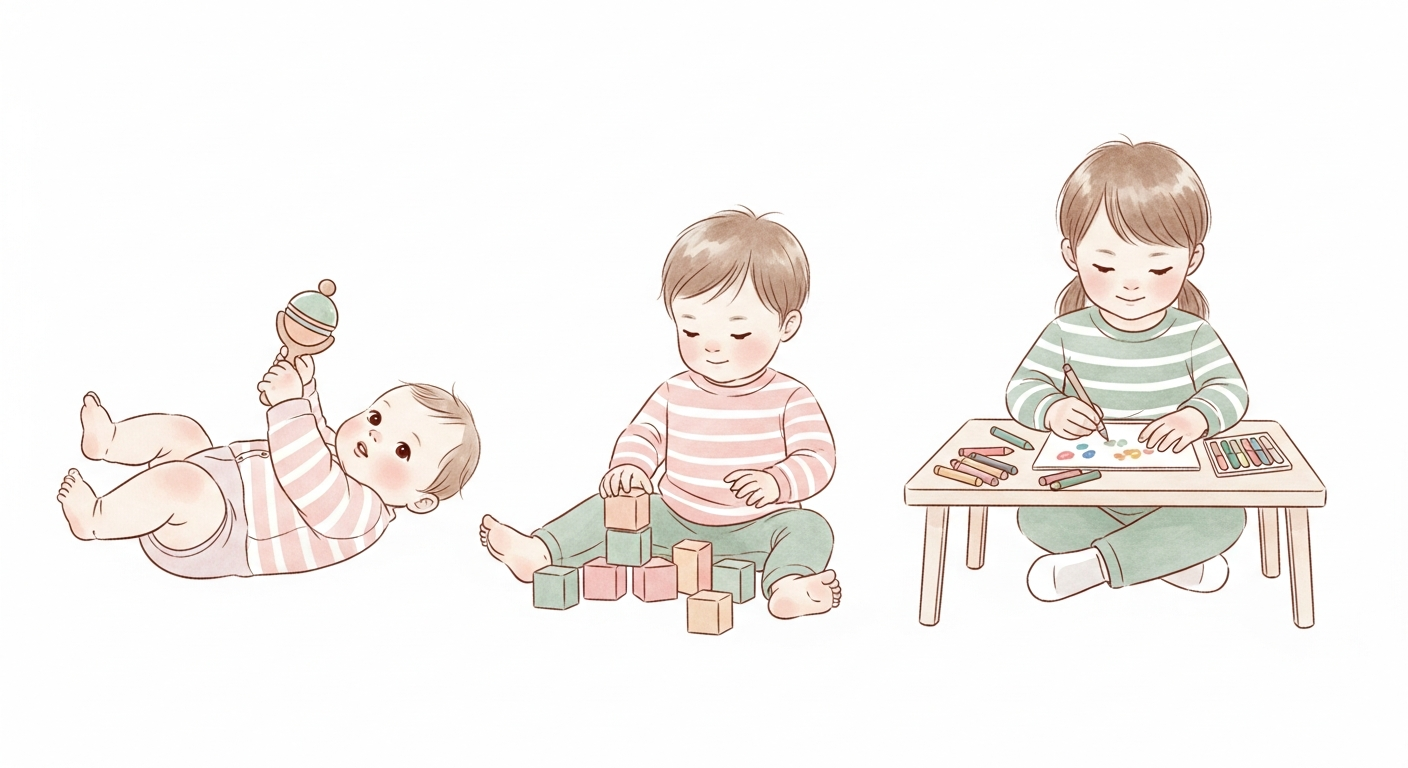
Quick Answer
The best screen-free, non-toxic toys organized by age and developmental stage. Natural materials, open-ended play, zero batteries required.
Updated for 2025. All products independently researched. Some links are affiliate links — we earn a small commission at no cost to you.
In 2025, the average toddler is exposed to screens for over 3 hours a day. Meanwhile, developmental research consistently shows that hands-on, open-ended play with physical objects builds neural pathways that screens simply cannot replicate. Add in the chemical concerns with many mass-produced plastic toys, and there’s a strong case for going screen-free AND non-toxic with your toy choices.
Here’s our age-by-age guide to the best toys that use natural materials, encourage developmental milestones, and require zero batteries or wifi.
0-3 Months: Sensory Foundations
At this age, babies are building basic sensory awareness: contrast vision, sound localization, and grasping reflexes.
- High-contrast cards — Black and white pattern cards (Wee Gallery, $13). Newborns can only see 8-12 inches and respond strongest to high contrast.
- Organic cotton rattle — Under Nile or Apple Park organic rattles ($12-15). Lightweight enough for tiny hands, safe for mouthing.
- Wooden play gym — Finn + Emma or Lovevery play gym. Natural wood frame with organic hanging toys. GREENGUARD certified options available.
3-6 Months: Grasping & Mouthing
Everything goes in the mouth now. Material safety is critical.
- Maple wood teether — Finished with food-grade beeswax or coconut oil ($6-10). Harder than silicone, which actually helps emerging teeth.
- Organic muslin cloths — Doubles as comfort object, peekaboo toy, and teething cloth. Aden + Anais organic ($14/4-pack).
- Silicone stacking rings — Mushie stacking rings ($18). Food-grade silicone, no paint, no small parts.
- Fabric ball — Under Nile organic cotton ball ($12). Light, graspable, can’t hurt anyone or anything.
6-12 Months: Cause & Effect
Babies discover they can make things happen. Object permanence develops. Crawling opens up spatial exploration.
- Wooden stacking cups — Grapat or Grimm’s nesting bowls ($20-28). Water-based, non-toxic dyes. Infinite stacking, sorting, and pretend play possibilities.
- Ball drop toy — PlanToys ball drop ($25). Sustainable rubberwood, water-based finishes. Teaches cause and effect without batteries.
- Wooden shape sorter — Lovevery or Hape shape sorter ($15-25). FSC-certified wood, water-based paint.
- Board books — Wee Gallery or Indestructibles series. Chew-proof, rip-proof, non-toxic inks.
1-2 Years: Movement & Language
- Push walker — Hape Wonder Walker ($65). Solid wood, non-toxic finishes, activity panel without electronics.
- Beeswax crayons — Stockmar beeswax crayons ($18-22). Made from beeswax and food-grade pigments. Block shape perfect for toddler grip.
- Wooden blocks — Maple Landmark or Melissa & Doug natural blocks ($15-25). The classic toy for a reason — spatial reasoning, physics, creativity.
- Play kitchen food — PlanToys fruit and vegetable sets ($15-20). Rubberwood with water-based paint. Pretend play explodes at this age.
2-5 Years: Imagination & Social Play
- Grimm’s Rainbow — The iconic wooden rainbow ($45-80). Open-ended play: bridges, tunnels, fences, people, anything a child imagines.
- Kinetic sand — Made from natural sand with a silicone-based polymer. Mess-contained sensory play.
- Magna-Tiles — BPA-free, phthalate-free, lead-free magnetic tiles ($40-120). STEM learning through play.
- Play silks — Sarah’s Silks ($12-18). 100% silk with plant-based dyes. Becomes a cape, a tent, a river, a princess gown — whatever the child needs it to be.
Materials to Avoid in Toys
- PVC/vinyl — Common in bath toys, inflatable toys, and cheap plastic figures. Contains phthalates and chlorine.
- Painted toys from unknown brands — Lead paint is still found in imported toys. Stick to brands that test and disclose.
- Foam/EVA puzzle mats — Many contain formamide. If you use them, air them out for 2+ weeks before baby plays on them, or buy OEKO-TEX certified options.
- “Squishy” toys — Often made from polyurethane foam with questionable chemical treatments.
— Angela Grace
Screen-Free Play Picks
| Product | Best For | Price | |
|---|---|---|---|
| Organic Wooden Baby Toys Set | Best Overall | $26.99 | View |
| Montessori Shape Sorter Wooden Toy | 1 Stop | Best Value | $14.99 | View |
| DUMOS Wooden Baby Push Walker | 1 Stop | Editor's Pick | $55.99 | View |
| Joyreal Wooden Noah's Ark Toy for Kids | Great Choice | $36.99 | View |
| Montessori Wooden Shape Sorting Toys for Toddlers Age | Great Choice | $22.49 | View |
| Montessori Wooden Learning Toys | Great Choice | $25.99 | View |
BEST OVERALL 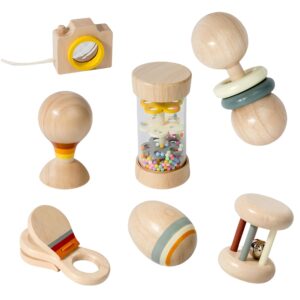
Organic Wooden Baby Toys Set
$26.99
- Engaging textures and sounds stimulate your baby’s sensory development.
- Montessori-inspired design encourages creativity, curiosity, and hands-on exploration.
- Made from sustainable wood, promoting eco-friendly playtime practices.
- Safe for teething, providing a gentle option for babies who are exploring their mouths.
- Creates wonderful bonding moments between parent and child during playtime.
BEST VALUE 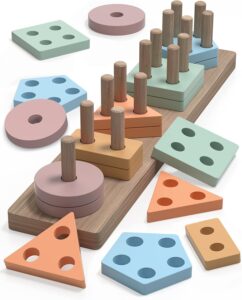
Montessori Shape Sorter Wooden Toy | 1 Stop Baby
$14.99
- Encourages fine motor skills: Chunky, easy-to-grasp pieces help enhance dexterity and hand-eye coordination.
- Promotes problem-solving: Sorting and stacking activities stimulate young minds and develop critical thinking.
- Color and shape recognition: With 5 vibrant colors and 5 distinct geometric shapes, children learn to identify and categorize as they play.
- Screen-free playtime: This engaging toy offers an alternative to screens, encouraging creativity and imaginative play.
- Safe and sturdy design: Built with durable materials and smooth edges, ensuring safe play for your little ones.
EDITOR'S PICK 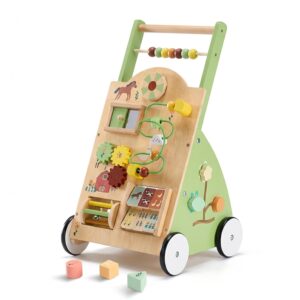
DUMOS Wooden Baby Push Walker | 1 Stop Baby
$55.99
- Encourages early walking skills while promoting balance and coordination.
- Adjustable speed feature that grows with your child’s confidence and abilities.
- Silent rubber wheels that glide smoothly, preserving the serenity of your home.
- Montessori-inspired design that fosters independence and creativity during play.
- Crafted from natural wood, ensuring a durable and long-lasting toy that can be passed down.
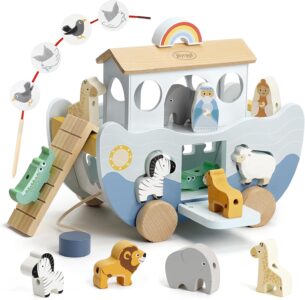
Joyreal Wooden Noah's Ark Toy for Kids
$36.99
- Complete Set: Includes intricately designed figurines of Noah and Naamah, 8 pairs of animals, and fun accessories like a ladder and rainbow, sparking endless storytelling possibilities.
- Faith-Based Learning: Encourages parents and children to act out the Noah's Ark story, helping teach moral values such as gratitude, kindness, and faith.
- Skill Development: Features built-in activities like sorting and stacking that enhance fine motor skills and hand-eye coordination, all while encouraging creativity.
- Gender-Neutral Design: The stylish, neutral tones and boho rainbow decor make it suitable for any child, seamlessly fitting into any nursery or playroom.
- Meaningful Gift: Perfect for special occasions, this toy combines educational value with spiritual significance, making it a thoughtful gift for baptisms, birthdays, and holidays.

Montessori Wooden Shape Sorting Toys for Toddlers Age 1-3
$22.49
- Encourages fine motor skill development through engaging shape sorting activities.
- Promotes color and shape recognition with colorful, appealing designs.
- Offers various play methods, including sorting, matching, and imaginative play.
- Supports social interaction as toddlers can enjoy playing together and build friendships.
- Crafted from high-quality wood with polished edges, ensuring a safe play experience.
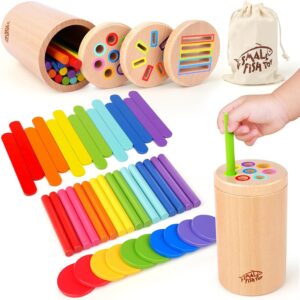
Montessori Wooden Learning Toys
$25.99
- Enhances Fine Motor Skills: The act of inserting colored wooden sticks into various holes promotes dexterity and hand-eye coordination.
- Encourages Color Recognition: With 16 vibrant sticks and 10 discs, toddlers can easily connect colors while they play.
- Promotes Spatial Awareness: The different shapes and stacking options help children develop their sense of direction and spatial concepts.
- Supports Imagination: The open-ended design allows for creative play, encouraging innovation and exploration.
- Easy to Organize and Transport: The canvas drawstring bag makes it convenient to carry to playdates or outings.
As an Amazon Associate we earn from qualifying purchases. We only recommend products we'd use ourselves — we're never paid for placement.
Angela's Recommended Resources
Guides and courses I personally recommend:
Children Learning Reading
Phonics-based reading program for young children. Simple 15-minute daily lessons that work.
* Affiliate links. We may earn a commission at no extra cost to you.