- Angela’s Picks
- Shop by Age
- Shop by Category
- Shop by Values
- Montessori Toys
- Sensory Toys
- Teething Toys
- Wooden Toys
- Educational Toys
- Stacking & Sorting Toys
- Baby Bottles
- Sippy Cups
- Plates & Bowls
- Bibs
- Baby Utensils
- Deals
- High Chairs
- Breastfeeding & Nursing
- Snack Containers
- Crib Mattresses
- Bassinets
- Sleep Sacks & Swaddles
- Baby Blankets
- Baby Monitors
- Cribs & Nursery Furniture
- Baby Shampoo & Wash
- Baby Lotion & Oil
- Baby Sunscreen
- Bath Tubs & Seats
- Towels & Washcloths
- Diaper Cream & Balm
- Eco-Friendly Diapers
- Baby Wipes
- Potty Training
- Changing Pads
- Cloth Diapers
- Baby Thermometers
- Baby Proofing
- Baby Gates
- Humidifiers
- First Aid & Grooming
- Onesies & Bodysuits
- Sleepers & Pajamas
- Hats & Mittens
- Nursing Pads
- Breast Pumps & Accessories
- Postpartum Care
When Do Babies Start Teething? Signs, Timeline & Natural Relief

Quick Answer
When do babies start teething? Learn the signs, full timeline, and safe, non-toxic relief options. No amber necklaces needed.
That first tooth is a milestone you’ll remember, mostly because of the sleepless nights that came with it. Teething typically starts between 4-7 months, but some babies get their first tooth as early as 3 months or as late as 12 months. All normal.
The Teething Timeline
Bottom central incisors come first (6-10 months), followed by upper central incisors (8-12 months), then lateral incisors, first molars, canines, and finally second molars around age 2-3. By age 3, most kids have all 20 baby teeth.
Real Teething Signs vs. Myths
Actual signs: Drooling (lots of it), chewing on everything, swollen or tender gums, slight temperature increase (not a real fever), irritability, and sometimes refusing to eat.
NOT caused by teething: High fever (over 100.4F), diarrhea, rash on the body, or ear infections. These are coincidental. Babies start teething around the same age maternal antibodies wear off, so they get sick more often. Correlation, not causation.
Baby Sleep Miracle
Help baby sleep through the night naturally
Get It →Safe, Non-Toxic Teething Relief
What Works
Cold pressure: A chilled (not frozen) washcloth, silicone teether from the fridge, or a cold spoon. The cold numbs the gums and the pressure feels good. This is the most effective and simplest remedy.
Silicone teethers: Look for 100% food-grade silicone, free of BPA, PVC, phthalates, and lead. Brands like mushie, Comotomo, and Dr. Brown’s make excellent options. Avoid anything with liquid inside (mold risk) or small parts.
Gum massage: Clean finger rubbed firmly on baby’s gums. Simple, free, and surprisingly effective. Wash your hands first, obviously.
Mesh feeders: Put frozen breast milk, cold fruit, or ice in a silicone mesh feeder. Baby gets cold relief AND nutrition. Win-win.
What to Avoid
Amber necklaces: No scientific evidence they work, and they’re a strangulation and choking hazard. The FDA has warned against them. Hard pass.
Benzocaine gels (Orajel, etc.): The FDA warns against using benzocaine products on children under 2 due to risk of methemoglobinemia, a serious condition where oxygen levels drop.
Homeopathic teething tablets: Some were recalled after being linked to adverse events. The FDA found inconsistent levels of belladonna in some products.
Frozen teethers: Too hard and can actually hurt or bruise swollen gums. Chilled is better than frozen.
When to Call the Doctor
If your baby has a fever over 100.4F, diarrhea lasting more than a day, a rash, or seems unusually lethargic, call your pediatrician. These aren’t teething symptoms and need proper evaluation.
Teething is temporary, even though it doesn’t feel like it at 3 AM. Most babies handle it better than we expect. Hang in there.
How to Soothe a Teething Baby (Safely)
Teething discomfort comes and goes in waves, usually flaring for a few days around each new tooth. These gentle, dentist-approved methods bring real relief without anything you’ll regret:
- Cold (not frozen) teethers. Chill a solid silicone or natural-rubber teether in the fridge — cold soothes inflamed gums. Avoid freezing hard, which can bruise gums.
- Counter-pressure. A clean finger or a damp, chilled washcloth to gently rub the gums works surprisingly well.
- A cold washcloth to gnaw. Twist a damp muslin cloth, chill it, and let baby chew the textured end.
- Extra cuddles & distraction. Teething pain is worse when babies are tired or bored — connection genuinely helps.
- For older babies (6+ months): chilled, soft foods like a refrigerated (not frozen) banana in a silicone feeder.
What to Avoid
The FDA warns against amber teething necklaces (strangulation and choking risk) and benzocaine gels like Orajel for infants (linked to a rare but serious blood condition, methemoglobinemia). Skip homeopathic teething tablets too — some have contained inconsistent amounts of belladonna. Stick to BPA-free silicone or natural rubber teethers and counter-pressure. If your baby is truly miserable, ask your pediatrician about an appropriate dose of infant acetaminophen rather than reaching for topical numbing gels.
Teething Relief Picks
| Product | Best For | Price | |
|---|---|---|---|
| Dr. Brown's Baby Teether, BPA Free, 3m+ | Best Overall | $5.34 | View |
| ROBBEAR Baby Teething Toy - Silicone Fire TV | Best Value | $5.50 | View |
| BEBECAN Teething Sticks for Babies - Soft Silicone | Editor's Pick | $9.99 | View |
| Baby Einstein Teether-Pillar Rattle and Chill Teething Toy | Great Choice | $4.99 | View |
| Infantino Water Teethers Set - Sensory Exploration and | Great Choice | $7.99 | View |
| Baby Einstein Opus The Octopus Sensory Rattle & | Great Choice | $5.99 | View |
BEST OVERALL 
Dr. Brown's Baby Teether, BPA Free, 3m+
$5.34
- 3-in-1 functionality: Effectively soothes during all stages of tooth development.
- Fun cactus shape: Designed to safely reach all areas of the mouth, making teething a playful experience.
- Easy to clean: Top-rack dishwasher and sterilizer safe for hassle-free maintenance.
- Durable and soft: Made from high-quality silicone, ensuring it's gentle on delicate gums.
- Lightweight and easy to grasp: Perfectly sized for tiny hands, encouraging independent exploration.
BEST VALUE 
ROBBEAR Baby Teething Toy - Silicone Fire TV Remote Teether
$5.50
- Made from food-grade silicone that is BPA-free, ensuring a safe chewing experience for your baby.
- Soft and flexible material reduces the risk of oral injuries while effectively soothing teething discomfort.
- Bright colors and various textures engage your baby’s senses and stimulate their tactile development.
- Compact size (1.7"×5.5") is easy for little hands to grasp, promoting hand-eye coordination.
- Can double as an ice cube mold for fun sensory experiences during hot days.
EDITOR'S PICK 
BEBECAN Teething Sticks for Babies - Soft Silicone Teethers
$9.99
- Instant Relief: The unique textured design effectively targets your baby’s sore gums, providing immediate comfort.
- Soft and Gentle: Made from food-grade silicone, these teethers are soft enough for delicate gums while also discouraging thumb-sucking and nail-biting.
- Easy to Clean: Each teether comes with three brushes that make internal cleaning hassle-free, ensuring that your baby’s toy remains hygienic.
- Perfect for Tiny Hands: The contoured design fits snugly in your baby’s grasp, making it easy for them to hold and chew.
- Safety First: BPA-free and temperature resilient, these teethers are made with your child’s safety in mind.

Baby Einstein Teether-Pillar Rattle and Chill Teething Toy
$4.99
- Filled with water for soothing coolness, providing immediate relief for teething discomfort.
- Bright colors and tactile surfaces engage baby’s senses, supporting overall sensory development.
- The caterpillar ring design is easy for tiny hands to grasp, promoting motor skill development.
- Lightweight and portable, making it easy to take along on family outings or trips.
- Durable materials ensure it can withstand the inevitable drops and chews from curious babies.

Infantino Water Teethers Set - Sensory Exploration and Teething Relief
$7.99
- Cooling Comfort: Each teether can be placed in the refrigerator, offering a refreshing chill that helps alleviate sore gums.
- Ergonomic Design: The circular shape is easy for tiny hands to grasp, encouraging self-soothing and independent exploration.
- Textured for Engagement: With gentle bumps and ridges, these teethers not only massage gums but also stimulate sensory development.
- On-the-Go Convenience: This handy 3-pack means you’ll always have a clean teether ready, whether at home or out and about.
- Effortless Maintenance: Quick to clean with warm, soapy water, these durable teethers are built for everyday use.
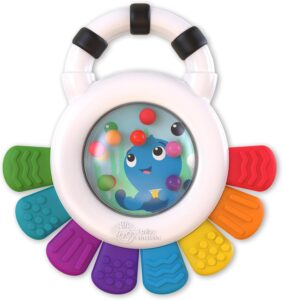
Baby Einstein Opus The Octopus Sensory Rattle & Teether
$5.99
- The unique bubble-pop feature engages babies in fun cause-and-effect learning.
- Eight different textures offer diverse experiences for tiny hands and mouths.
- The bright and contrasting colors capture visual attention, promoting visual development.
- Its lightweight design and easy-to-grasp handle make it perfect for travel and on-the-go soothing.
- Hand washable and made from BPA-free materials, ensuring safety during playtime.
As an Amazon Associate we earn from qualifying purchases. We only recommend products we'd use ourselves — we're never paid for placement.
Frequently Asked Questions
What order do baby teeth come in?
Most babies get the two bottom front teeth first (around 6–10 months), followed by the top front teeth, then the ones on either side, then first molars, canines, and second molars by age 2–3. The exact order varies and isn’t a concern.
Can teething cause a fever?
Teething can cause a slightly raised temperature (under 100.4°F) but not a true fever. If your baby has a fever of 100.4°F or higher, diarrhea, or a runny nose, that’s an illness — not teething — and worth a call to your pediatrician, especially under 3 months.
How long does teething pain last per tooth?
Discomfort usually lasts a few days before and after a tooth breaks through the gum — not weeks. If your baby seems in pain for a long stretch, look for another cause.
Angela's Recommended Resources
Guides and courses I personally recommend:
Most Popular
Baby Sleep Miracle
Proven gentle method to help your baby sleep through the night naturally. No cry-it-out, science-backed.
* Affiliate links. We may earn a commission at no extra cost to you.