- Angela’s Picks
- Shop by Age
- Shop by Category
- Shop by Values
- Montessori Toys
- Sensory Toys
- Teething Toys
- Wooden Toys
- Educational Toys
- Stacking & Sorting Toys
- Baby Bottles
- Sippy Cups
- Plates & Bowls
- Bibs
- Baby Utensils
- Deals
- High Chairs
- Breastfeeding & Nursing
- Snack Containers
- Crib Mattresses
- Bassinets
- Sleep Sacks & Swaddles
- Baby Blankets
- Baby Monitors
- Cribs & Nursery Furniture
- Baby Shampoo & Wash
- Baby Lotion & Oil
- Baby Sunscreen
- Bath Tubs & Seats
- Towels & Washcloths
- Diaper Cream & Balm
- Eco-Friendly Diapers
- Baby Wipes
- Potty Training
- Changing Pads
- Cloth Diapers
- Baby Thermometers
- Baby Proofing
- Baby Gates
- Humidifiers
- First Aid & Grooming
- Onesies & Bodysuits
- Sleepers & Pajamas
- Hats & Mittens
- Nursing Pads
- Breast Pumps & Accessories
- Postpartum Care
Is Silicone Safe for Babies? A Mom’s Honest Guide to Bibs, Plates & Teethers

Quick Answer
Food-grade silicone is widely considered safe for babies. Learn how to spot cheap filler silicone, the white pinch test, and LFGB vs FDA grades.
If you’ve stood in the feeding aisle holding a colorful silicone bib and wondered, “wait… is this actually safe for my baby to chew on?” — you’re in good company. It’s one of the questions I get asked most, and it deserves a real answer instead of either marketing hype or panic. So here’s the honest version.
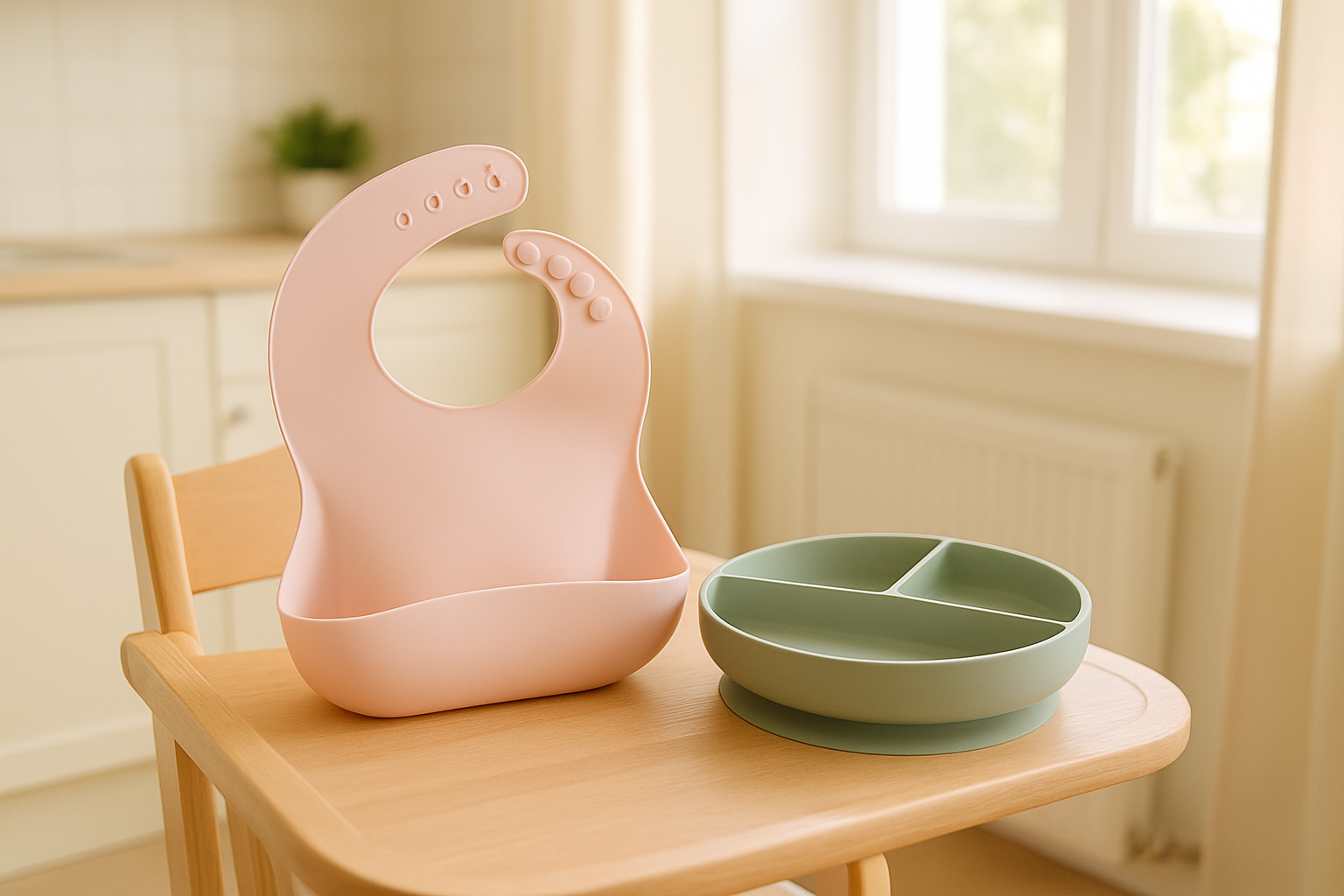
The short answer: high-quality, food-grade (or medical-grade) silicone is widely considered safe and stable for babies. It’s a non-reactive material, which means it doesn’t easily break down or shed the way some plastics do. Genuine food-grade silicone doesn’t contain BPA, BPS, phthalates, PVC, or lead, and it holds up well to chewing, heat, and repeated washing without leaching. That’s why you’ll see it used for everything from menstrual cups to medical tubing — it’s trusted in places where safety really matters.
So where does the worry come from? The real issue isn’t silicone itself — it’s cheap “filler” silicone. To cut costs, some manufacturers blend in non-silicone fillers (essentially cheap plastic-like additives) and still call the product “silicone.” Filler-heavy products are lower quality, can break down faster, and in rare cases may leach unwanted substances, especially when heated. The good news is that you can learn to tell the difference, and once you know what to look for, it’s genuinely easy.
Food-Grade vs. Filler-Grade Silicone: The Distinction That Matters
Think of “silicone” like the word “juice.” Some juice is 100% fruit; some is a splash of fruit and a lot of filler. Silicone works the same way. Pure, food-grade silicone is made to a high standard with no cheap additives mixed in. Filler-grade silicone has been stretched with other materials to lower the price — and that’s where quality and safety can slip.
This matters most for baby gear because these are products your little one mouths, chews, and presses against hot food: bibs, plates, bowls, teethers, sippy-cup parts, and spoons. A pure food-grade item will stay intact and inert through years of dishwasher cycles. A filler-heavy one is more likely to get gummy, tear, discolor, or give off a faint smell — all signs the material isn’t as clean as it should be.
Baby Sleep Miracle
Help baby sleep through the night naturally
Get It →The At-Home “Pinch & Twist” Test (a.k.a. the White Test)
Here’s the trick that surprises most parents: you can roughly check silicone quality right at your kitchen counter, no lab required. It’s sometimes called the white test or the pinch-and-twist test.
Find a flat, solid section of the item — the edge of a bib, the rim of a plate, the base of a teether. Pinch it firmly between your thumb and finger and twist or stretch it. With pure, high-quality silicone, the color stays the same as you pull and twist. If a white or lighter streak appears where you’re stretching it, that can be a sign that fillers were added — the additives separate visibly from the silicone under pressure. Pure silicone holds its color; filler-blended silicone tends to “blush” white.
It’s not a perfect laboratory analysis, and a single test won’t catch everything — but it’s a quick, practical gut-check, especially for unbranded products or mystery items from a marketplace. If something blushes white the moment you twist it, I’d pass.
LFGB vs. FDA: What Those Labels Actually Mean
When you’re shopping, you’ll see two standards come up a lot, and it helps to know the difference.
- FDA food-grade generally means the material is approved as safe for food contact under U.S. guidelines. It’s a solid baseline.
- LFGB is a German/European standard that is often considered stricter, because it can include testing for whether the material actually transfers anything into food, not just whether the ingredients are approved. Many parents treat LFGB as a step up in confidence.
Neither label is a gimmick, and you don’t need to obsess over them. But if you’re choosing between two similar products and one notes LFGB testing, that’s a reasonable tiebreaker.
Why Platinum-Cured Silicone Is the One to Look For
You may also spot the term platinum-cured (sometimes called platinum silicone). This refers to how the silicone is set, or cured. Platinum-cured silicone uses a platinum-based process that produces a cleaner, more stable, more durable end product, with fewer byproducts left behind. The more common alternative, peroxide-cured silicone, is generally cheaper and can leave more residual byproducts.
For anything your baby chews on or eats off of, platinum-cured is the gold standard. It’s more heat-stable, less likely to smell, and holds up beautifully over time. When a brand uses platinum-cured silicone, they almost always say so — because it costs more to make and it’s a genuine selling point.
Silicone vs. Soft Plastic: An Honest Comparison
Here’s the balanced take. For baby feeding gear, quality silicone is generally a safer, sturdier pick than soft plastic or flexible PVC. Soft plastics often rely on plasticizers to stay bendy, and those are exactly the additives many of us are trying to avoid around babies. Silicone gets its flexibility from its own structure, so it doesn’t need that chemistry to stay soft.
Silicone is also more heat-stable, doesn’t splinter or crack into sharp pieces the way hard plastic can, and tends to last far longer — which is gentler on both your baby and the planet. That’s a big part of why you’ll find well-made silicone across our feeding collection and among the teethers in our toys & learning section. None of this means plastic is automatically dangerous — plenty of plastic baby products are perfectly fine — but as a default material for things that get chewed and heated, good silicone is hard to beat.
How to Spot Safe Silicone
Keep this quick checklist in mind whether you’re shopping online or eyeing something already in your cupboard:
- Look for “food-grade” or “medical-grade” wording, ideally with FDA or LFGB mentioned.
- Favor “platinum-cured” (platinum silicone) when it’s noted — it’s the cleaner, more stable option.
- Do the pinch-and-twist test — if it blushes white when stretched, fillers may be present.
- Give it a sniff — quality silicone is essentially odorless. A strong chemical or rubbery smell is a red flag.
- Check the feel — it should be smooth and firm, not greasy, sticky, or oddly soft.
- Watch over time — good silicone won’t get gummy, tear easily, or stain after normal use and washing.
- Be cautious with ultra-cheap, unbranded items — if there’s no information about material grade at all, that absence is itself a clue.
If you want to go deeper on choosing non-toxic gear across feeding, sleep, and play, I’ve gathered more guides like this one over in our parenting resources hub.
Food-Grade Silicone Feeding Picks
| Product | Best For | Price | |
|---|---|---|---|
| DF DUALFERV 4 Pcs Waterproof Silicone Baby Bibs | Best Overall | $9.99 | View |
| Little Dimsum Silicone Baby Bibs with Food Catcher | Best Value | $13.99 | View |
| PandaEar 2 Pack Silicone Baby Bibs with Food | Editor's Pick | $6.95 | View |
| WeeSprout Waterproof Silicone Baby Bibs (Set of 2) | Great Choice | $9.98 | View |
| PandaEar 3 Pack Silicone Baby Bibs, Waterproof Feeding | Great Choice | $6.59 | View |
| Accmor Silicone Baby Bibs, Waterproof Soft Bibs with | Great Choice | $5.99 | View |
BEST OVERALL 
DF DUALFERV 4 Pcs Waterproof Silicone Baby Bibs
$9.99
- Mess-Free Meals: The large capacity catcher pocket captures food spills and droppings, keeping baby clothes and high chairs tidy.
- Adjustable Comfort: With four adjustable holes, these bibs grow with your child, ensuring a snug fit at every stage of their development.
- Travel Friendly: These bibs can be easily rolled up for convenient storage, making them a perfect on-the-go solution for busy parents.
- Effortless Cleaning: Simply scrub with soapy water or wipe clean, and the bibs are ready for use again—no hassle, no fuss.
- Durable Design: Made from high-quality silicone, these bibs are built to endure the rigors of toddler dining, providing long-lasting use.
BEST VALUE 
Little Dimsum Silicone Baby Bibs with Food Catcher
$13.99
- Food Catcher Design: The built-in food catcher effectively traps spills and crumbs, making post-meal clean-up a breeze.
- Soft and Comfortable: Made from lightweight silicone, these bibs gently hug your child’s neck without causing discomfort during mealtime.
- Adjustable Fit: The snap-button closure allows for easy size adjustments, ensuring a snug and comfortable fit as your baby grows.
- Easy to Clean: Simply wipe with a damp cloth or rinse with soapy water, making them hassle-free for busy parents.
- Stylish Designs: Each bib features fun cartoon motifs, appealing to your child's sense of style while encouraging them to enjoy their meals.
EDITOR'S PICK 
PandaEar 2 Pack Silicone Baby Bibs with Food Catcher
$6.95
- Made from 100% soft silicone, these bibs are gentle on delicate skin and provide comfort during meals.
- The adjustable neck strap offers four different sizes, ensuring a perfect fit for children from 6 months to 6 years.
- They are easy to clean and quick to dry, making post-mealtime clean-up a breeze.
- With a built-in food catcher, these bibs help catch dropped food, resulting in less mess on your floors and furniture.
- Available in a variety of colors that can match any outfit, allowing little ones to express their style while staying clean.

WeeSprout Waterproof Silicone Baby Bibs (Set of 2)
$9.98
- Mess-Free Meals: With a generously sized pocket, these bibs catch all the spills, so you can enjoy mealtime without the stress of constant cleanup.
- Comfortable Fit: Made from soft, lightweight silicone, they provide a comfortable experience for your baby, allowing them to focus on exploring new foods.
- Durable and Long-Lasting: The ultra-resistant silicone material is designed to withstand the rigors of daily use, remaining stain and odor-free over time.
- Adjustable for Growth: With multiple snap options, these bibs easily adjust to fit your growing baby, making them a long-term investment for mealtime.
- Easy Cleanup: Simply rinse with soap and water or toss them in the dishwasher for a hassle-free cleaning experience.
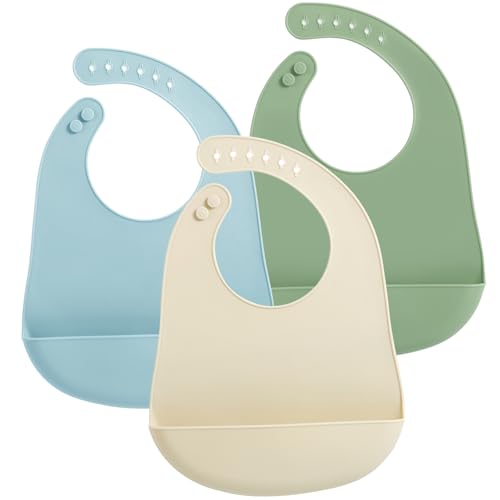
PandaEar 3 Pack Silicone Baby Bibs, Waterproof Feeding Bibs
$6.59
- No More Silicone Odor: Crafted from top-grade silicone, these bibs are free from the unpleasant odors often associated with other brands.
- Adjustable Closure: The neck strap features four adjustable sizes, accommodating children from 6 months to 6 years for a perfect fit.
- Convenient Cleanup: Made from 100% soft silicone, they are easy to wipe clean and dishwasher safe, significantly reducing laundry chores.
- Affordable Multi-Pack: This economical 3-pack comes in a variety of vibrant colors, ensuring there’s always a stylish option to match your little one's outfit.
- Lightweight Comfort: Unlike rigid bibs, these soft silicone bibs are gentle on your child’s skin, making mealtime a comfortable experience.

Accmor Silicone Baby Bibs, Waterproof Soft Bibs with Pocket
$5.99
- **Catch-all Pocket:** The generously sized pocket effectively catches dropped food, crumbs, and spills, making clean-up a breeze and reducing the laundry load.
- **Adjustable Fit:** With adjustable neck straps, these bibs can grow alongside your baby, ensuring a comfortable fit from 3 to 24 months.
- **Lightweight & Soft:** Made from soft silicone, these bibs are easy for little ones to wear without feeling weighed down, allowing them to focus on their eating adventures.
- **Easy to Clean:** Cleanup is effortless with these bibs; simply wipe them down, or toss them in the dishwasher for a thorough cleaning.
- **Safe Materials:** Crafted from 100% food-grade silicone, these bibs are free from harmful substances like PVC, BPA, phthalates, and vinyl.
As an Amazon Associate we earn from qualifying purchases. We only recommend products we'd use ourselves — we're never paid for placement.
Frequently Asked Questions
Is silicone safer than plastic for babies?
For feeding gear like bibs, plates, and teethers, quality food-grade silicone is generally considered a safer, more durable choice than soft or flexible plastic. Silicone stays soft without the plasticizers many soft plastics rely on, handles heat better, and doesn’t crack into sharp pieces. That said, not all plastic is harmful — the key is choosing well-made products and avoiding cheap, unlabeled items of either material.
What is the white test for silicone?
The white test is a simple at-home check: pinch a flat section of the silicone item and twist or stretch it firmly. Pure, food-grade silicone keeps its color, while filler-blended silicone often shows a white or lighter streak where it’s stretched. A white blush suggests non-silicone fillers may have been added. It’s not a lab-grade test, but it’s a handy gut-check for unbranded products.
Does silicone leach chemicals when heated?
High-quality, food-grade and platinum-cured silicone is heat-stable and considered safe for typical baby uses like warm food, dishwashers, and sterilizing. It’s far more resistant to leaching than many plastics. The bigger concern is filler-grade silicone, which is less stable and more likely to break down or release additives under heat. Sticking with food-grade, platinum-cured products keeps this risk very low.
Are silicone bibs safe for my baby to chew on?
Yes — a genuine food-grade silicone bib is designed to handle plenty of chewing and is widely considered safe. Silicone is non-reactive and doesn’t easily shed material the way some plastics can. Just buy from sources that clearly state the silicone grade, do a quick pinch-and-twist test, and replace any bib that becomes torn, gummy, or damaged over time.
At the end of the day, you don’t need to fear silicone — you just need to know how to pick the good stuff. Trust your hands, trust your nose, and trust that you’re already doing a wonderful job by asking the question in the first place. I’ve got you, mama. — Angela
Angela's Recommended Resources
Guides and courses I personally recommend:
Most Popular
Baby Sleep Miracle
Proven gentle method to help your baby sleep through the night naturally. No cry-it-out, science-backed.
Children Learning Reading
Phonics-based reading program for young children. Simple 15-minute daily lessons that work.
* Affiliate links. We may earn a commission at no extra cost to you.