- Angela’s Picks
- Shop by Age
- Shop by Category
- Shop by Values
- Montessori Toys
- Sensory Toys
- Teething Toys
- Wooden Toys
- Educational Toys
- Stacking & Sorting Toys
- Baby Bottles
- Sippy Cups
- Plates & Bowls
- Bibs
- Deals
- Baby Utensils
- High Chairs
- Breastfeeding & Nursing
- Snack Containers
- Crib Mattresses
- Bassinets
- Sleep Sacks & Swaddles
- Baby Blankets
- Baby Monitors
- Cribs & Nursery Furniture
- Baby Shampoo & Wash
- Baby Lotion & Oil
- Baby Sunscreen
- Bath Tubs & Seats
- Towels & Washcloths
- Diaper Cream & Balm
- Eco-Friendly Diapers
- Baby Wipes
- Potty Training
- Changing Pads
- Cloth Diapers
- Baby Thermometers
- Baby Proofing
- Baby Gates
- Humidifiers
- First Aid & Grooming
- Onesies & Bodysuits
- Sleepers & Pajamas
- Hats & Mittens
- Nursing Pads
- Breast Pumps & Accessories
- Postpartum Care
Best Non-Toxic Sippy Cups: Safe Materials, Mold Traps & When to Make the Switch

Quick Answer
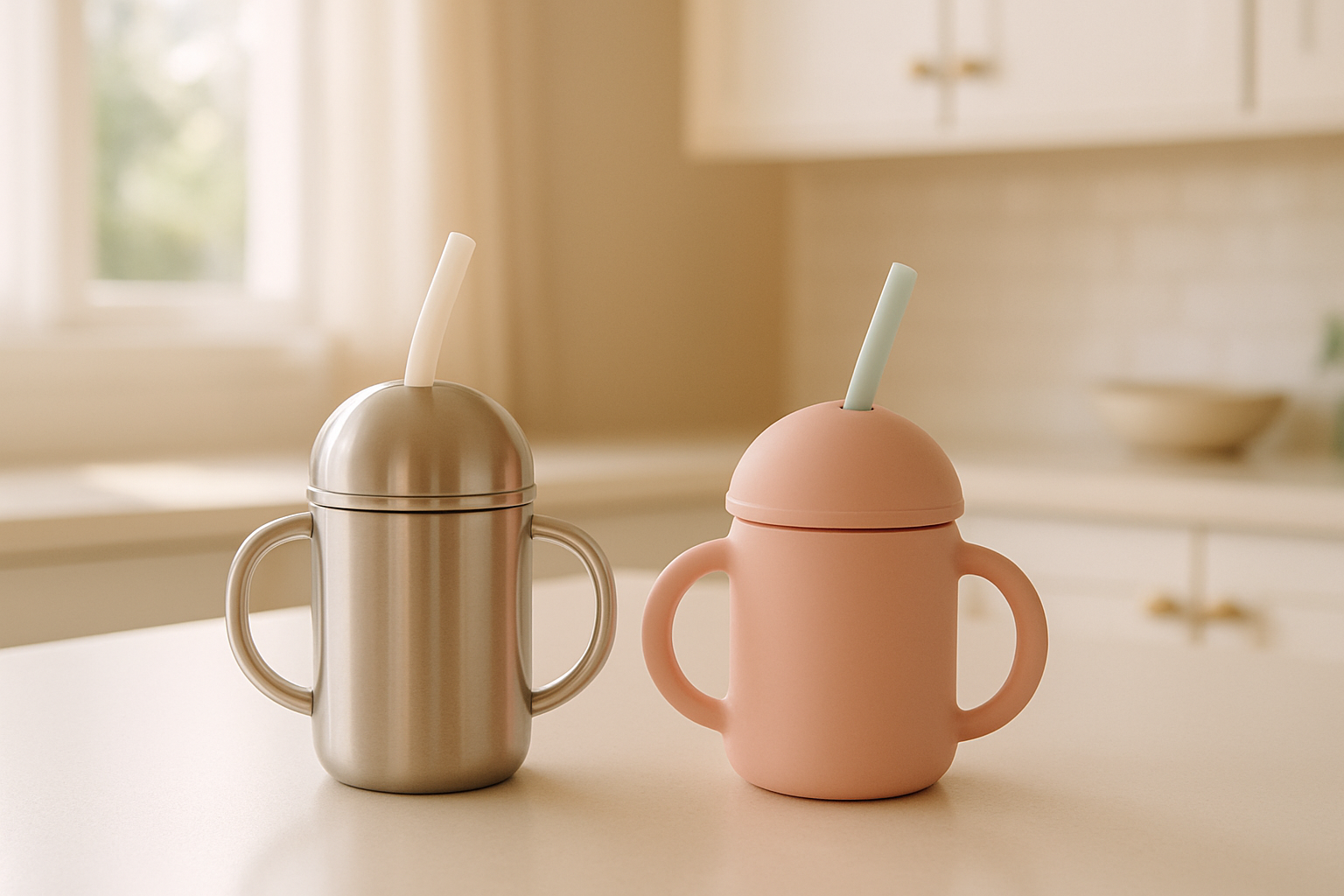
The safest non-toxic sippy cups are stainless steel, glass, or food-grade silicone. What to look for, hidden mold traps, and when to ditch the bottle.
If you want the short answer, mama, here it is: the best non-toxic sippy cups are made from stainless steel, glass with a protective silicone sleeve, or 100% food-grade silicone. Those three materials don’t leach the chemicals we worry about in plastics, they hold up to hot dishwasher cycles without degrading, and they don’t hang onto smells or stains the way plastic does. If a cup is plastic and isn’t clearly labeled BPA-free, BPS-free, and phthalate-free, I’d pass — and honestly, even “BPA-free” plastic isn’t a guarantee, since some replacement chemicals raise similar concerns in the research.
Two more quick things before we dig in, because they change which cup you should actually buy. First: pediatric dentists and feeding specialists generally prefer straw cups and open-cup training over hard spouts, because spouts encourage the same sucking pattern as a bottle and can affect oral development if they stick around too long. A spouted cup is fine as a short-term bridge — it’s just not the finish line. Second: the biggest hidden problem with toddler cups isn’t the material at all. It’s mold, and it loves to hide inside valves and straws that can’t be fully taken apart. A “non-toxic” cup that grows mold in a sealed valve isn’t doing you any favors.
I’ve spent a lot of hours vetting cups for our shop — reading material disclosures, checking how brands respond to safety questions, and pulling cups apart piece by piece to see where gunk could hide. Here’s everything that screen taught me, so you can pick one cup and move on with your day.
What to Look For in a Non-Toxic Sippy Cup
When I evaluate a cup, I run it through the same handful of checks every time. Use this list in the store (or while you’re browsing at 11pm) and you’ll filter out 90% of the junk immediately.
Children Learning Reading
Simple phonics program, 15 min/day
Get It →- Material first. Stainless steel (18/8 food-grade), glass with a silicone sleeve, or 100% food-grade silicone. If any part touches the drink — straw, valve, spout, gasket — that part should be silicone or steel, not soft plastic. This is the same logic I walk through in my glass vs. silicone vs. stainless baby bottle comparison, and it applies to cups just as much as bottles.
- Full disassembly. Every single piece — lid, straw, valve, gasket, sleeve — should come apart with your hands, no tools. If you can’t see inside a channel or valve, you can’t clean it, and you can’t verify it’s clean.
- Valve and straw cleanability. Look for straws wide enough for a straw brush and valves that are a single simple piece of silicone, not a multi-layer plastic assembly. Fewer parts, fewer hiding spots.
- Dishwasher-safe, top rack minimum. Hot water and real cleaning cycles matter for cups that get milk in them. Silicone and steel handle this beautifully; cheap plastic warps and clouds.
- Handles for new drinkers. Around 6–9 months, removable handles make a real difference — babies at that stage grab with two hands. Bonus if the handles come off later so the cup grows with your kiddo.
- A weighted straw, if you go the straw route. The weight keeps the straw tip in the liquid no matter how the cup tilts, which means less frustration for a brand-new straw drinker. Just make sure the weighted piece detaches for cleaning — it’s a classic mold spot when it doesn’t.
- Clear labeling. BPA-free, BPS-free, phthalate-free, lead-free (this matters for painted or coated stainless cups). If a brand is vague about materials, that vagueness is your answer.
Spout vs. Straw vs. 360 vs. Open Cup: An Honest Comparison
This is where a lot of well-meaning advice gets muddy, so let me lay it out plainly. The classic hard-spout sippy cup — the one most of us picture — is actually the least preferred option from an oral-development standpoint. Sucking on a spout uses roughly the same tongue position as a bottle, so it doesn’t teach the mature swallowing pattern kids need to build. Pediatric dentists and speech-language professionals have been saying this for years: spouts are fine as a brief transition tool, but they shouldn’t be the cup your child uses for the next two years.
Straw cups are my usual recommendation for everyday use. Drinking through a straw pulls the tongue back and down, which supports healthy oral-motor development, and most babies can learn a straw surprisingly early — many between 6 and 9 months with a little practice. They’re also genuinely spill-resistant, which is why they win real life.
360-style rimless cups let your child drink from any edge, mimicking an open cup while limiting spills. They’re a solid middle ground, though some feeding specialists note the sealing rim still requires a bit of suction. If your little one takes to it, great — just check that the valve layer disassembles completely, because 360 lids are notorious hide-and-seek champions for residue.
Open cups are the actual developmental goal. A tiny open cup (silicone or small stainless) used at the table with your help, starting around 6 months, builds the exact skill your child will use for life. Yes, there will be spills. That’s the tuition. Most families land on a combo: open cup practice at meals, a straw cup for the car and the stroller.
The Mold Problem Nobody Puts on the Box
I want to be direct about this because it’s the number-one complaint I see from real parents: mold in valves and straws. Milk residue plus a warm, damp, sealed channel is a perfect growing environment, and many popular cups have valves that look clean from the outside while hiding black buildup inside. Parents usually discover it only when they finally crack a piece open — or notice a smell.
The fix isn’t scrubbing harder. It’s choosing cups designed so there’s nowhere for mold to hide: every part separates, every channel is visible and brushable, and the materials (silicone, steel, glass) don’t develop the micro-scratches that plastic does, which is where residue loves to settle. Rinse cups soon after milk, wash fully disassembled, and let every piece air-dry completely before reassembling. If you ever do find mold in a valve or straw, replace that part — don’t just bleach it and hope. And if you’re wondering about silicone safety in general, I break down what “food-grade” actually means in my guide to silicone bibs and plates — the same standards apply to cup parts.
When to Introduce a Cup — and When to Ditch the Bottle
You can start offering a cup around 6 months, right alongside the start of solids — a small amount of water in an open cup or straw cup at mealtimes is plenty. The point at this stage is practice, not hydration; milk (breast or formula) is still doing the heavy lifting nutritionally.
As for the bottle: pediatric guidance, including from the American Academy of Pediatrics, points to starting the wean around 12 months and being done by about 18 months. Lingering bottles — especially bottles in bed — are linked to tooth decay and can crowd out solid food intake. The transition goes easier when your child already has months of low-pressure cup practice behind them, which is exactly why starting at 6 months pays off. Swap one bottle feeding at a time for a cup, save the bedtime bottle for last, and expect some protest — it passes. For more feeding milestones and transition timelines, my parenting resources hub has you covered.
Every cup in our sippy cup collection has already been screened against the criteria above — safe materials, full disassembly, no sealed mold traps. Below are the cups that passed our screen.
Sippy Cups That Passed Our Screen
| Product | Best For | Price | |
|---|---|---|---|
| Dr. Brown's Anti-Colic Options+ Narrow Bottle to Sippy | Best Overall | $26.99 | View |
| Kiddikap Water Bottle Topper Sippy Spout - 3 | Best Value | $14.99 | View |
| NUK Fun Grips Hard Spout Sippy Cup 10 | Editor's Pick | $11.96 | View |
| RTMOK Bottle Handles for Dr. Brown's Sippy Cups, | Great Choice | $6.99 | View |
| Dr. Brown's Options+ Bottle to Sippy Baby Bottle | Great Choice | $7.98 | View |
| Sippy and Straw Conversion Kits for Philips Avent | Great Choice | $16.99 | View |
BEST OVERALL 
Dr. Brown's Anti-Colic Options+ Narrow Bottle to Sippy Gift Set
$26.99
- Clinically proven anti-colic internal vent system that effectively reduces symptoms of colic, helping both baby and parents enjoy feeding times.
- Vacuum-free feeding design closely mimics breastfeeding, allowing babies to feed at their own pace with a consistent flow.
- Breast-like silicone nipple shape promotes a proper latch, making the transition between breast and bottle seamless.
- Includes both bottle and sippy cup options that grow with your baby, adapting to their feeding needs at different stages.
- Recyclable materials used in construction, supporting eco-friendly practices and reducing waste.
BEST VALUE 
Kiddikap Water Bottle Topper Sippy Spout - 3 Pack - Pastel
$14.99
- 98% Spill-Proof: Say goodbye to puddles with a design that allows only flat liquids to escape, making it perfect for use in the car or while playing.
- Universal Fit: Compatible with standard 28mm spouts, the Kiddikap works with a variety of drink containers, from water bottles to juice boxes.
- Lightweight & Portable: Its compact design easily fits in bags or pockets, making it an ideal travel companion for busy families.
- Durable & Reusable: Crafted from high-quality materials, Kiddikap is built to withstand daily use while contributing to a more sustainable lifestyle.
- Easy to Clean: This bottle topper can be easily washed by hand, wiped down with sanitizing wipes, or placed in the dishwasher for hassle-free maintenance.
EDITOR'S PICK 
NUK Fun Grips Hard Spout Sippy Cup 10 oz. - 4 Pack
$11.96
- Textured Grip: The cup features a textured design that makes it easy for tiny hands to hold securely, reducing spills and messes.
- Bite-Resistant Spout: The hard spout is designed to withstand your toddler's chewing, making it a durable choice for little ones who are still teething.
- Leak-Proof Design: Say goodbye to unexpected spills! This sippy cup is guaranteed to be 100% leak-proof and spill-proof, allowing for worry-free outings.
- Float-Control Valve: Featuring a unique float-regulate valve, this cup lets your child drink at a comfortable pace, preventing them from gulping too much liquid too quickly.
- Dishwasher Safe: Cleaning up is a breeze! Simply toss it in the dishwasher for a hassle-free cleanup.

RTMOK Bottle Handles for Dr. Brown's Sippy Cups, 4m+
$6.99
- Independence Boost: The ergonomic design of these handles encourages self-feeding, allowing your baby to master the art of drinking on their own.
- Colorful Choices: Comes in bright yellow, blue, and green, these handles not only look fun but also engage your baby’s senses.
- Universal Fit: Designed to accommodate most baby bottles with a diameter of 2¼ inches, making them versatile for your growing collection of feeding gear.
- Easy to Clean: Simply pop them in the dishwasher or wash by hand, ensuring your baby’s feeding accessories are always hygienic.
- Safe Materials: Made from BPA, BPS, PVC, phthalate, and lead-free silicone, these handles prioritize your baby’s health.

Dr. Brown's Options+ Bottle to Sippy Baby Bottle Start Kit
$7.98
- Simple Transition: The soft silicone sippy spout replaces the nipple, making the switch from bottle to sippy cup easy and comfortable for your baby.
- Anti-Colic Design: The internal vent system minimizes colic symptoms, helping to reduce spit-up, burping, and gas for a more enjoyable feeding experience.
- Travel-Friendly: The snap-on cap keeps the nipple or spout clean and protected when you’re on the go, ensuring mess-free outings.
- Eco-Conscious Choice: This bottle is designed to be recyclable and comes from a brand committed to reducing plastic waste through its collaboration with Plastic Bank.
- Easy to Clean: All parts are dishwasher-safe for easy cleaning, giving you more time to focus on your little one.

Sippy and Straw Conversion Kits for Philips Avent Natural Baby Bottles
$16.99
- Easy Transition: The sippy conversion kit allows your baby to transition at their own pace without the need for new cups.
- 100% Safe Materials: Made from BPA-free, phthalates-free, and lead-free materials, ensuring peace of mind with every use.
- All-Silicone Straw: The single-piece design of the weighted straw means no small parts to lose and easy cleaning.
- Cost-Effective: Reuse your existing baby bottles instead of purchasing new sippy cups, saving money while being eco-friendly.
- Spill-Proof Design: The weighted straw allows babies to sip from any angle, minimizing spills during those playful adventures.
As an Amazon Associate we earn from qualifying purchases. We only recommend products we'd use ourselves — we're never paid for placement.
Frequently Asked Questions
Are BPA-free plastic sippy cups actually safe?
Safer than old-school BPA plastic, but not my first choice. Some BPA substitutes, like BPS, have raised similar concerns in early research, and plastic scratches over time, creating spots where residue and bacteria settle. If plastic is what fits your budget right now, choose cups clearly labeled BPA-, BPS-, and phthalate-free, skip the microwave, hand-wash on gentle heat, and replace them once they look scratched or cloudy. When you can, stainless steel or silicone is the cleaner long-term bet.
What is the safest sippy cup material overall?
Food-grade stainless steel is my top pick for durability plus safety — it’s inert, unbreakable, and easy to sanitize. Glass with a silicone sleeve is wonderfully non-reactive and lets you see exactly how clean the cup is, though it’s heavier. One-hundred-percent food-grade silicone is the lightest and gentlest for new drinkers. All three are excellent; the “best” one is honestly whichever your child will actually drink from.
How often should I replace sippy cup straws and valves?
Inspect them weekly when you wash — hold straws and valves up to the light and look for dark spots or cloudiness inside. Silicone parts in regular use typically want replacing every few months, or immediately if you spot mold, tears, or a sticky texture that won’t wash away. Most quality brands sell replacement parts separately, which is itself a good sign of a cup worth owning.
Do I have to skip spouted sippy cups completely?
No — don’t stress if you already own one. A spouted cup used briefly during the bottle-to-cup transition isn’t going to cause harm. The concern is long-term, everyday spout use, which reinforces an immature sucking pattern. Think of the spout as training wheels: totally fine for a few weeks, but the goal is to roll onto straws and open cups as soon as your child is ready.
Whichever cup you choose, mama, know that the hard part — caring enough to check — you’re already doing. I’ve done the label-reading and the valve-dissecting so you don’t have to; all that’s left is finding the cup your little one decides is theirs. — Angela
Angela's Recommended Resources
Guides and courses I personally recommend:
Children Learning Reading
Phonics-based reading program for young children. Simple 15-minute daily lessons that work.
* Affiliate links. We may earn a commission at no extra cost to you.