- Angela’s Picks
- Shop by Age
- Shop by Category
- Shop by Values
- Montessori Toys
- Sensory Toys
- Teething Toys
- Wooden Toys
- Educational Toys
- Stacking & Sorting Toys
- Baby Bottles
- Sippy Cups
- Plates & Bowls
- Bibs
- Deals
- Baby Utensils
- High Chairs
- Breastfeeding & Nursing
- Snack Containers
- Crib Mattresses
- Bassinets
- Sleep Sacks & Swaddles
- Baby Blankets
- Baby Monitors
- Cribs & Nursery Furniture
- Baby Shampoo & Wash
- Baby Lotion & Oil
- Baby Sunscreen
- Bath Tubs & Seats
- Towels & Washcloths
- Diaper Cream & Balm
- Eco-Friendly Diapers
- Baby Wipes
- Potty Training
- Changing Pads
- Cloth Diapers
- Baby Thermometers
- Baby Proofing
- Baby Gates
- Humidifiers
- First Aid & Grooming
- Onesies & Bodysuits
- Sleepers & Pajamas
- Hats & Mittens
- Nursing Pads
- Breast Pumps & Accessories
- Postpartum Care
Why Do Bath Toys Get Moldy? The Honest Truth (and How to Stop It)

Quick Answer
Why do bath toys get moldy inside? The real reason squirty toys grow black mold, whether it's dangerous, and how to prevent it for good.
If you’ve ever given a rubber duck a playful squeeze in the tub and watched a little cloud of grayish-black water shoot out, you already know the gross secret hiding inside so many bath toys. You’re not imagining it, and you’re definitely not a bad parent for missing it. Mold in bath toys is one of the most common (and most hidden) hygiene problems in the nursery, and almost every family runs into it eventually. So let’s talk honestly about why it happens and what actually works to stop it.
The Short Answer: Why Moldy Bath Toys Happen
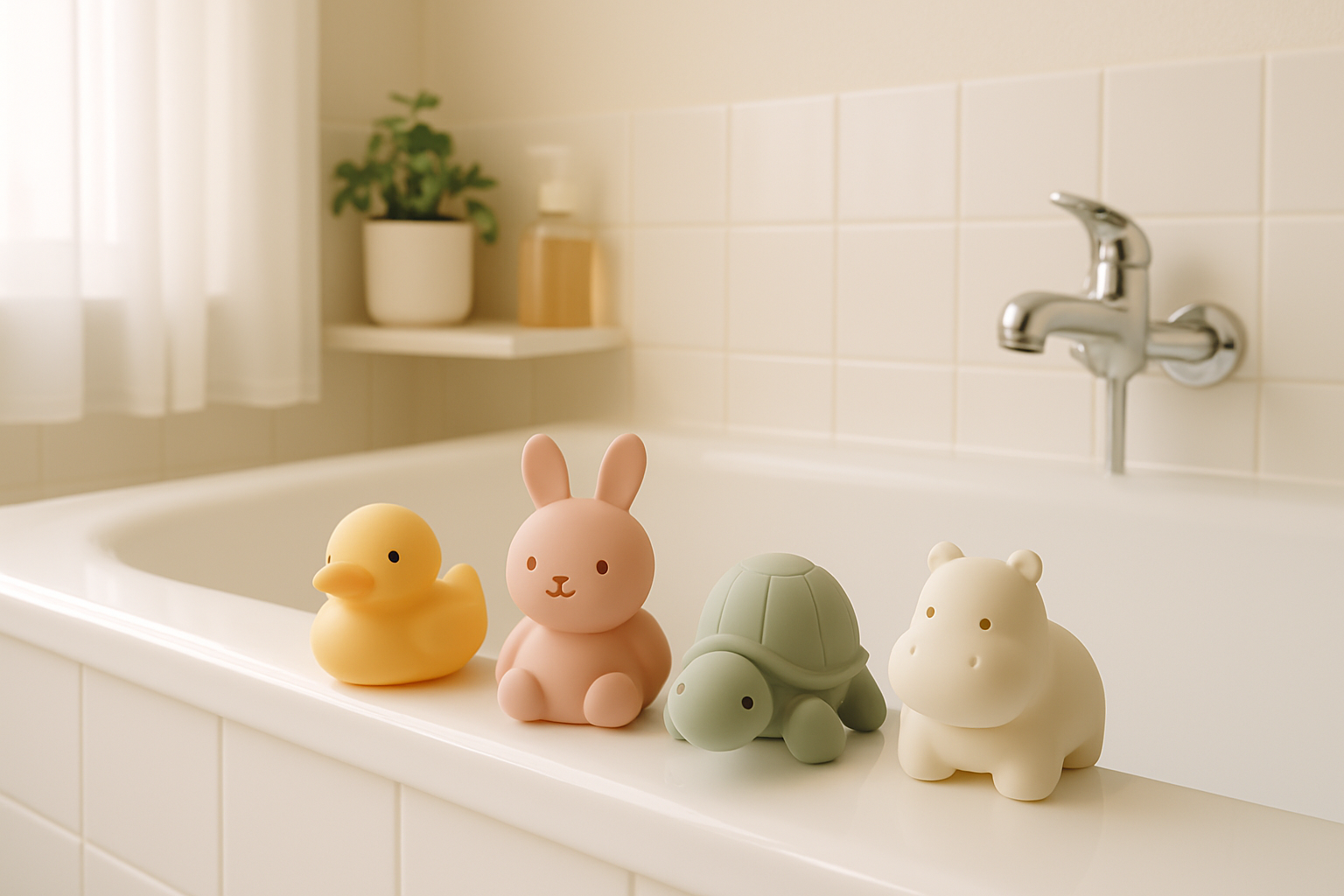
Those classic squirty bath toys—ducks, whales, little squishy animals—are hollow, with one tiny pinhole on the bottom. That hole is the whole problem. When your child squeezes the toy underwater, it sucks bathwater inside. But bathwater isn’t just water. It carries soap residue, dead skin cells, body oils, and sometimes a trace of, well, whatever else ends up in a toddler’s bath. That’s organic material, and it’s food for mold.
Now add the other two ingredients mold loves: warmth and moisture. After bath time, the toy gets set on the tub edge with water still trapped inside. The bathroom stays humid and warm, the pinhole is too small for that inner water to fully drain or dry, and you’ve created a tiny dark, damp, food-filled greenhouse. Within days, mold spores (which are floating in the air everywhere, totally normally) settle in and start to grow. That’s the black or pinkish gunk you see shoot out the next time it’s squeezed. In plain terms: moldy bath toys happen because water and warmth and food and a hole that won’t let it dry all come together inside a sealed space you can’t reach.
Why You Can’t Really Clean the Inside
Here’s the frustrating part. The same pinhole that lets water in is too small to let a brush, a cloth, or even a steady stream of cleaner do real work inside. You can swish soapy water around, squeeze it out, and feel like you’ve handled it—but mold isn’t just floating loose in there. It anchors itself to the inner walls in a slippery layer called biofilm, and biofilm is stubborn. Rinsing knocks off the surface, but the roots stay behind and regrow fast.
This is why so many parents feel like they’re fighting a losing battle. You can slow mold down, and I’ll share how, but with a classic hollow squirty toy you usually can’t fully win. Once the inside is visibly colonized, the honest advice is often just to toss it. A few dollars isn’t worth scrubbing something you can never truly see inside of.
Baby Sleep Miracle
Help baby sleep through the night naturally
Get It →The Squeeze Test: How to Check Your Toys Right Now
Want to know which toys are hiding something? Try this quick check tonight. Fill the toy with clean, warm water through the hole, give it a few seconds, then squeeze it hard over a white paper towel or a clean sink. If the water comes out cloudy, gray, speckled, or carries little black flecks—or if it smells musty—there’s mold inside. Clear, clean water that smells like nothing is a good sign.
For toys you really want to inspect, you can sometimes cut one open with kitchen scissors (an old toy you’re retiring anyway). What you find inside is usually eye-opening, and it tends to make the case for switching toy types all on its own.
How to Prevent Mold in Bath Toys
The good news: prevention is genuinely doable, and most of it is free. Here are the approaches that actually work, from simplest to most thorough.
Dry them properly (the single most important habit)
Mold can’t grow without moisture, so getting water out is everything. After every bath, squeeze each toy hard several times to push out as much trapped water as you can. Then store them somewhere they can actually dry—a mesh bag that hangs, a wire basket with airflow, or even propped hole-down on a towel. The closed plastic bucket sitting in the corner of the tub is the worst option; it just keeps everything damp. Good airflow does more than any cleaner.
Seal the hole shut
This is my favorite low-cost trick. If a squirty toy is still new and clean inside, you can seal that pinhole permanently with a dab of food-safe silicone or a drop of hot glue. No hole means no water gets sucked in, which means no dark wet chamber for mold to grow. The toy won’t squirt anymore, but it’ll float and play just fine, and it’ll stay mold-free. Just be sure to do this before mold sets in—sealing a toy that’s already contaminated only traps the problem inside.
Clean regularly (with realistic expectations)
For surface cleaning and toys without an inner cavity, a simple white vinegar soak works well: mix about one part white vinegar to two parts warm water, soak for an hour, then rinse thoroughly and air dry. Vinegar is gentle, food-safe, and a reasonable first choice for a non-toxic home. For tougher cases some parents use a diluted bleach solution, but please be cautious—keep it well diluted, rinse extremely thoroughly, let it fully air out, and never mix bleach with vinegar or any other cleaner (that combination releases toxic fumes). Honestly, for hollow toys already growing mold inside, no soak reliably reaches the interior, so treat cleaning as a way to maintain healthy toys rather than rescue ruined ones.
Choose better toys in the first place
This is the real fix. The most reliable way to never deal with moldy bath toys again is to stop buying the hollow squirty kind and switch to designs that can’t trap water out of sight. One-piece solid toys, toys with no hole at all, and sealed food-grade silicone toys (some open up completely so you can wash and dry every surface) sidestep the whole problem. It’s worth gradually replacing the worst offenders rather than fighting them forever.
What to Look For in Mold-Free Bath Toys
When you’re shopping for replacements, these are the features that genuinely keep mold away:
- No drainage hole — if water can’t get inside, mold can’t grow inside. Solid or sealed designs win every time.
- One-piece construction — a single molded piece with no hidden hollow cavity leaves mold nowhere to hide.
- Food-grade silicone — durable, naturally more mold-resistant than soft porous rubber, and easy to wipe clean.
- Opens fully for cleaning — toys that pop apart or unfold let you reach, scrub, and dry every surface completely.
- Quick-drying and easy to air out — smooth, non-porous surfaces and open shapes that dry fast between baths.
- Non-toxic, tested materials — free of BPA, PVC, and phthalates, since these go straight into little mouths.
This is exactly the lens we use when we curate our bath & skincare collection at 1 Stop Baby. We lean toward sealed, one-piece, and food-grade silicone designs precisely because they spare you the squeeze-test panic down the road. If you’re refreshing your tub lineup, that’s a good place to start, and you’ll find more open-ended, easy-to-clean options in our toys & learning section too.
Is It Worth Worrying About? An Honest Take
Let me be straight with you, because I don’t believe in scaring parents. For most healthy kids, the occasional squirt of moldy water in the tub is not a crisis. Our immune systems encounter mold spores all day long. But it isn’t nothing, either. Some children—especially those with asthma, allergies, eczema, or sensitive systems—can react to mold with skin irritation, eye irritation, or respiratory symptoms. And bath toys can also harbor bacteria alongside the mold, which is a fair reason to care about a clean tub.
So the sensible middle ground is this: you don’t need to panic about a toy you squeezed last week, but it’s genuinely worth fixing the habit going forward. Dry your toys, seal the holes, retire the ones that are visibly colonized, and lean toward better designs. For more practical, no-fear guides like this one, our parenting resources hub is always here for you.
Mold-Free Bath Toys We Love
| Product | Best For | Price | |
|---|---|---|---|
| Tub Works® Emergency™ Light Up Bath Toys, 6 | Best Overall | $14.99 | View |
| BUNMO Suction Bath Toys 10 Pack - Connect, | Best Value | $14.99 | View |
| CozyBomB™ Kids Fishing Bath Toys Game | Editor's Pick | $15.98 | View |
| LiKee Strong Suction Cup Fidget Bath Toys for | Great Choice | $9.99 | View |
| XY-WQ No Hole Bath Toys for Infants and | Great Choice | $13.98 | View |
| Tub Works® Mold Free Bath Toys - Soft, | Great Choice | $12.99 | View |
BEST OVERALL 
Tub Works® Emergency™ Light Up Bath Toys, 6 Pack
$14.99
- Bright water-activated LED lights engage children, promoting sensory exploration and imaginative play.
- Seamless design prevents mold growth, ensuring hygienic use and easy cleanup.
- Made from soft, squeezable PVC that is free from phthalates and BPA, making it safe for little hands.
- Durable construction allows for long-lasting fun, whether in the bath, pool, or during water play.
- Encourages fine motor skills and understanding of cause-and-effect as kids learn to activate the lights.
BEST VALUE 
BUNMO Suction Bath Toys 10 Pack - Connect, Build, Create
$14.99
- Encourages imaginative play: Kids can connect, build, and create endless structures, making every bath a new adventure.
- Calming sensory experience: The tactile satisfaction of these silicone toys, paired with the delightful pop of suction, provides soothing sensory engagement.
- Versatile play options: Perfect for use in the bath, at home, or while traveling, these toys easily stick to any non-porous surface.
- Durable and easy to clean: Made from high-quality silicone, they can withstand rough play and are dishwasher safe for hassle-free cleaning.
- Convenient storage: Comes with a handy mesh bag, making it easy to pack up and take your creativity on the go!
EDITOR'S PICK 
CozyBomB™ Kids Fishing Bath Toys Game
$15.98
- Encourages learning about ocean animals with over 15 different fish and aquatic creatures, promoting curiosity and fun discussions.
- Boosts hand-eye coordination and fine motor skills as kids practice their fishing techniques.
- Supports color recognition through a vibrant palette of more than 10 colors, making it visually stimulating.
- Allows for interactive play, whether it’s kids competing against each other or parents joining in for family fun.
- Perfect for enhancing social skills through cooperative play and friendly competition during bath time or outdoor water activities.

LiKee Strong Suction Cup Fidget Bath Toys for Babies 12-18 Months
$9.99
- Captivating Spin Action: The smooth spinning mechanism keeps your child's focus, making bath time a fun and interactive experience.
- Multi-Sensory Stimulation: Each press and bounce activates your baby's senses, enhancing their cognitive development through sight, sound, and touch.
- Variety of Textures: With nine unique textures on the bubbles, your little one can explore different sensations, promoting tactile learning.
- Secure Suction: The sturdy suction cup adheres well to smooth surfaces like bathtubs and windows, ensuring the toy stays put during playtime.
- Parent-Approved Safety: Constructed from BPA-free plastic and soft silicone, these toys exceed all safety standards, giving parents peace of mind.

XY-WQ No Hole Bath Toys for Infants and Toddlers, 24 Pcs
$13.98
- Always Clean: The toys are completely sealed with food-grade epoxy glue, ensuring that no water can enter them, keeping bath time hygienic.
- Safe for Little Hands: Made of PVC that is free from BPA and phthalates, these toys are soft and easy for tiny hands to grasp.
- Educational Fun: Featuring adorable animals like a koala, fox, and monkey, these toys encourage imaginative play and help children learn about different wildlife.
- Convenient Storage: The set comes with a mesh bag, making it easy to dry and store the toys neatly between bath sessions.
- Perfect Gift Idea: These colorful and fun bath toys are great for baby showers, birthdays, or as special surprises for your little ones.

Tub Works® Mold Free Bath Toys - Soft, Squeezable & Easy-Grip Set
$12.99
- Mold-Free Design: Sealed construction keeps moisture out, effectively preventing mold and making clean-up a breeze.
- Soft & Squeezable: Made from high-quality PVC, these toys are soft to touch, easy to squeeze, and durable enough for countless bath times.
- Perfectly Sized: Designed for tiny hands, these toys are easy for toddlers to grasp and play with, enhancing their bath experience.
- Encourages Imaginative Play: With vibrant colors and fun marine animal shapes, these toys inspire imaginative scenarios and games during bath time.
- Versatile Water Fun: Ideal for bubble baths, baby pools, and water tables, these toys are perfect companions for any water play activity!
As an Amazon Associate we earn from qualifying purchases. We only recommend products we'd use ourselves — we're never paid for placement.
Frequently Asked Questions
Is mold in bath toys dangerous?
For most healthy children, an occasional exposure isn’t a medical emergency. But mold can cause skin, eye, or respiratory irritation, and kids with asthma, allergies, or eczema may be more sensitive. Bath toys can also hold bacteria. It’s not worth panicking over, but it is worth preventing.
Can you get mold out of bath toys?
Surface mold on solid toys cleans up well with a vinegar soak and thorough drying. But for hollow squirty toys with mold inside, you usually can’t fully remove it—the pinhole is too small to reach the biofilm clinging to the inner walls, and it regrows. Once the inside is clearly colonized, it’s best to retire that toy.
Are silicone bath toys better?
Generally, yes. Food-grade silicone is non-porous and more mold-resistant than soft rubber, and many silicone toys are designed as sealed or one-piece shapes—or open fully for cleaning—so water doesn’t get trapped where you can’t reach it. They tend to be the easiest type to keep genuinely clean.
How do I stop bath toys from getting moldy in the first place?
Dry them thoroughly after every bath with good airflow, squeeze out all trapped water, seal the pinhole on squirty toys with hot glue or food-safe silicone while they’re still clean, and choose no-hole, one-piece, or sealed silicone designs going forward. Prevention is far easier than rescue.
You’ve got enough on your plate, mama—a little prevention now means one less gross surprise at bath time, and that’s a win I’ll take any day. xo, Angela
Angela's Recommended Resources
Guides and courses I personally recommend:
Most Popular
Baby Sleep Miracle
Proven gentle method to help your baby sleep through the night naturally. No cry-it-out, science-backed.
Children Learning Reading
Phonics-based reading program for young children. Simple 15-minute daily lessons that work.
* Affiliate links. We may earn a commission at no extra cost to you.