
- Angela’s Picks
- Shop by Age
- Shop by Category
- Shop by Values
- Montessori Toys
- Sensory Toys
- Teething Toys
- Wooden Toys
- Educational Toys
- Stacking & Sorting Toys
- Baby Bottles
- Sippy Cups
- Plates & Bowls
- Bibs
- Baby Utensils
- Deals
- High Chairs
- Breastfeeding & Nursing
- Snack Containers
- Crib Mattresses
- Bassinets
- Sleep Sacks & Swaddles
- Baby Blankets
- Baby Monitors
- Cribs & Nursery Furniture
- Baby Shampoo & Wash
- Baby Lotion & Oil
- Baby Sunscreen
- Bath Tubs & Seats
- Towels & Washcloths
- Diaper Cream & Balm
- Eco-Friendly Diapers
- Baby Wipes
- Potty Training
- Changing Pads
- Cloth Diapers
- Baby Thermometers
- Baby Proofing
- Baby Gates
- Humidifiers
- First Aid & Grooming
- Onesies & Bodysuits
- Sleepers & Pajamas
- Hats & Mittens
- Nursing Pads
- Breast Pumps & Accessories
- Postpartum Care
How Long to Air Out New Nursery Furniture (and Why It Matters)

Quick Answer
New crib smell? Learn how long to air out nursery furniture, why it off-gasses VOCs, and a simple step-by-step timeline before baby arrives.
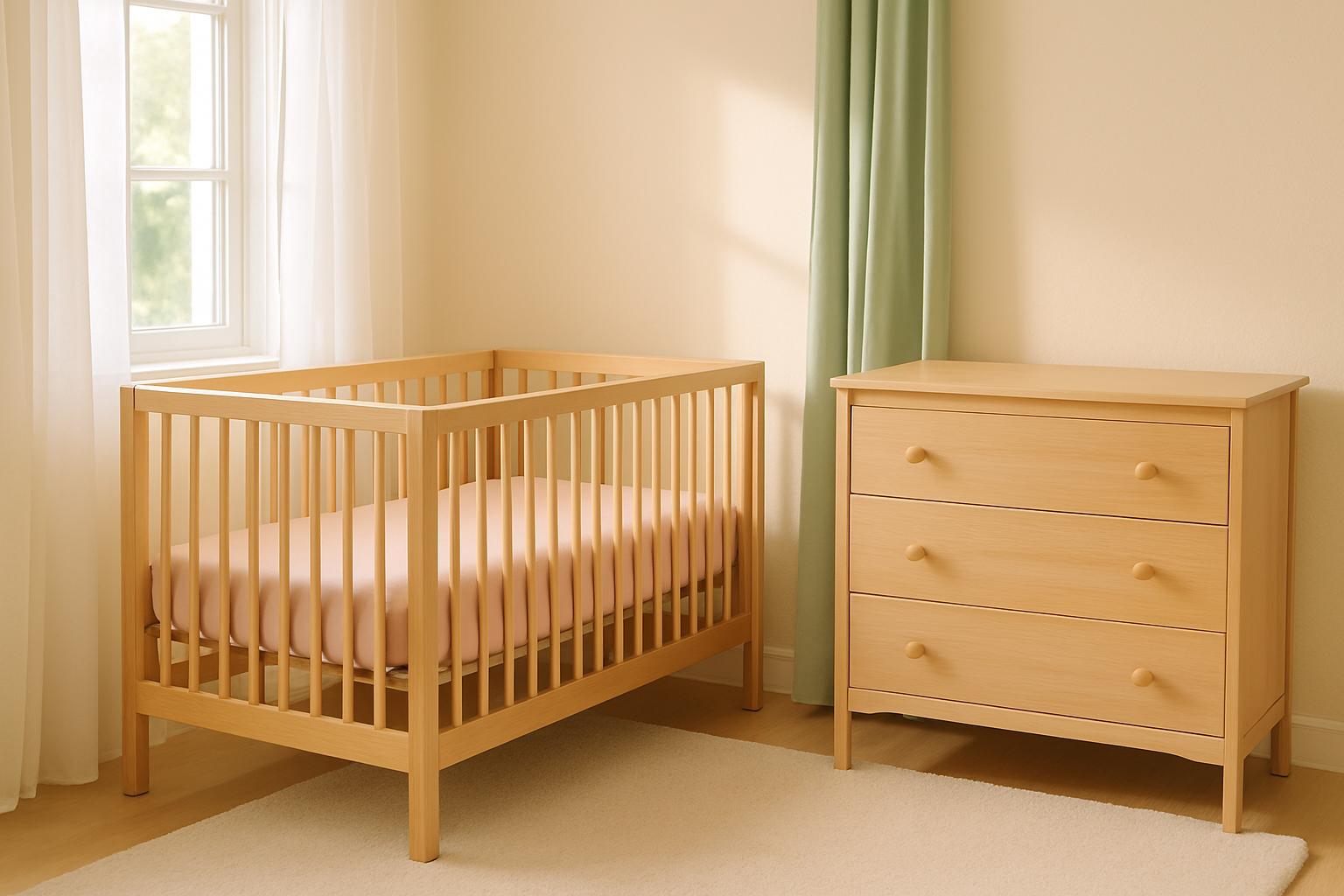
If you’ve just unboxed a new crib or dresser and noticed that sharp, chemical “new furniture” smell, here’s the short answer you came for: yes, you should air it out before baby sleeps near it. New cribs, dressers, gliders, and changing tables—especially ones made from composite wood like MDF or particleboard with painted or lacquered finishes—can release VOCs (volatile organic compounds) such as formaldehyde into the air. That’s what you’re smelling.
The good news is that airing out nursery furniture is simple and free. Unbox each piece as early as you can and let it breathe in a well-ventilated space—a spare room, garage, or covered porch—for at least 1 to 2 weeks before baby arrives. For pieces with a strong smell, give it longer, sometimes several weeks, until the odor fades. Off-gassing is heaviest when furniture is brand new and tapers off over time, so the earlier you start, the better.
I always tell expecting parents the same thing: assemble the nursery ahead of your due date, not the week of. It gives furniture time to release the bulk of those fumes while the windows are open and baby is still cozy on board.
Baby Sleep Miracle
Help baby sleep through the night naturally
Get It →Where Do the VOCs in Nursery Furniture Come From?
“VOC” sounds scary, but it just means certain chemicals evaporate into the air at room temperature—that’s why you can smell them. With nursery furniture, they come from a handful of predictable places:
- Engineered wood adhesives. MDF, particleboard, and plywood are made by pressing wood fibers or chips together with glue-like resins. Some of those resins contain or release formaldehyde, which slowly seeps out of the finished piece—most noticeably when it’s new.
- Paints, stains, and finishes. Glossy lacquers, sealants, and conventional paints can contain solvents that evaporate as they fully cure.
- Flame retardants and foam. Upholstered gliders, rockers, and changing pad covers can contain treated foam and fabrics that contribute their own chemical smell.
- Packaging. Sometimes the strongest initial odor is just the plastic wrap, foam corners, and cardboard the furniture shipped in.
This is also why solid wood furniture with a no-VOC or water-based finish off-gasses far less. There are no pressed-together resins doing the heavy lifting, and a water-based finish skips most of the harsh solvents.
A Practical Airing-Out Timeline
There’s no single magic number, because it depends on the material, the finish, and how strong the smell is to begin with. But here’s a realistic framework I share with parents:
- Solid wood, water-based or no-VOC finish: often just a few days to a week. Any faint smell usually clears quickly.
- Composite wood with a standard finish: aim for 1 to 2 weeks of active airing, longer if you can manage it.
- Strong-smelling pieces: if you can still smell it clearly after two weeks, keep going. Some pieces need three to four weeks before the odor genuinely fades.
The trick is to use your nose. When you walk up to the piece and it no longer hits you with that chemical sharpness, the bulk of the off-gassing has passed. Trust that more than any calendar.
How to Air Out New Nursery Furniture
- Unbox everything early. Remove all plastic, foam, and cardboard packaging as soon as the furniture arrives. Off-gassing can’t escape through sealed wrap.
- Pick a ventilated spot. A spare bedroom with open windows, a garage, a basement, or a covered porch all work well.
- Open windows and cross-ventilate. Fresh air moving through the room carries fumes out instead of letting them settle.
- Add a fan. Pointing a fan at the furniture, or running one to push air across the room, speeds things up considerably.
- Use a little warmth. Off-gassing happens faster in warmer air.
- Open drawers and doors. Pull out every drawer and open every cabinet so the inside surfaces can breathe too.
- Wipe it down. A wipe with mild soap and water (or a water-and-vinegar mix) can help remove surface residue.
- Re-check with your nose. After a week or two, do the smell test. Strong odor means keep airing; neutral means it’s ready for the nursery.
Set Up the Nursery Ahead of Time
The single most helpful habit is simply planning ahead. If you set up the nursery a few weeks before your due date, your furniture gets to do most of its off-gassing while the room is empty and the windows are open—long before baby is sleeping in there. Once the furniture is aired out and in place, keep the nursery well-ventilated in the early weeks too.
If you’re still in the shopping stage, this is the easiest time to lower the whole issue. When you’re choosing a crib or dresser from our cribs & furniture collection, you’re already steering toward pieces designed with little ones in mind.
Materials and Certifications That Lower the Risk
You can sidestep a lot of the worry by choosing furniture that simply has less to off-gas in the first place. A few things to look for:
- Solid wood construction. Real wood skips the resin-heavy adhesives that engineered boards rely on, so there’s far less to release.
- Water-based or no-VOC finishes. These cure with far fewer harsh solvents than traditional lacquers and paints.
- GREENGUARD Gold certification. This is a third-party standard focused on low chemical emissions, tested with indoor air quality in mind.
None of this means a brand-new piece will be totally odorless on day one—but it does mean the airing-out window is shorter and the peace of mind is bigger. If thinking through the air in baby’s room is on your radar, our health & safety collection is a good place to keep that same mindful approach going.
Low-VOC Nursery Furniture Picks
| Product | Best For | Price | |
|---|---|---|---|
| DaVinci Birdie 3-in-1 Convertible Crib | Best Overall | $179.00 | View |
| DaVinci Charlie 4-in-1 Convertible Crib | Best Value | $199.00 | View |
| Delta Children Fancy 4-in-1 Crib | Editor's Pick | $209.30 | View |
| BROLEX Baby Bedding Collection - Mini & Standard | Great Choice | $12.99 | View |
| Suite Bebe Barnside 4-in-1 Convertible Crib in Vintage | Great Choice | $399.99 | View |
| Dream On Me Casco 3-in-1 Convertible Crib | Great Choice | $243.99 | View |
BEST OVERALL 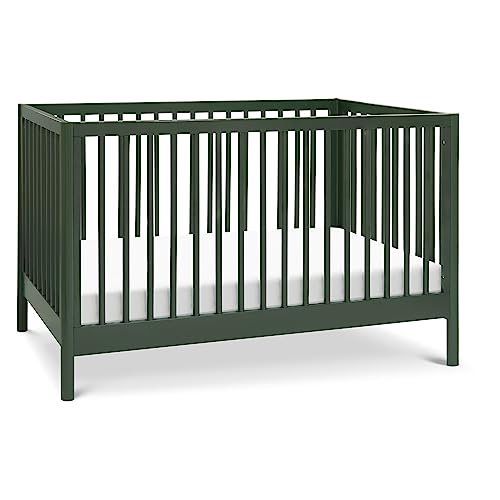
DaVinci Birdie 3-in-1 Convertible Crib
$179.00
- 3-in-1 Versatility: Easily converts from a crib to a toddler bed and daybed, saving you money and space.
- Adjustable Mattress Heights: With four positions, it accommodates your baby’s growth and keeps them safe as they start to sit and stand.
- Durable Construction: Crafted from solid sustainable New Zealand pine, designed to withstand the active play of toddlers and last into their teen years.
- Safety First: Lead and phthalate protected, exceeding ASTM International and U.S. CPSC safety standards for peace of mind.
- Eco-Friendly Choice: Made with non-toxic materials and contributes to cleaner indoor air quality.
BEST VALUE 
DaVinci Charlie 4-in-1 Convertible Crib
$199.00
- 4-in-1 Convertibility: Seamlessly transitions from crib to toddler bed to full-size bed, saving you money on multiple purchases.
- Adjustable Mattress Heights: Four adjustable positions allow you to lower the mattress as your baby grows, ensuring safety and convenience.
- Quality Materials: Crafted from sustainable New Zealand pinewood and engineered wood, providing durability and stability.
- Non-Toxic Finish: Finished with a multi-step, non-toxic painting process, free from harmful chemicals like lead and phthalates.
- Easy Pairing: Complements other DaVinci nursery furniture, like the Charlie 3-Drawer Dresser, for a coordinated look.
EDITOR'S PICK 
Delta Children Fancy 4-in-1 Crib
$209.30
- Versatile Design: This crib easily converts into a toddler bed, daybed, and full-size bed, making it a long-term investment for your child’s sleep space.
- Adjustable Mattress Height: With three different mattress height positions, you can safely lower the mattress as your baby grows and begins to sit or stand.
- Sturdy Construction: Made from strong, durable wood, this crib is built to withstand years of use, ensuring it remains a fixture in your home.
- Stylish Options: Available in a range of colors like Grey, Bianca White, and Dark Chocolate, you can easily match it with your nursery decor.
- Safety First: JPMA certified and tested for lead and other toxic materials to meet stringent safety standards, offering peace of mind for parents.

BROLEX Baby Bedding Collection - Mini & Standard Crib Sheets
$12.99
- **Ultimate Comfort**: Crafted to provide a soft and gentle surface, these sheets help your baby drift off into peaceful sleep.
- **Easy to Clean**: Made from machine-washable fabric, these sheets are convenient for busy parents, allowing for quick clean-up after any little messes.
- **Breathable Material**: The breathable design helps regulate your baby's temperature, promoting a comfortable sleep environment throughout the night.
- **Secure Fit**: With elastic edges, these sheets stay snugly in place on mini cribs and playards, providing a stable sleeping surface for active toddlers.
- **Stylish Options**: Available in a range of colors and patterns, these sheets will complement any nursery decor while enhancing functionality.

Suite Bebe Barnside 4-in-1 Convertible Crib in Vintage Chestnut
$399.99
- 4-in-1 design allows for versatile use throughout your child's development.
- Three adjustable mattress heights accommodate your baby's growth and ensure safety as they learn to sit and stand.
- Soft-distressed finish adds a charming, rustic touch to any nursery decor.
- Fits a standard-size crib mattress, making it easy to find the perfect mattress for your baby.
- Constructed with non-toxic finishes, ensuring a safe sleeping environment for your little one.

Dream On Me Casco 3-in-1 Convertible Crib
$243.99
- Multi-functional design: Converts from a mini crib to a daybed and a twin bed, offering long-term use.
- Thoughtful storage: Equipped with a 3-drawer changing table to keep baby essentials organized and within reach.
- Adjustable mattress heights: Features three mattress height settings for optimal safety and convenience.
- Elegant aesthetics: Minimalist design with gentle arches and a variety of non-toxic paint finishes to complement any nursery theme.
- Safety first: Meets and exceeds JPMA, ASTM, and CPSC safety standards, ensuring your baby's well-being.
As an Amazon Associate we earn from qualifying purchases. We only recommend products we'd use ourselves — we're never paid for placement.
Frequently Asked Questions
How long should you air out a new crib?
For most new cribs, plan on at least 1 to 2 weeks of airing in a ventilated space before baby sleeps in it. Solid wood cribs with a water-based finish may only need a few days, while strongly scented composite-wood cribs can take three to four weeks. Let your nose be the final judge.
Is the smell from new baby furniture dangerous?
That “new furniture” smell is the VOCs you’re detecting, and the reasonable, non-alarmist approach is simply to reduce baby’s exposure while the piece is at its strongest. Airing it out before use and keeping the nursery well-ventilated handles the vast majority of the concern. If a smell is overwhelming or persistent, keep airing it out longer—or reconsider the piece.
What nursery furniture off-gasses the least?
Solid wood furniture with a no-VOC or water-based finish tends to off-gas the least, because it avoids both the resin adhesives in engineered wood and the heavy solvents in conventional finishes. Pieces carrying a low-emissions certification like GREENGUARD Gold are also a reassuring choice.
Can I speed up off-gassing?
Yes. Fresh air, a fan, gentle warmth, and open drawers and doors all help fumes escape faster. Unboxing early and removing every scrap of packaging matters more than people expect. You can’t make off-gassing instant, but good ventilation can meaningfully shorten how long it takes.
Preparing a nursery is one of the sweetest parts of waiting for your baby, and a little air and a little patience go a long way. For more gentle, practical guidance, visit our parenting resources hub anytime. — Angela Grace
Angela's Recommended Resources
Guides and courses I personally recommend:
Most Popular
Baby Sleep Miracle
Proven gentle method to help your baby sleep through the night naturally. No cry-it-out, science-backed.
* Affiliate links. We may earn a commission at no extra cost to you.