- Angela’s Picks
- Shop by Age
- Shop by Category
- Shop by Values
- Montessori Toys
- Sensory Toys
- Teething Toys
- Wooden Toys
- Educational Toys
- Stacking & Sorting Toys
- Baby Bottles
- Sippy Cups
- Plates & Bowls
- Bibs
- Baby Utensils
- Deals
- High Chairs
- Breastfeeding & Nursing
- Snack Containers
- Crib Mattresses
- Bassinets
- Sleep Sacks & Swaddles
- Baby Blankets
- Baby Monitors
- Cribs & Nursery Furniture
- Baby Shampoo & Wash
- Baby Lotion & Oil
- Baby Sunscreen
- Bath Tubs & Seats
- Towels & Washcloths
- Diaper Cream & Balm
- Eco-Friendly Diapers
- Baby Wipes
- Potty Training
- Changing Pads
- Cloth Diapers
- Baby Thermometers
- Baby Proofing
- Baby Gates
- Humidifiers
- First Aid & Grooming
- Onesies & Bodysuits
- Sleepers & Pajamas
- Hats & Mittens
- Nursing Pads
- Breast Pumps & Accessories
- Postpartum Care
Glass vs. Silicone vs. Stainless: The Safest Non-Toxic Baby Bottles

Quick Answer
Glass, silicone, stainless steel or plastic? A warm, honest guide to choosing the safest non-toxic baby bottles, with pros, cons & care tips.
If you’ve stood in front of a wall of baby bottles feeling slightly overwhelmed, I want you to know that’s completely normal. Feeding your baby is one of the most repeated things you’ll do in those early months, so it makes sense to want the bottle touching that warm milk to be as safe as possible. Let me give you the short answer first, then we’ll dig into the details together.
The Quick Verdict on Non-Toxic Baby Bottles
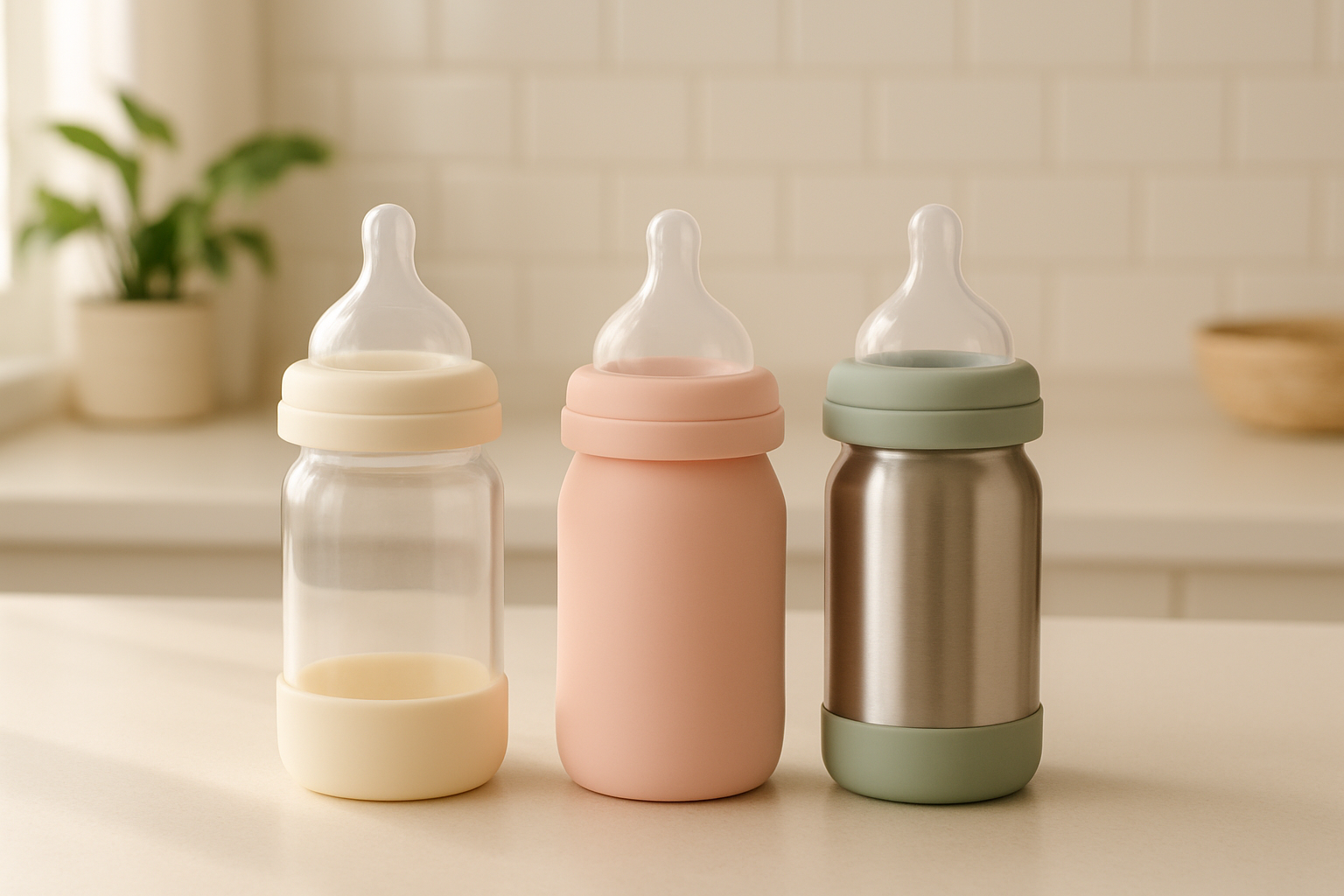
The safest baby bottle materials are glass, food-grade silicone, and stainless steel. All three are stable, don’t leach the chemicals parents most worry about, and hold up well to repeated washing and sterilizing. If you choose plastic — and plenty of families do, because it’s light and affordable — pick bottles clearly labeled BPA-free, BPS-free, and phthalate-free, and follow one simple rule: never heat plastic. Heat is what encourages plastics to break down and release tiny amounts of unwanted substances into milk, so warm in warm water instead of the microwave, no matter which material you land on.
There’s no single “best” bottle for every family. The right one depends on your baby’s temperament, your budget, whether you’re juggling daycare drop-offs, and how much you mind a little extra weight in the diaper bag. So instead of crowning a winner, let’s walk through each material honestly.
Glass Baby Bottles
Glass is about as inert as it gets, which is a fancy way of saying it doesn’t react with what’s inside it. Nothing leaches into the milk, it doesn’t hold onto odors or stains, and it stays clear and see-through for the life of the bottle — so you always know exactly how clean it is. Glass also handles high heat beautifully, which makes sterilizing simple.
- Pros: Completely inert, no leaching, easy to see and verify cleanliness, doesn’t stain or absorb smells, very long-lasting.
- Cons: Heavier than other materials, and it can break or crack if dropped. As baby gets older and wants to hold the bottle themselves, the weight and breakability matter more.
Many glass bottles now come with removable silicone sleeves, which soften the weight in your hand, improve grip, and add a real cushion against drops. If glass appeals to you but the breakability gives you pause, a sleeved bottle is a lovely middle ground.
Baby Sleep Miracle
Help baby sleep through the night naturally
Get It →Silicone Baby Bottles
Food-grade silicone has become a favorite for good reason. It’s soft, squeezable, feather-light, and essentially shatterproof — which is wonderful once your little one starts grabbing for the bottle on their own. It’s stable across a wide temperature range and doesn’t leach the chemicals associated with plastics.
- Pros: Lightweight, soft and pleasant to hold, shatterproof, gentle on little gums and hands, travels well.
- Cons: Less transparent than glass, so it’s a touch harder to see exactly how much residue is left after washing.
When shopping for silicone, look for bottles that specify food-grade or medical-grade silicone. Because you can’t see through it as clearly, I’d gently suggest being extra thorough with a bottle brush at every wash.
Stainless Steel Baby Bottles
Stainless steel is the workhorse of the bunch. It’s genuinely tough — the kind of bottle that survives being dropped on a tile floor and shrugs it off. Food-grade stainless steel doesn’t leach, and it has a built-in bonus: it insulates, so it helps keep warm milk warmer and cold milk colder for longer.
- Pros: Extremely durable, won’t shatter, naturally insulating, long lifespan, no leaching from food-grade steel.
- Cons: Opaque, so you can’t see the milk level or how clean the inside is at a glance. Often the priciest option up front, though the durability can make it worth it over time.
The opacity is the main thing to make peace with. Some stainless bottles add a small window or markings to help, but you’ll generally be relying on the printed measurement marks rather than your eyes to gauge how much baby has taken.
Plastic Baby Bottles
I won’t pretend plastic doesn’t have its appeal. It’s the lightest and usually the most budget-friendly, it doesn’t break, and it’s everywhere, which makes replacements easy. For many families, especially in those exhausting early weeks, that practicality matters.
- Pros: Lightweight, inexpensive, shatterproof, widely available.
- Cons: Plastics can break down with heat, repeated washing, and age, and that’s when leaching becomes a concern. Even “safe” plastics shouldn’t be heated, and they tend to need replacing more often.
If plastic is your choice, look for clear labeling: BPA-free, BPS-free, and phthalate-free. Treat it gently — no microwave, no boiling water poured directly in, no harsh scrubbing that scratches the surface — and replace it more frequently than you would glass or steel.
Don’t Forget the Nipple
The bottle gets all the attention, but the nipple matters just as much — it’s the part actually in your baby’s mouth. You’ll generally find two materials: silicone and latex.
- Silicone nipples are firmer, clearer, longer-lasting, and a good default for most babies. Because latex allergies exist, many parents prefer silicone to sidestep that concern entirely.
- Latex nipples are softer and more flexible, which some babies prefer, but they wear out faster and aren’t suitable if there’s any latex sensitivity in the picture.
Whichever you choose, nipple flow rate matters too. Newborns do best with a slow flow, and you’ll size up gradually as your baby grows and feeds more efficiently.
Warming, Cleaning, and the “Never Microwave” Rule
This is the single most important habit, and it applies to every material: never microwave a baby bottle. Microwaves heat unevenly and create hot spots that can scald your baby’s mouth, and with plastics, heat is exactly what encourages chemicals to migrate into the milk.
Instead, warm the bottle by standing it in a bowl of warm (not boiling) water for a few minutes, or use a dedicated bottle warmer. Swirl gently to even out the temperature and always test a drop on the inside of your wrist before offering it. For cleaning, wash after every feeding with hot soapy water and a bottle brush that reaches the bottom, and let everything air-dry fully on a rack.
How to Choose a Non-Toxic Baby Bottle
- Start with material: glass, food-grade silicone, or stainless steel are your safest bets. If plastic, insist on BPA-, BPS-, and phthalate-free labeling.
- Check the nipple: silicone is a solid, allergy-friendly default; match the flow rate to your baby’s age and stage.
- Match it to your life: glass for see-through reassurance, silicone for light and shatterproof, stainless for durability and insulation on the go.
- Look for anti-colic features if your baby is gassy or fussy after feeds.
- Buy a couple before committing: babies have opinions! Test one or two before stocking up on a full set.
- Plan to warm, never microwave.
If you’d like a head start, the curated baby bottles in our shop are chosen with these exact priorities in mind, and you can browse the wider feeding collection for warmers, brushes, and everything else that makes bottle days a little easier.
Our Favorite Non-Toxic Baby Bottles
| Product | Best For | Price | |
|---|---|---|---|
| Dr. Browns Anti-Colic Bottle Handi-Craft Baby Glass Vented | Best Overall | $8.99 | View |
| Willow Glass Breastmilk Pitcher - 32oz Capacity | Best Value | $23.99 | View |
| Dr. Brown's Anti-Colic Wide-Neck Glass Baby Bottles, 0m+ | Editor's Pick | $10.99 | View |
| Papablic Glass Breastmilk Pitcher | Great Choice | $35.99 | View |
| Philips Avent Glass Natural Baby Bottle with Natural | Great Choice | $12.99 | View |
| Evenflo Classic Glass Bottle, 8 Oz, 1-Pack | Great Choice | $16.99 | View |
BEST OVERALL 
Dr. Browns Anti-Colic Bottle Handi-Craft Baby Glass Vented
$8.99
- Effective Anti-Colic Design: The unique venting system reduces air intake during feeding, helping to alleviate colic-related discomfort.
- Durable Glass Material: Made from high-quality glass, this bottle is not only sturdy but also free from harmful chemicals like BPA and BPS.
- Easy to Clean: The wide neck design allows for straightforward cleaning and filling, plus it's dishwasher safe for added convenience.
- Compatibility with Dr. Brown's Accessories: This bottle works seamlessly with other Dr. Brown's products, making it easy to find the right nipples and accessories as your baby grows.
- Eco-Friendly Choice: Opting for glass over plastic is a step toward a more sustainable lifestyle, reducing plastic waste.
BEST VALUE 
Willow Glass Breastmilk Pitcher - 32oz Capacity
$23.99
- Convenient Pouring: The specially designed spout allows for easy and precise pouring into storage bags or bottles, minimizing mess.
- Wide Mouth Design: The wide opening makes it easy to fill, clean, and monitor milk levels, so you can keep track of your output effortlessly.
- Leak-Proof Seal: This pitcher ensures that your milk stays fresh without the worry of spills, giving you peace of mind.
- Dishwasher Safe: Made for busy parents, it can be easily cleaned in the dishwasher, saving you valuable time.
- Measurement Markings: Clear markings in ounces, cups, and milliliters help you track your milk supply throughout the day.
EDITOR'S PICK 
Dr. Brown's Anti-Colic Wide-Neck Glass Baby Bottles, 0m+
$10.99
- Clinically Proven Relief: The anti-colic vent system significantly decreases spit-up, burping, and gas, allowing for a more peaceful feeding experience.
- Natural Feeding Experience: With a vacuum-free design and silicone nipples that mimic the breast, babies can feed at their own pace, promoting a natural transition between breast and bottle.
- Nutrient Preservation: This bottle helps preserve essential nutrients in breast milk or formula and aids in better digestion, which can lead to improved sleep for both baby and parents.
- Adaptable Design: The bottle grows with your baby; the internal vent can be removed as feeding skills develop, eliminating the need to switch to different bottles.
- Eco-Friendly Choice: Made from glass and fully recyclable, this bottle supports a sustainable lifestyle while ensuring your baby’s health.

Papablic Glass Breastmilk Pitcher
$35.99
- Maintains Nutritional Integrity: The unique Pitcher Method allows you to mix and manage breastmilk without disturbing the fat layer, ensuring your baby receives every bit of nutrition.
- Durable and Safe: Made from heavy-duty glass, the pitcher is both non-toxic and odor-free, offering a safer alternative to plastic containers.
- Clump-Free Mixing: Engineered to prevent air bubbles and clumping, ensuring your baby gets a consistent feeding experience every time.
- Effortless Cleaning: The smooth glass surface resists residue buildup and is dishwasher safe, letting you spend more time with your little one and less time cleaning.
- Versatile Temperature Resistance: This pitcher can handle both hot sterilization and cold storage, making it perfect for busy parents.

Philips Avent Glass Natural Baby Bottle with Natural Response Nipple.
$12.99
- Natural Feeding Experience: The wide, breast-shaped nipple mimics the softness and shape of a breast, making transitions between breast and bottle feeding smoother.
- No-Drip Design: The innovative nipple design helps prevent messes by minimizing lost milk, giving parents peace of mind during feeding time.
- Anti-Colic Feature: With an anti-colic valve, this bottle is engineered to reduce discomfort by directing air away from your baby's tummy.
- Durable and Safe: Made from high-quality borosilicate glass, it's not only BPA-free but also resistant to heat and thermal shock, ensuring safe storage and use.
- Easy to Clean: The bottle is designed for effortless cleaning and sterilization, making it convenient for busy parents.

Evenflo Classic Glass Bottle, 8 Oz, 1-Pack
$16.99
- Ergonomic Design: The uniquely shaped bottle fits comfortably in your hand, making feeding time easier for both you and your little one.
- Easy to Clean: With only three pieces to assemble and disassemble, cleaning is quick and thorough, allowing you to spend more time enjoying precious moments.
- Direct Pumping: Save time by pumping directly into the bottle, as it fits most standard neck breast pumps – perfect for busy parents!
- BPA-Free Assurance: Made from food-grade materials, parents can rest easy knowing their baby's bottle is free from harmful chemicals.
- Sustainable Choice: The recyclable glass construction reflects a commitment to both safety and the environment, allowing you to feel good about your purchase.
As an Amazon Associate we earn from qualifying purchases. We only recommend products we'd use ourselves — we're never paid for placement.
Frequently Asked Questions
Are glass or plastic baby bottles safer?
Glass is generally the safer choice because it’s inert — it doesn’t react with milk or leach anything, even when heated or sterilized repeatedly. Plastic can be a reasonable option if it’s clearly labeled BPA-, BPS-, and phthalate-free and you never heat it, but it breaks down over time and needs replacing more often.
Is silicone safe for baby bottles?
Yes. Food-grade and medical-grade silicone is stable, doesn’t leach the chemicals associated with plastics, and handles a wide range of temperatures, which is why it’s trusted for both bottles and nipples. Just look for clear “food-grade” or “medical-grade” labeling.
How often should you replace baby bottles?
It depends on the material and condition. Glass and stainless steel can last a long time as long as they’re free of cracks, chips, or deep scratches. Plastic bottles should be replaced more frequently — at the first sign of cloudiness, scratching, or odor. Nipples wear out fastest of all; replace any that are torn, sticky, thinning, or discolored, roughly every couple of months.
What is the safest baby bottle material overall?
There’s no universal winner, but glass, food-grade silicone, and stainless steel are all excellent, low-leaching choices. Glass offers see-through reassurance, silicone is light and shatterproof, and stainless steel is the most durable and insulating. The “safest” one is the one you’ll consistently use and care for properly.
Whatever you choose, please don’t lose sleep over getting it perfect — a safe material, gentle warming, and regular replacing covers the vast majority of it. You can always find more honest, mom-tested guidance over in our parenting resources. — Angela
Angela's Recommended Resources
Guides and courses I personally recommend:
Most Popular
Baby Sleep Miracle
Proven gentle method to help your baby sleep through the night naturally. No cry-it-out, science-backed.
* Affiliate links. We may earn a commission at no extra cost to you.