- Angela’s Picks
- Shop by Age
- Shop by Category
- Shop by Values
- Montessori Toys
- Sensory Toys
- Teething Toys
- Wooden Toys
- Educational Toys
- Stacking & Sorting Toys
- Baby Bottles
- Sippy Cups
- Plates & Bowls
- Bibs
- Deals
- Baby Utensils
- High Chairs
- Breastfeeding & Nursing
- Snack Containers
- Crib Mattresses
- Bassinets
- Sleep Sacks & Swaddles
- Baby Blankets
- Baby Monitors
- Cribs & Nursery Furniture
- Baby Shampoo & Wash
- Baby Lotion & Oil
- Baby Sunscreen
- Bath Tubs & Seats
- Towels & Washcloths
- Diaper Cream & Balm
- Eco-Friendly Diapers
- Baby Wipes
- Potty Training
- Changing Pads
- Cloth Diapers
- Baby Thermometers
- Baby Proofing
- Baby Gates
- Humidifiers
- First Aid & Grooming
- Onesies & Bodysuits
- Sleepers & Pajamas
- Hats & Mittens
- Nursing Pads
- Breast Pumps & Accessories
- Postpartum Care
Baby Reflux & Spit-Up: What’s Normal and How to Help

Quick Answer
Is your baby's spit-up normal reflux or something more? Learn the difference between spit-up and GERD, gentle ways to reduce reflux, and when to call the doctor.
If your baby spits up after nearly every feed, you’re not alone — and it’s almost always normal. More than half of babies have some reflux in the first months because the muscle at the top of the stomach is still immature. Here’s how to tell ordinary spit-up from the kind that needs attention, plus simple ways to help.
Spit-Up vs. Reflux vs. GERD
- Spit-up / normal reflux: milk comes back up easily, often with a burp. Baby is comfortable, feeding well, and gaining weight — this is a “laundry problem, not a medical one.”
- GERD (the problematic kind): reflux that causes pain, frequent crying with feeds, poor weight gain, refusing to eat, or breathing issues. This needs a doctor’s evaluation.
Most babies peak in spit-up around 4 months and outgrow it by 12 months as the digestive system matures and they spend more time upright.
Gentle Ways to Reduce Reflux
- Feed smaller amounts more often — an overfull stomach spits up more.
- Burp frequently — midway through and after feeds.
- Keep baby upright for 20–30 minutes after eating.
- Paced bottle feeding with a slow-flow nipple reduces swallowed air — see our bottle feeding guide.
- Avoid tight diapers/waistbands that press on the tummy.
- Always back to sleep on a firm, flat surface — never use inclined sleepers or props, which are unsafe and don’t reduce reflux.
When to Call the Doctor
- Forceful, projectile vomiting, or green/yellow or bloody vomit.
- Poor weight gain, or refusing to feed and seeming in pain.
- Arching, frequent crying with feeds, or choking/gagging and breathing trouble.
- Far fewer wet diapers or signs of dehydration.
Feeding Helpers for Reflux
| Product | Best For | Price | |
|---|---|---|---|
| Lovely Care Muslin Burp Cloths | Best Overall | $12.99 | View |
| 5-Pack Organic Muslin Burp Cloths for Baby | Best Value | $19.96 | View |
| Konssy Muslin Baby Burp Cloths - 6 Pack | Editor's Pick | $17.99 | View |
| MUKIN Baby Muslin Burp Cloths, 6 Layers Soft | Great Choice | $12.98 | View |
| Arnzion Baby Burp Cloths 4 Pack - Curved | Great Choice | $8.99 | View |
| Konssy Muslin Baby Burp Cloths Set - 7 | Great Choice | $16.99 | View |
BEST OVERALL 
Lovely Care Muslin Burp Cloths
$12.99
- Ultra-Absorbent: They effectively catch spills and drools, ensuring that messes are kept to a minimum during feeding times.
- Soft & Gentle: Made from 100% pure muslin cotton, these cloths are incredibly soft and gentle against your baby’s sensitive skin.
- Quick-Drying: Their breathable fabric allows for rapid drying, so they're always ready when you need them without worrying about pilling or shrinkage.
- Durable Design: With reinforced edges and pre-washed fabric, these burp cloths become softer with each wash while maintaining their integrity.
- Perfect for Gifting: They make a thoughtful and practical baby shower gift, fitting seamlessly into any baby registry.
BEST VALUE 
5-Pack Organic Muslin Burp Cloths for Baby
$19.96
- 8 Layers of Softness: Crafted from 8 layers of viscose derived from bamboo cotton, these burp cloths provide exceptional absorbency, perfect for capturing every droplet.
- Generous Coverage: Measuring 21" x 10", the figure-8 design ensures that your shoulders are fully covered, so you can focus on snuggling your baby instead of worrying about messes.
- Stylish & Gender-Neutral: With a chic and neutral aesthetic, these burp cloths complement any baby outfit and are ideal for both boys and girls.
- Exquisitely Soft: Made with the softest organic cotton, these cloths are gentle enough for all skin types, making them perfect for your little one.
- Durable & Long-Lasting: Designed to withstand multiple washes without losing their softness or absorbency, these burp cloths are a practical investment for any parent.
EDITOR'S PICK 
Konssy Muslin Baby Burp Cloths - 6 Pack Large 100% Cotton
$17.99
- Super Absorbent: Made from soft muslin cotton, these burp cloths quickly soak up any spills or spit-up, keeping you and your baby clean and dry.
- Versatile Use: Beyond just burping, they can easily double as washcloths, bibs, or even pillow towels, making them a multi-tasking essential for any parent.
- Generous Size: At 19” x 9.6”, they offer ample coverage for your shoulder, ensuring that you don’t have to worry about messes transferring to your clothes.
- Stylish Design: With unisex colors and classic prints, these burp cloths are not only practical but also a trendy accessory to complement any baby outfit.
- Perfect Gift: Beautifully packaged, this set makes a thoughtful and practical gift for baby showers, holidays, or just because.

MUKIN Baby Muslin Burp Cloths, 6 Layers Soft Absorbent Rags
$12.98
- Generously sized at 20 x 10 inches, they provide ample coverage to protect your clothes and surfaces from messes.
- The six-layer design means you won’t have to constantly worry about leaks and spills.
- Not just for burping—these versatile cloths can double as lap pads, nursing covers, or lightweight blankets.
- Stylish gender-neutral patterns make them a chic addition to any nursery decor.
- Machine washable and dryable, ensuring hassle-free cleaning and reuse.
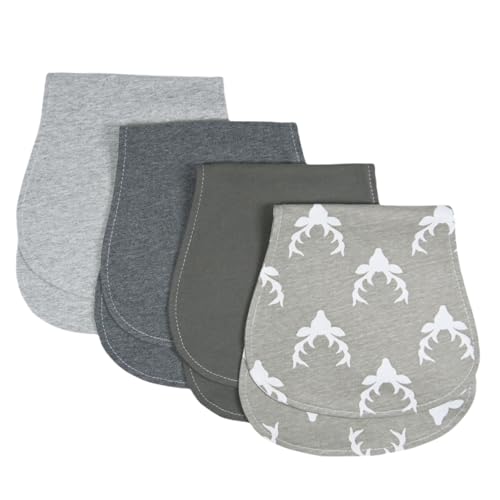
Arnzion Baby Burp Cloths 4 Pack - Curved and Absorbent
$8.99
- Generous Size: Each burp cloth measures 19” by 9”, offering ample coverage to protect your clothes from spills and messes.
- Stylish Designs: With a variety of vivid and cute prints, these burp cloths add a fun touch to your baby’s feeding routine.
- Soft & Absorbent: Made from a towel-like material, they quickly absorb any spills while keeping your baby comfortable.
- Durable & Long-Lasting: High-quality cotton construction ensures that the burp cloths maintain their shape and softness, even after multiple washes.
- Convenient Storage: Lightweight and easy to roll up, these burp cloths fit perfectly in your nursing bag for on-the-go parenting.

Konssy Muslin Baby Burp Cloths Set - 7 Pack Soft Cotton
$16.99
- Super Soft and Absorbent: Crafted from 100% cotton muslin, these burp cloths provide a soft touch that is gentle against your baby's delicate skin while effectively absorbing spills and spit-ups.
- Multi-Functional: Not just for burping, these cloths can double as washcloths, bibs, and even pillow towels, making them an essential tool in any feeding routine.
- Generously Sized: Each cloth is large enough to catch any messes, ensuring you stay clean and comfortable during feeding sessions without worrying about spills on your clothes.
- Stylish Unisex Design: With classic prints and colors, this set is perfect for both boys and girls, seamlessly complementing your baby's outfits.
- Thoughtful Gift Idea: Elegantly packaged, this set makes for a practical and charming gift for baby showers, Christmas, or any special occasion.
As an Amazon Associate we earn from qualifying purchases. We only recommend products we'd use ourselves — we're never paid for placement.
Frequently Asked Questions
When do babies outgrow reflux?
Most babies’ spit-up peaks around 4 months and resolves between 6 and 12 months as the stomach valve matures and they spend more time sitting and standing upright. If reflux is painful or worsening rather than improving, talk to your pediatrician.
Is it normal for a baby to spit up a lot?
Yes — frequent spit-up is very common and, as long as your baby is comfortable, feeding well, and gaining weight, it’s not a health concern even if it seems like a lot. It often looks like more than it is.
Does keeping baby upright help reflux?
Yes — holding your baby upright for 20–30 minutes after feeds uses gravity to keep milk down and is one of the simplest, most effective things you can do. Just never use inclined sleepers for sleep, which are unsafe.
This guide is for general educational purposes and is not medical advice. Always consult your pediatrician about your baby’s health and symptoms.
Angela's Recommended Resources
Guides and courses I personally recommend:
Most Popular
Baby Sleep Miracle
Proven gentle method to help your baby sleep through the night naturally. No cry-it-out, science-backed.
* Affiliate links. We may earn a commission at no extra cost to you.